

The Marshall Spectator
January 21, 2025


In This Issue:
From The Skittles Room
Recent Games, by GM Aleksandr Lenderman
Across the Table, with Robert Thorstad
Chess Toons
En Passant
Problems, Problems, curated by Alexander George
Editor’s Note

Welcome back, fellow chess players, to this edition of the Marshall Chess Club’s fortnightly bulletin, The Marshall Spectator.
This past week we had a number of special events at our humble club, from a book signing for IM John Donaldson’s newest book to a chess 960 tournament as well as a sold-out, six round action tournament in honor of Martin Luther King day.
In addition to this action-packed schedule, we also hosted a six-day, 9-round norm tournament in 5 sections: GM A, GM B, IM C, IM D, and Challengers E. Congratulations to Megan Paragua, who achieved a WIM Norm in the IM C section for her performance. Bryan Lin also achieved an IM norm, though he had already met the requirements for the title previously. We will be hosting another 9-round Norm Invitational event next month.
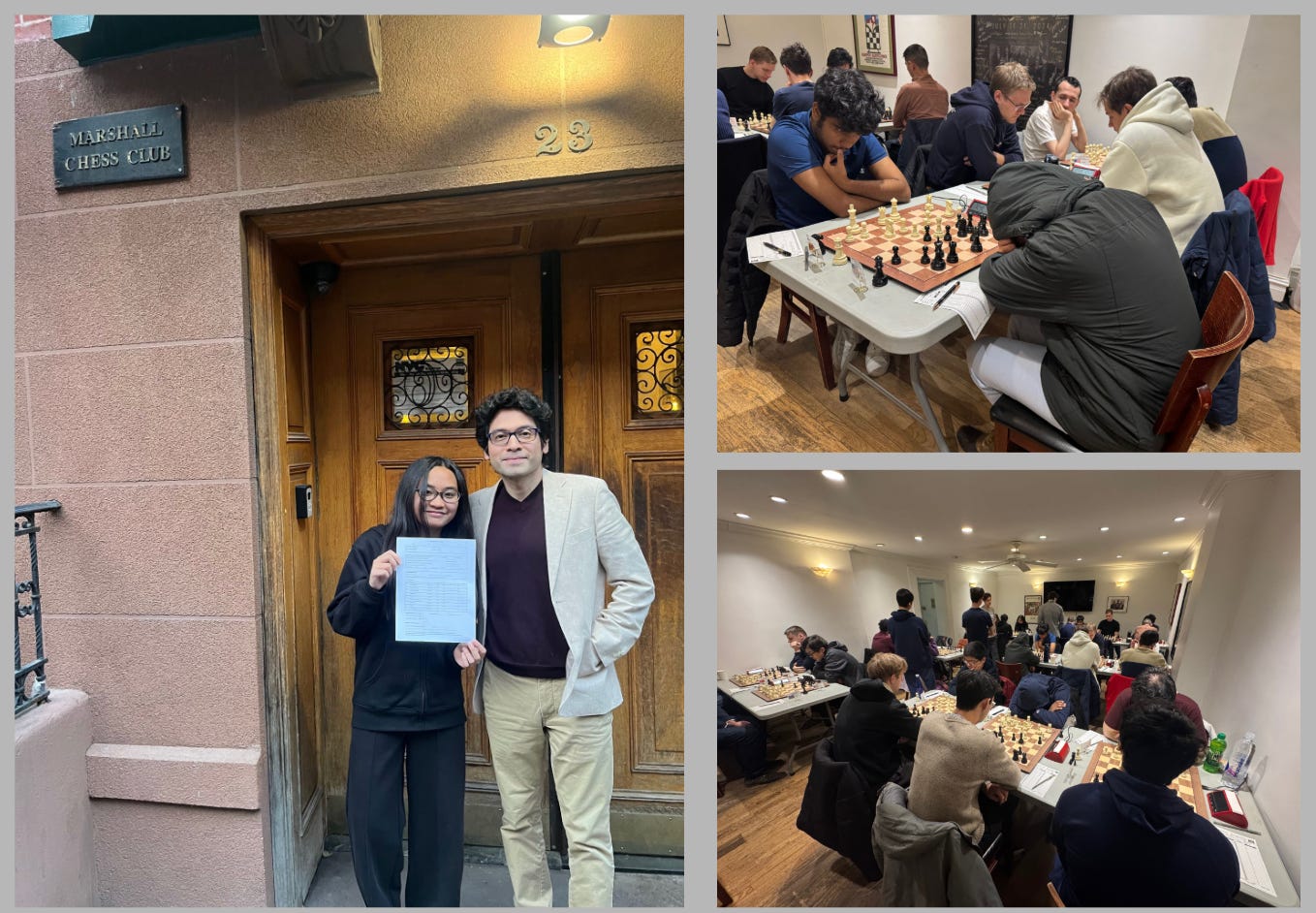
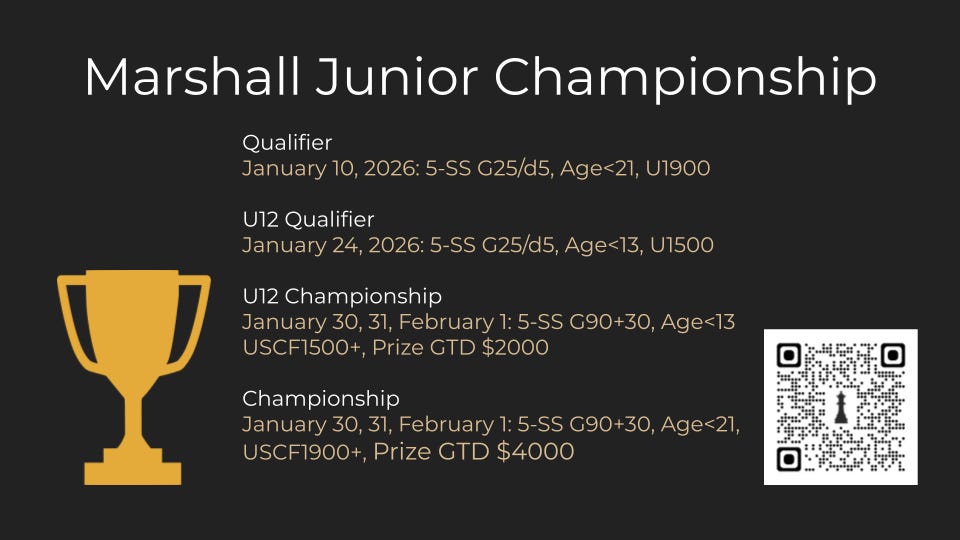
Looking ahead, we are thrilled to kick off the competitive new season with a Marshall Junior Championship. The dates and details can be found in the flier below, and you can register for this series of events here. Registration in advance is strongly encouraged, as these tournaments are likely to sell out.
Finally, there is a new tournament policy regarding refunds for tournament registrations. Withdrawing within 24 hours of a tournament’s start is strongly discouraged to allow time to contact waitlisted players.
New refund policy for weekend events ONLY, effective immediately:
- Withdrawal more than 24 hours before start: 100% refund
- 13-24 hours before start: 50% refund
- Less than 12 hours before start: No refund
After a player makes two withdrawals within 24 hours of tournament start in a calendar year, all subsequent withdrawals within 24 hours will receive no refund (including the 13-24 hour window).
Looking back over the last two weeks, we have had a plethora of events for our members to participate in.
The Under 2000 Morning Action on January 17 had 54 players registered and was won by the following players who scored a perfect 3 out of 3 to win $94.60 each: Kenny T Bolling, Gary Chan, Gabriel D Malpica, Favor Idemudia, and Alex Even Selden. The following players shared in the remaining prize funds winning $29 each for their 2 out of 3 score: Terrance Zeng, Leandro Almanzar, Gabriel Negussie, Eugene Bang, Nikolai Varfolomeev, Nikola Scekic, and Isabelle Kao.
The Morning Masters on January 17 had 4 players registered and was won by Alexander Fikiet, who scored a near-perfect 2.5 out of 3 to win the $30 first-place prize, while Naveen Paruchuri won $20 for his 2 out of 3 score.
The Chess 960 on January 16 had no fewer than 11 players registered and was won by the following players who scored 3 out of 4 to win $37.50 each: Naveen Paruchuri, IM Justin Sarkar, and WCM Wan Qin Li. Sameul Pozen and Charles Kiesling won $18.75 each for their 2 out of 4 score, while Travis Henry-Reid and David Shenk won $7.50 each for their 1.5 out of 4 performance.
The Afternoon Action on January 16 had 9 players registered and was won by Sasha Kagle who scored 3 out of 3 to win the $68 first place prize. FM Arun Dixit won a $45 prize for scoring 2.5 out of 3 in the event.
The Thursday Action on January 15 had 32 players registered and was won by Evan Kauffmann, who scored a perfect 4 out of 4 to win the $120 first-place prize. CM Krish Bhandari and Vladimir Bugayev scored 3.5 out of 4 to win $70 each, while the following players won $30 each for their 3 out of 4 score: Joseph Devilla, Andrew Colwell, Misha Raitzin, and Daniel Wang.
The Weekly Under 2200 that concluded on January 14 had 29 players registered and was won by Anthony Levin who scored 5 out of 6 to win the $290 first-place prize. The following players won $128.99 each for their 4.5 out of 6 score: Aleksandr Gutnik, Jonas Michael Zeutzius, and Quan Anh Le, while Thomas Lay and Richard Koppenaal won a class prize of $24.16 each for their 3 out of 6 performance.
The Weekly Under 1600 that concluded on January 14 had 20 players registered and was won by David Shenk, who scored a near-perfect 5.5 out of 6 to win the $166.67 first-place prize. Reginal Davis and James Basuk scored 4 out of 6 to win $83.34 each, while Philip Seidenawr won a $66.67 class prize for his 3 out of 6 performance.
The Sunday Game 50 Open on January 11 had 49 players registered and was won by Aaron Kudryavsky and Suvan Baranwal who scored a perfect 4 out of 4 to win $245 each, while Preston Delgadillo and Joseph De Villa scored 3 out of 4 to win $73.50 each.
The Sunday Game 50 Under 1600 on January 11 had 30 players registered and was won by Carolina Vasilatos who scored a perfect 4 out of 4 to win the $174 first-place prize, while Mathias Chuqui and Eden Klein scored 3.5 out of 4 to win $58 each. Jaiden Lu scored 2.5 out of 4 to win an $87 class prize.
The Morning Under 1600 on January 11 had 32 players registered and was won by Laksh Mehta, Luke Musto, and Yicheng Zhang who scored 3 out of 3 to win $133.33 each.
The Rated Beginner Open on January 11 had 38 players registered and was won by the following players who scored a perfect 3 out of 3 to win $118.75 each: Gregory Thomas McLain, Calvin Gaynor, Aarav Rathi, and Mirat Mavlyutov.
The Under 2000 Morning Action on January 10 had 58 players registered and was won by the following players who scored a perfect 3 out of 3 to win $83.33 each: Gavin Liu, Anthony Wang, Kyle Clayton, Chris Weldon, Robert Thorstad, and David Ologunleko. Andres Choquehuamani scored 2.5 out of 3 to win a $214 class prize.
The Morning Masters on January 10 had 14 players registered and was won by FM Aditeya Das, DanielWang, and Miles Hinson who scored 2.5 out of 3 to win $54.33 each.
The Junior Championship Qualifier on January 10 had 64 players registered and finished with top 8 players by tie breaks qualifying. Those players in tie break order were Daniel Svoyskiy, Shu Chen, Dervin Kouyate, Sebastian Goodrich, Akeil Williams, Arko Chakrabartiroy, Winston Ruiying Chen, and Kyle Cheng.
The Afternoon Action on January 9 had 8 players registered and was won by Evan S Rosenberg and Kenny T Bolling who scored 2.5 out of 3 to win $50 each.
The FIDE Blitz on January 9 had 81 players registered and was won by FM Marcus Miyasaka and our club champion IM Mykola Bortnyk. The both scored a near-perfect 8 out of 9 to win $288.75 each. FM Linxi Zhu scored 7 points while FM Leif Pressman scored 6.5 – and they won $96.25 each – while the following players won $48.13 each for their performance: Naveen Paruchuri, Daniel Moreno, Alec Choi, and Kevin Feng.
The Thursday Action on January 8 had 39 players registered and was won by Miguel Garcia who scored a perfect 4 out of 4 to win the $139 first-place prize. Daniel Austin Wang scored 3.5 out of 4 to win the $93 second-place prize, while Anthony Wang won a $35 class prize for his 3 out of 4 performance. The following players won $28 each for their 3 out of 4 score: FM Leif Pressman, Oliver Chernin, Alan Stolyarov, Grant Elliot Rheingold, Kevin Zhang, and Alec Hyunmook Choi.
We look forward to seeing you at the club soon!
Recent Games Analyzed
I had an honor to participate in another invitational tournament which offers players a possibility of obtaining IM and GM norms with strong performances. Even though no one was able to get a GM norm, IM-elect Bryan Lin was able to achieve another IM norm for his very strong performance (tying for first with 5.5/9). Even though he doesn’t need the IM norm, as he already has met all his requirements to get the IM title, and just waiting for approval from FIDE congress, it was still great to see Bryan (a young rising star) play some great chess. He started the tournament relatively slowly with 1.5/4, but then, he had a 3-game winning streak starting with his game against yours truly.
You can play through the games with annotations here.
Round 5: Lin, Bryan Enming - Lenderman, Aleksandr
1. e4 e5 2. Nf3 . Nf6 I played Petroff, since I was ok with a draw this game before the game, and wanted to be solid. Last time I played this opening against him, I made a comfortable draw, but this time, Bryan came up with a rare line surprise, which he knew better than me.
3. Nxe5 (3. Nc3 Nc6 4. h3 d5) 3... d6 4. Nf3 Nxe4 5. c4!? A rare sideline, which I haven’t seen or analyzed since pre-pandemic era (2018-2019)
5... Nc6 (5... Bf5 6. d4 d5 (6... Be7 7. Bd3)) (5... Be7 6. d4 Nc6 7. Bd3 Ng5 8. Bxg5 Bxg5 9. Qe2+ Be7 10. h3)
6. d3!? (6. Nc3 I invited my opponent into this line which is the line I remembered a little bit, and can potentially lead to an early 3-fold repetition. 6... Nxc3 (6... Bf5?? 7. Qe2 Qe7 8. Nd5 Would fall into the famous Zapata-Anand trap. 8... Qd7 9. d3) 7. dxc3 g6 (7... Bf5) 8. Bg5 Be7 9. Bh6 Bf8 10. Qd2 (10. Bg5 Would be a 3-fold repetition, and I had two games end like this pre-pandemic.) 10... Bg4 { ½- (63) ½ (63) Jones,G (2677)-Lenderman,A (2630) Chess.com INT 2018)
6... Nf6 7. d4 I vaguely remembered that this was a thing during a game, but of course, I didn’t remember any analysis. Likely, I didn’t choose the best line. My position quickly became very unpleasant to play.
7... d5 The most common move here, but not one that I’ll likely repeat. (7... Be7 8. d5 (8. h3 O-O 9. Nc3 d5 10. c5 Bxc5 11. dxc5 d4) 8... Ne5 9. Nxe5 dxe5 10. Nc3) (7... Bg4)
8. c5 Be7 (8... a6 9. h3 Was something I considered but it also felt unpleasant to me.)
9. Bb5 Bd7 10. O-O O-O 11. Nc3 Bg4 12. Be3! A strong move, keeping the tension. For some reason, I was mainly expecting Bxc6, which was also played much more frequently in the master database.
12... Qc8?! (12... Ne4 13. h3 Bh5 14. g4)
13. h3 Bh5 I played this idea with Qc8-Rd8 with two ideas. One was to try to build harmony, and the other one was to try to “stop” g4 by meeting it with Nxg4. However, I didn’t realize that g4 was still playable here.
14. Re1?! (14. g4! { Applying Shankland rule here. Turns out, White can play g4 anyway! 14... Nxg4 (14... Bxg4 15. hxg4 Qxg4+ 16. Kh1) (14... Bg6 15. Ne5 (15. Bxc6 bxc6 16. Ne5 ) 15... Nd8 16. g5) 15. hxg4 Qxg4+ 16. Kh2 Qxf3 17. Be2! After this key move, white regains the extra piece and will be much better.) 14... Rd8
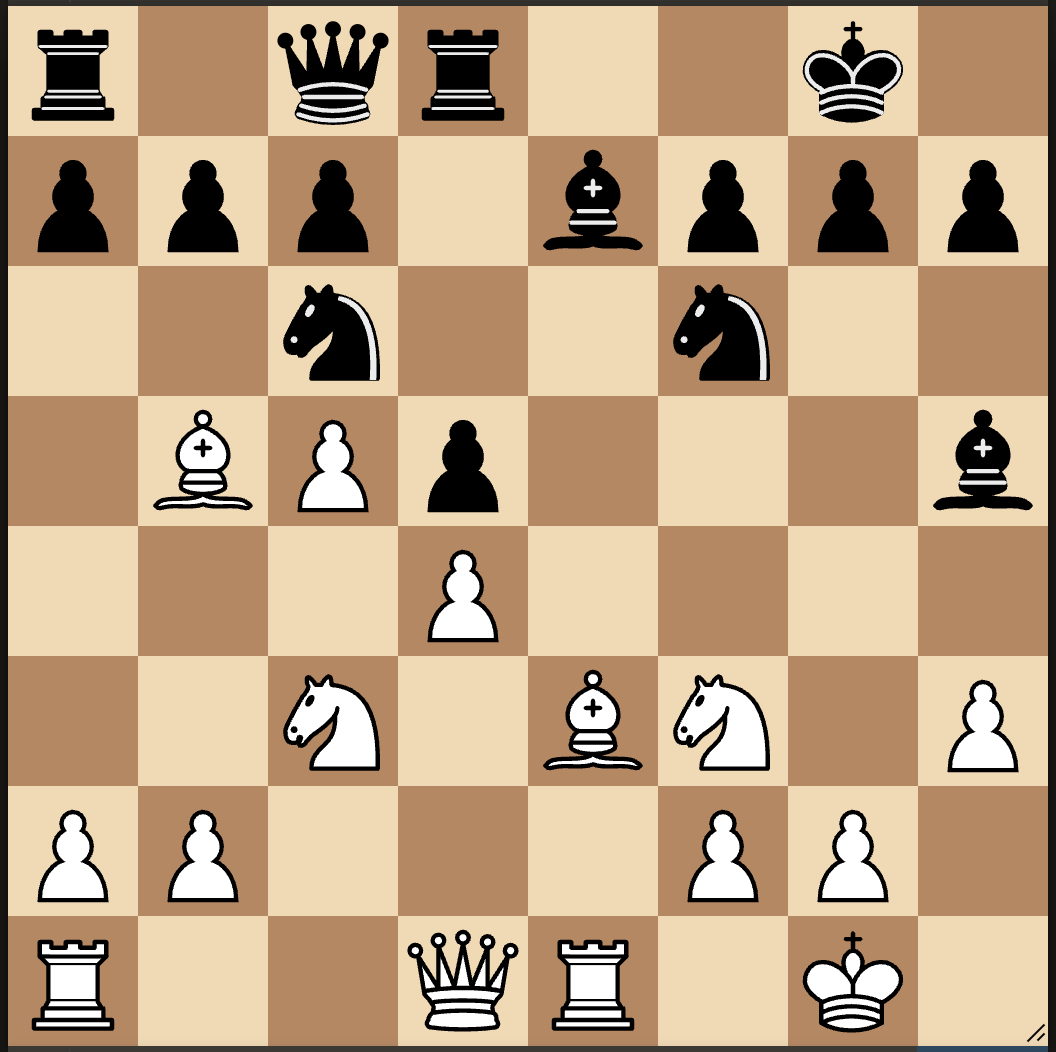
15. g4 Bryan finds this idea from the second try, though, now it’s less effective, as I have more counterplay resources with my rook on d8.
15... Nxg4 Here, I realized his idea, but I understood I still had to take on g4, since my alternatives were even worse. (15... Bg6? 16. Bxc6 bxc6 17. Ne5 Is simply awful for me, and I’m likely losing c6 pawn with no compensation.)
16. hxg4 Qxg4+17. Kh2 Bxc5! (17... Qxf3 18. Be2) 18. dxc5 d4! 19. Rg1?! Inaccuracy according to the engine, but in my opinion, a strong practical choice. (19. Bxc6 bxc6 (19... dxe3) 20. Bxd4 Qf4+ 21. Kg2 Rxd4 22. Nxd4)
19... Qxf3 (19... dxe3 20. Rxg4 Rxd1 21. Nxd1 Bxg4 22. Bxc6 bxc6 23. Ne5 Was not a great alternative for me.) 20. Qxf3 Bxf3 21. Bh6 g6?
Here, I was a bit lazy. I saw some dangerous lines for myself after dxc3 (in both Rxg7 and Bxg7), and I also, thought my position after g6 was better than it actually was, so I didn’t see as much of a point in calculating dxc3 super deeply. (21... dxc3! It turned out the principled move was best, but I vaguely remember that one line really concerned me. 22. Rxg7+ This scared me more (22. Bxg7 Here, black should be able to draw in several ways, but I have to be accurate here, also. 22... Rd5 Is probably a cleanest draw. (22... cxb2? This natural move, however, loses for me after 23. Bxb2+ Kf8 24. Bg7+ Ke7 25. Rae1+ Kd7 26. Rg3! Bh5 27. Bf6) (22... c2) (22... Ne7)) 22... Kh8 (22... Kf8? 23. Re1) 23. Rg3!? { I vaguely remember seeing this, and thought I’m concretely in danger. However, I have an incredibly strong concrete equalizing solution which I didn’t see. } (23. Rxf7 Ne5 (23... cxb2)) 23... Rg8!! { I definitely didn’t consider this. } (23... Be4?! 24. Bg7+ (24. Bxc6! { Is even stronger. } 24... bxc6 25. Bg5 h5 26. Bxd8 Rxd8 27. Rxc3) 24... Kg8 25. Bf6+ Bg6 26. Bxd8 cxb2 27. Rb1 Rxd8 28. Bxc6 bxc6 29. Rxb2 Would be quite unpleasant for me.) 24. Rxf3 Ne5!! { Another very accurate move. (24... Nd4? { Is tempting but losing for black after } 25. Rd3! Nxb5 26. a4! cxb2 27. Rb1 Rg6 28. Bf4) 25. Rg3 (25. Rh3 Ng4+) 25... Ng4+ 26. Rxg4 Rxg4 27. Be3 cxb2 28. Rb1 Rb4 With rough dynamic equality.)
22. Ne2 Rd5?! I thought I’ll have 4 pawns for the piece potentially, but I miscaclulated/misevaluated this position badly.
23. Kg3! Rxc5 24. Bxc6 Bxe2 25. Bxb7 Rb8 26. Bf3?? Blunder. Be4 was best. One small blemish on a great game by Bryan. (26. Be4 Rxb2 27. Rac1)
26... Rxb2?? Bad move, underestimating the danger, in particular of my king safety. (26... Bxf3 27. Kxf3 f6 I had to make sure I get my king out of the danger zone as soon as possible. (27... Rxb2 28. Rac1 Rf5+))
27. Rgc1 Rxc1 28. Rxc1 Bxf3
29. Kxf3! Bryan chose the accurate continuation. (29. Rxc7? Was a tempting false lead, but would narrowly fail due to 29... Bb7 (29... Rb8 30. Kxf3) 30. Rd7 f6 31. Rg7+ Kh8 32. Rf7 Bd5! The key defense for Black. 33. Rd7 Bxa2)
29... Rb7 (29... Rxa2 30. Rxc7 Ra3+ 31. Ke4 Rc3 This was the continuation me and Bryan discussed after the game, and we both saw it, but we both thought this is not a fortress, and indeed, white easily breaks through here. 32. Rxa7 Rc8 33. Kxd4 Re8 34. Kd5 Rb8 35. Kd6 Re8 36. Kd7 Rb8 37. Ke7 Rc8 38. Rd7 Ra8 39. Rd8+)
30. Re1 Rb8 31. Re7 Rc8 32. Ke4 c5 33. Rxa7 Rd8 34. Kd3 c4+ 35. Kxc4 d3 36. Kc3
Seeing that I cannot really stop his a-pawn, nor can I create counterplay, I threw the towel. A very nice fighting win by Bryan, which gave him momentum to follow up with a strong 3/4 finish and a very nice tournament for him. Wish him best of luck in his quest to GM title. 1-0
Round 7: Kaplan, Avi Harrison - Lenderman, Aleksandr
After a difficult start for me in the tournament, 2.5/6 with no wins, I was determined to try to win at least one game in this tournament. My opponent surprised me with 1)e4 which he hasn’t played in this tournament, and in general, hasn’t played frequently, so I decided to also play something fighting, and something I haven’t played in quite some time.
1. e4 c6!? The surprise worked, as my opponent, Avi Kaplan immediately sank into thought for a few minutes.
2. d4 d5 3. exd5 I was happy to see this, since I wasn’t theoretically as up-to-date with my Caro, and I was relieved not to be tested theoretically. 3… cxd5 4. Bd3 Nc6 5. c3 Qc7 Principled move, trying to prevent the Bf4 setup. 6. h3 g6 7. Nf3 Bf5 8. O-O Bxd3 9. Qxd3 Nf6 10. Na3 a6 11. Nc2 Bg7 (11... e6 12. Qe2) 12. Re1 The most natural here, but actually, the best plan for white in the Carlsbad is to try to get the knight to d3. This could’ve been achieved with. (12. Qe2! O-O 13. Nce1 And White can play for an advantage here.)
12... O-O 13. Ne5 e6 (13... Ne4!?)
14. Bf4 Qb6 15. b3 (15. Rab1 I think this was better, not creating any weaknesses.)
15... Rfd8 16. c4 dxc4 17. Nxc4 (17. bxc4 Nxd4 18. Qe3 Concretely wasn’t bad for him.) 17... Qa7 I was very happy to get this position. Now, I have pressure against d4 pawn, and concretely, he didn’t have anything special to compensate for the weakness.
18. Rad1 (18. Bc7 b5! 19. Bxd8 bxc4 20. Qxc4 Nxd8 Was what I saw. }) 18... b5 19. Ne5 Rac8 20. Nxc6 Rxc6 21. Nb4 Rcc8 22. Rc1 Qb7 23. Qf3 Qxf3 24. gxf3 Ra8 25. Nc6 Rd7 26. Nb8 Rd8 27. Nc6 Re8 I am statically better, so I don’t want a draw here. 28. Rc5?! (28. Bd6)
28... Bf8 29. Rc2 Nd5 30. Be5?! Ba3
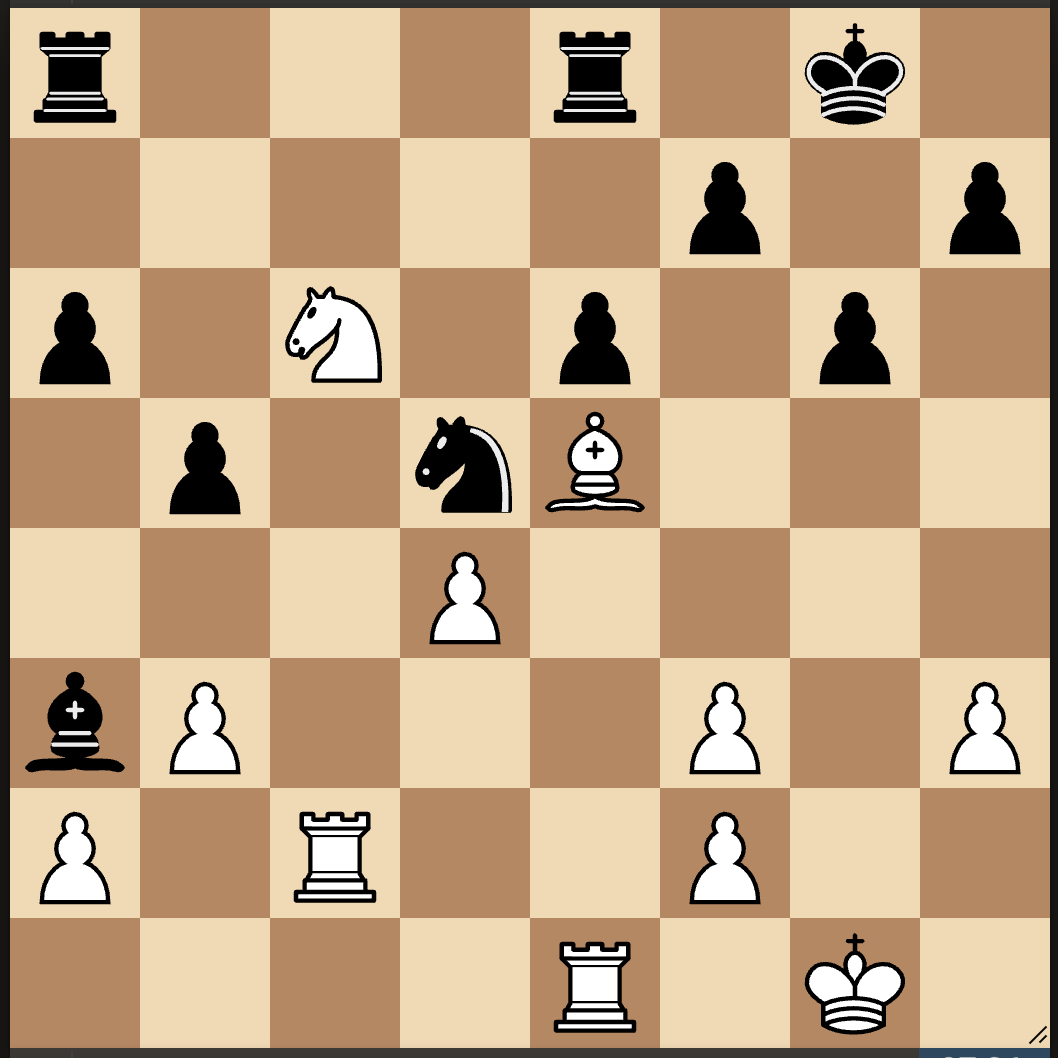
Stopping any counterplay with a4, and taking away rc1 from his rook. Now, he’s in big trouble, as bishop his knight on c6 and bishop on e5, while they look active, are actually not doing anything. His bishop is on an empty diagonal with no targets, and his knight in some lines is close to being trapped.
31. Kf1 f6 32. Bg3 Kf7 (32... a5) 33. Ke2? (33. Na5 Bb4 34. Nb7 Was the best chance for White.)
33... Rec8 34. Kd1 a5?!
35. h4 h5?! { Inaccuracy. Ke8 was best. (35... Ke8! 36. Nb8 Rxc2 37. Kxc2 e5 38. dxe5 f5 39. e6 (39. Nc6 Rc8) 39... f4)
36. Bh2 Bb4 I thought for a bit here, and decided this was simplest.
37. Nxb4 Nxb4 My knight completely dominantes his bishop, my rooks are more active, and my pawn structure is much better. Black is winning here, and the rest of the game went smoothly for me.
38. Rd2 Rc6 39. Ke2 a4 40. bxa4 Rxa4 41. Rb1 Nxa2 42. Kf1 Nc3 43. Rb3 b4 44. Rc2 Ke8 45. Bf4 Kd7 46. Rcb2 Nd5 47. Be3 Rc3 48. Ke2 Rxb3 49. Rxb3 Kc6 50. Bc1 Ra1 51. Kd2 Kb5 52. Rb2 Kc4 53. Rc2+ Nc3 54. f4 Kxd4 Here, he effectively resigned by graciously allowing me to mate him.
55. Bb2? Checkmate is now unavoidable. Rb2 was best. 55... Rd1# I was very happy and relieved to win at least a game, and it was a decent game for me positionally. 0-1
Round 9: Hebbar, Eshaan - Lenderman, Aleksandr
After saving a draw from a lost position with a very shaky round 8, I wanted to finish this tournament on a high with a win. I was playing a young player, who was also having a difficult tournament, similar to Avi, my round 7 opponent, so I wanted to try to play for a win with Black.
1. d4 e6 2. c4 b6 3. Nc3 Bb4 4. e4 Bb7 5. Qc2 Qh4 6. Bd3 This was expected, as Eshaan has already played like this before in 2024.
6... Bxc3+ This is the important move order. (6... f5? Is much more commonly played, even at master games, but is actually a serious inaccuracy due to 7. Nf3! Qg4 8. O-O Bxc3 9. h3! Qh5 (9... Qg6 10. exf5) 10. bxc3 Nf6 11. exf5 Bxf3 12. gxf3)
7. bxc3 f5 8. g3 (8. Nf3? Qg4 9. O-O fxe4 Doesn’t work for white anymore.)
8... Qh5 9. f3 (9. Ne2? White has to be accurate in this line. For example, it is already possible to lose quickly with } 9... Qf3) 9... Ne7
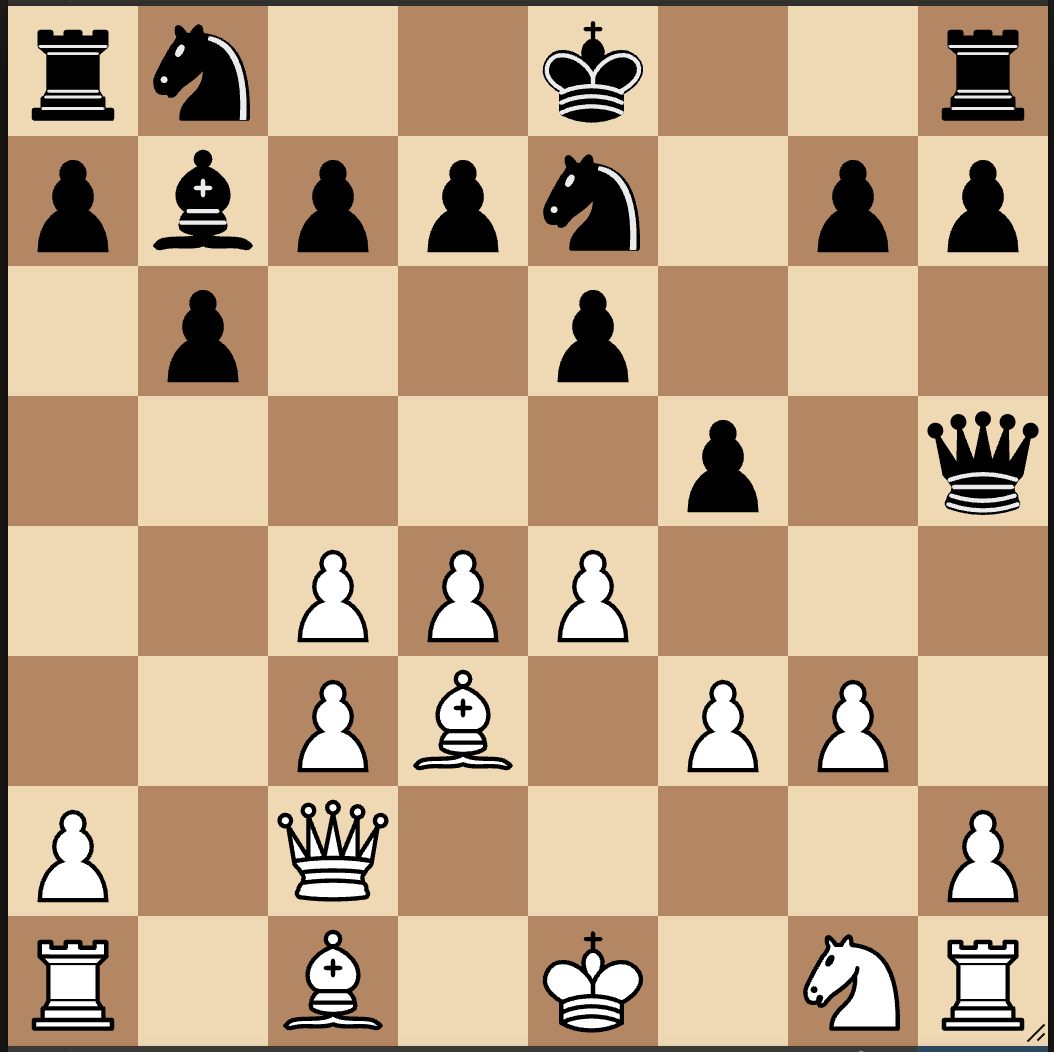
This is a line I have already played before, but it’s not the best line for Black, which I’m not likely to repeat. I didn’t even remember I played a game with Black here, until I checked the database after I finished my game against Eshaan. (9... fxe4 10. fxe4 d6 Is likely the best for for Black to play. Engine approves it, and in the small sample size in the database, black has scored 3/3 from here. 11. Ne2 e5 12. O-O Nh6 (12... Nd7) 13. Kg2 (13. c5) 13... Nd7 14. h3 Qg6 15. g4 Nf7 16. Ng3 h5 $15 { 0-1 (43) Nakada,A (2324)-Cordova,E (2549) Chicago 2022 And black went on to win in)
10. Bf4?! Inaccuracy. Ne2 was best. I was happy to see this move, since it’s not the best principled, and I have easy play after this. (10. Ne2! { This is the best move, and the principled move, which I was expecting, and I wasn’t totally sure what I’d do here. 10... Qxf3 11. Rf1 Here, I wasn’t sure where I should move the queen, but I’m under pressure in all the lines. 11... Qh5 (11... Qg4 12. exf5 Nbc6 13. Nf4 O-O-O 14. fxe6 dxe6 15. Be2 Qf5 16. Qxf5 exf5 17. Ne6 { 0-1 (57) Chabanon,J (2485)-Edouard,R (2680) Nimes 2014 }) 12. exf5 exf5 13. Bf4) (10. Qg2 { This was also not very principled, and was played against me in 2017, where I also won a comfortable game. 10... fxe4 11. Bxe4 Bxe4 12. fxe4 O-O 13. Ne2 Nbc6 0-1 (34) Ouellet,M (2084)-Lenderman,A (2591) Montreal 2017 }) (10. exf5 Nxf5 11. Ne2 Is also interesting for White. } (11. g4 Qh4+))
10... fxe4 11. fxe4 (11. Bxe4 Here, I was planning to sac a pawn. 11... Bxe4 12. Qxe4 Nbc6 13. Bxc7 Rc8)
11... d6 12. Ne2 (12. Qe2 Relatively best for white was to try to trade queens since my king is now safer in the long run than his king.
12... Qxe2+ (12... Qa5?! 13. Bd2) 13. Kxe2 Nd7) 12... O-O (12... e5 13. g4 I was a bit afraid of g4 here, but it turns out I’m much better here anyway. 13... Qh3 14. dxe5 Ng6 15. exd6 Nxf4 16. Nxf4 Qe3+ 17. Ne2)
13. O-O-O e5 14. Bd2 Nbc6 15. h4?! (15. c5 { Here, it was already tough for him to play, but he needed to sac a pawn to close up the queenside, somehow and disturb my harmony a bit. } 15... dxc5 16. dxc5 (16. d5 Na5 17. c4) 16... Bc8)
15... Bc8! From here on, I had total control of the game, and I made sure to never allow counterplay. Bc8 had a few ideas. One was to get my bishop to g4, from b7 where it wasn’t doing as much, and the other was to stop any potential counterplay for white with g4.
16. Rde1 Bg4 17. Bg5 (17. Nf4 exf4 18. gxf4 Na5) 17…h6 18. Bxe7 Nxe7 19. Ref1 Nc6 20. Qd2 Na5 21. Qe3?! Rf7 22. d5?! (22. Rxf7 Qxf7)
22… Raf8 23. Rxf7 Qxf7 24. Re1 Qd7 Black is totally dominating here. His king is chronically weak, and all my pieces are better than his. (24... Qf2 25. Qxf2 Rxf2)
25. Qd2 Qa4 26. Qc2 Qa3+ 27. Kb1 (27. Qb2 Qc5 ) 27…Rf2 28. Qd1 Qc5 29. Rf1 Rxf1 30. Qxf1 Nxc4 31. Ka1?! Nd2 32. Qg1 (32. Qd1 Qe3 (32... Bxe2 33. Qxd2 Qg1+ 34. Kb2 Bg4) 33. Bb5 Bxe2) 32... Bxe2 Simplifying into an easily won endgame.
33. Qxc5 dxc5 34. Bxe2 Nxe4 35. Kb2 Nxg3 36. Bg4 Kf8 37. Kc2 Ne4 I was happy to finish a difficult tournament with two relatively nice victories towards the end of the tournament. 0-1
GM Aleksandr Lenderman, Marshall Spectator Contributor
Across the Board, with Robert Thorstad
Q: When did you start playing chess and how did you learn?
I played a bit growing up, mostly casually, and entered exactly two rated tournaments. Then I put chess down for about fifteen years. I returned to chess a little under two years ago.
Q: How long have you been a member of the club?
About a year and a half. Having a strong, active chess club was a must for me when I decided to get back into the game.

Q: What’s your favorite opening trap?
I generally like quiet openings—but even they have traps. Believe it or not, I’ve won several games straight out of the opening in the Exchange Slav, including one like this from last year at the Marshall:
d4 d5 2. c4 c6 3. cxd5 cxd5 4. Bf4 Nf6 5. Nc3 Bf5 6. Nf3 e6 7. Qb3 b6?? 8. Nb5. Now Black must lose material, since 8... Na6 is met by 9. Qa4.
Q: Any great game you’ve played at the Marshall you’d like to share?
Some games begin with opening theory; others begin with a die roll. My 2000-rated opponent rolled a die to choose his first move—and it landed on 1…f6. This was the game:
1. d4 f6 2. e4 d6 3. Bc4 e6 4. Nc3 Bd7 5. Be3 Nc6 6. Nf3 a6 7. O-O Qe7 8.d5 Nd8 9. dxe6 Bxe6 10. Nd5 Bxd5 11. exd5 Nf7 12. Re1 O-O-O 13. Qd4 Ne5 14. Bd3 c5 15. dxc6 Nxc6 16. Qc3 Qc7 17. b4 Ne5
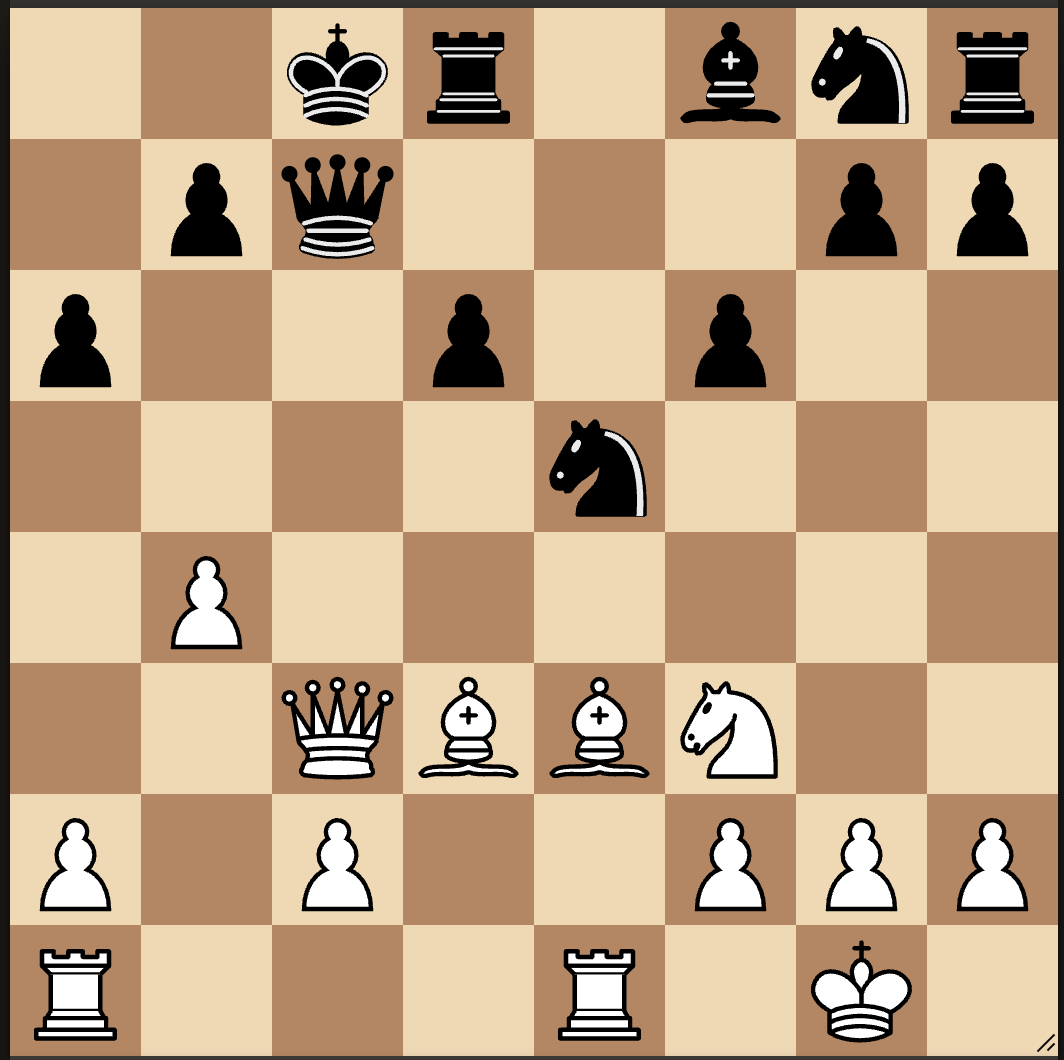
18. Bf5+ Kb8 19. Ba7+ 1-0
Q: What about yourself would you like other members to know, that we may not know! Any surprising facts?
Before returning to chess, I was a very active competitive bridge player.
Robert Thorstad, Marshall Chess Club Member
Chess Toons

En Passant
Every January, Tata Steel sponsors one of the northern hemisphere’s biggest highlights of the classical chess calendar in Wijk aan Zee in the Netherlands. This year, Tata Steel looked to take over the entire month and the globe, hosting its seventh edition of Tata Steel Chess India Rapid & Blitz from January 6 through 11 at Dhono Dhanyo Auditorium in Kolkata, India. Americans Yip, and So won the event.
There were three decisive games in the first round of the Tata Steel Masters, there could even have been a couple more. The first story was that the start to the tournament was delayed, climate protesters targeting Tata Steel drew attention to their heavy use of coal and the environmental damage it causes.
GM Hans Niemann climbed over a fence to get in as Extinction Rebellion disrupted the iconic Tata Steel Chess Tournament.
British Chess Grandmaster Jonathan Hawkins has passed away at the far too young age of 42… He was British Champion in 2014 shared with David Howell and 2015 where he was the sole winner. In recent years Hawkins was a successful chess coach. His 2012 book "Amateur to IM" is rightly highly regarded.
Problems, Problems, curated by Alexander George
Yuri Averbakh, 1982
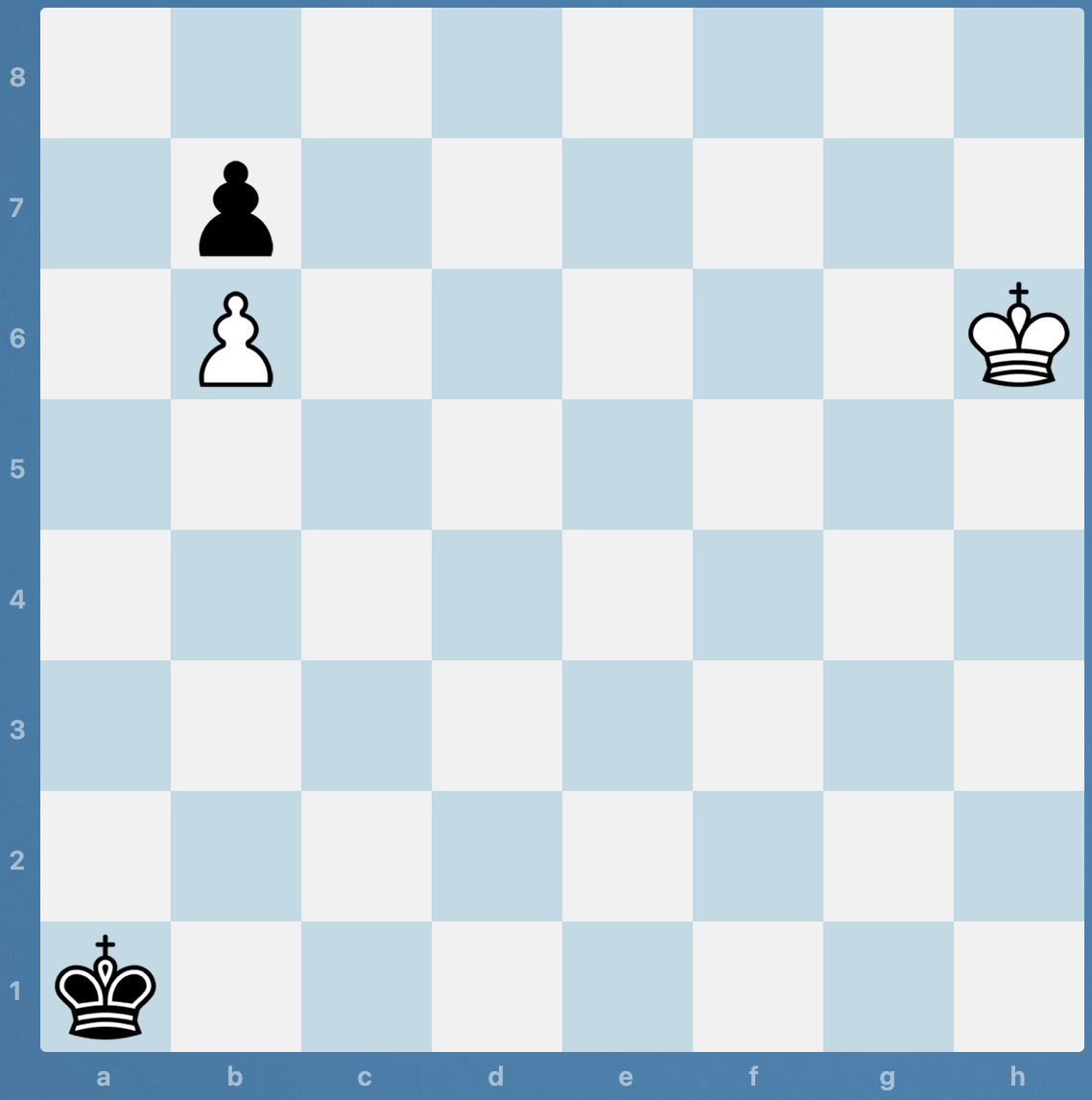
White to move and draw.
Another great player who was also a very strong endgame composer. For interesting photos of Averbakh, see here.
---
Solution to last issue's problem (Andersson, Timman, and Torre 1977):
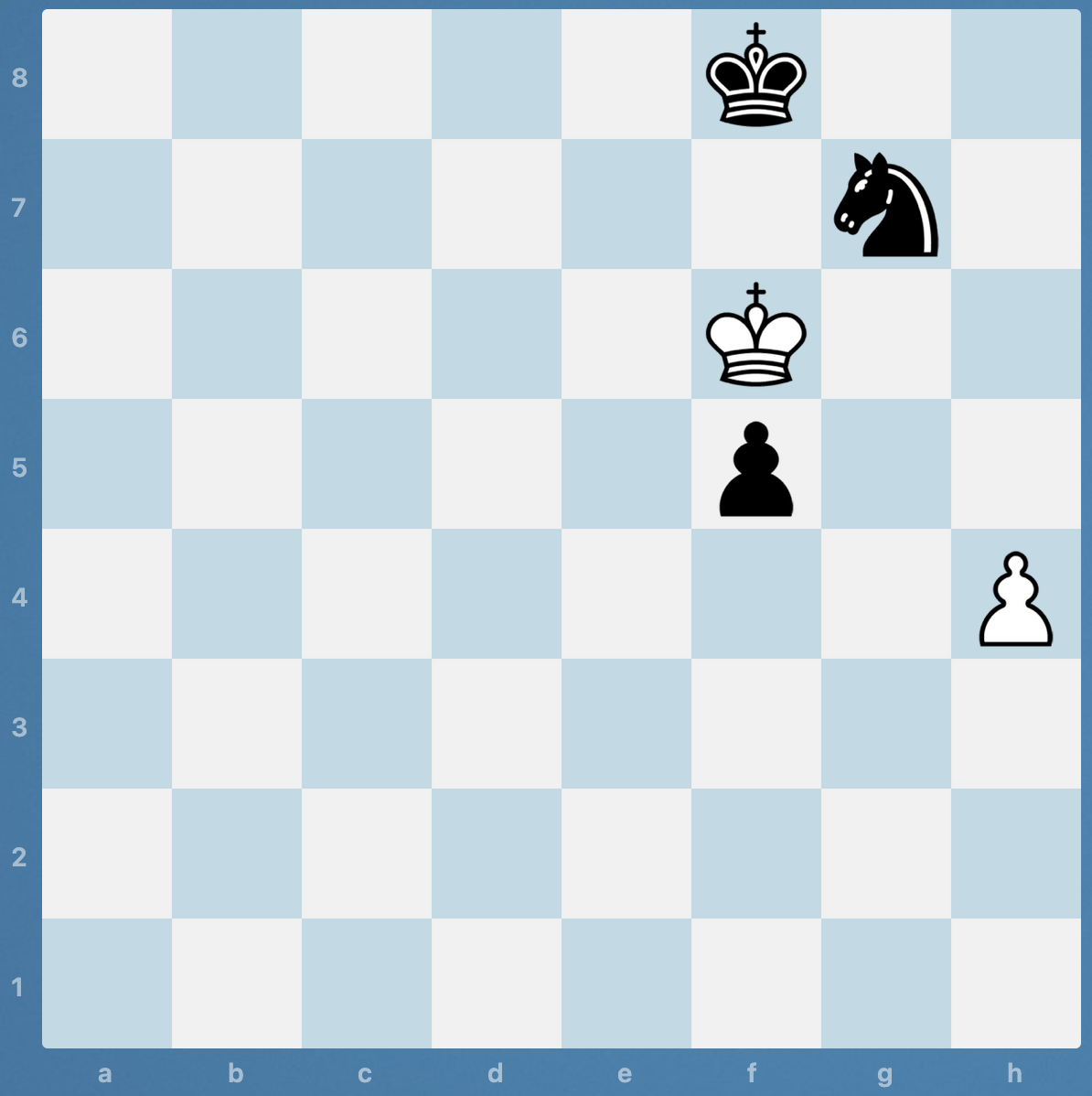
White to move and draw.
Kg5 Kf7 2.h5 Ke6 3.h6 Ne8 4.h7 Nd6 5.h8=N =
---
Alexander George
Editor’s Note
As always, if you have any feedback, comments, or would like to submit an article please contact us directly at td@marshallchessclub.org.
Enjoy, and thanks for reading!
The Marshall Chess Club
23 West Tenth Street New York, NY 10011
212.477.3716

Thanks for reading The Marshall Spectator! Subscribe for free to receive new posts and support the club.