

The Marshall Spectator
Aug 5, 2026


In This Issue:
From The Skittles Room
Endgame Corner, by IM Silas Esben Lund
14th NY Intl. Game Analyzed, by Miles Lee
Chess Toons
En Passant
Problems, Problems, curated by Alexander George
Editor’s Note

Welcome back, fellow chess players, to this edition of the Marshall Chess Club’s fortnightly bulletin, The Marshall Spectator.
We were saddened to learn of the passing of FM Bill Goichberg this last weekend. As the founder of Continental Chess Association and former President and Board Member of USChess, he dedicated his life to the royal game. It is difficult to overstate the enormity of his contributions to the growth of popularity in tournament chess. Starting as an organizer before the 1972 Fischer-inspired chess boom, he was instrumental in bringing about the growth, structure, and rules of large, open chess tournaments in the United States. In our next issue we will dive more deeply into his legacy, but for now, the editorial staff of The Marshall Spectator extends its most heartfelt condolences to those who were close to him.
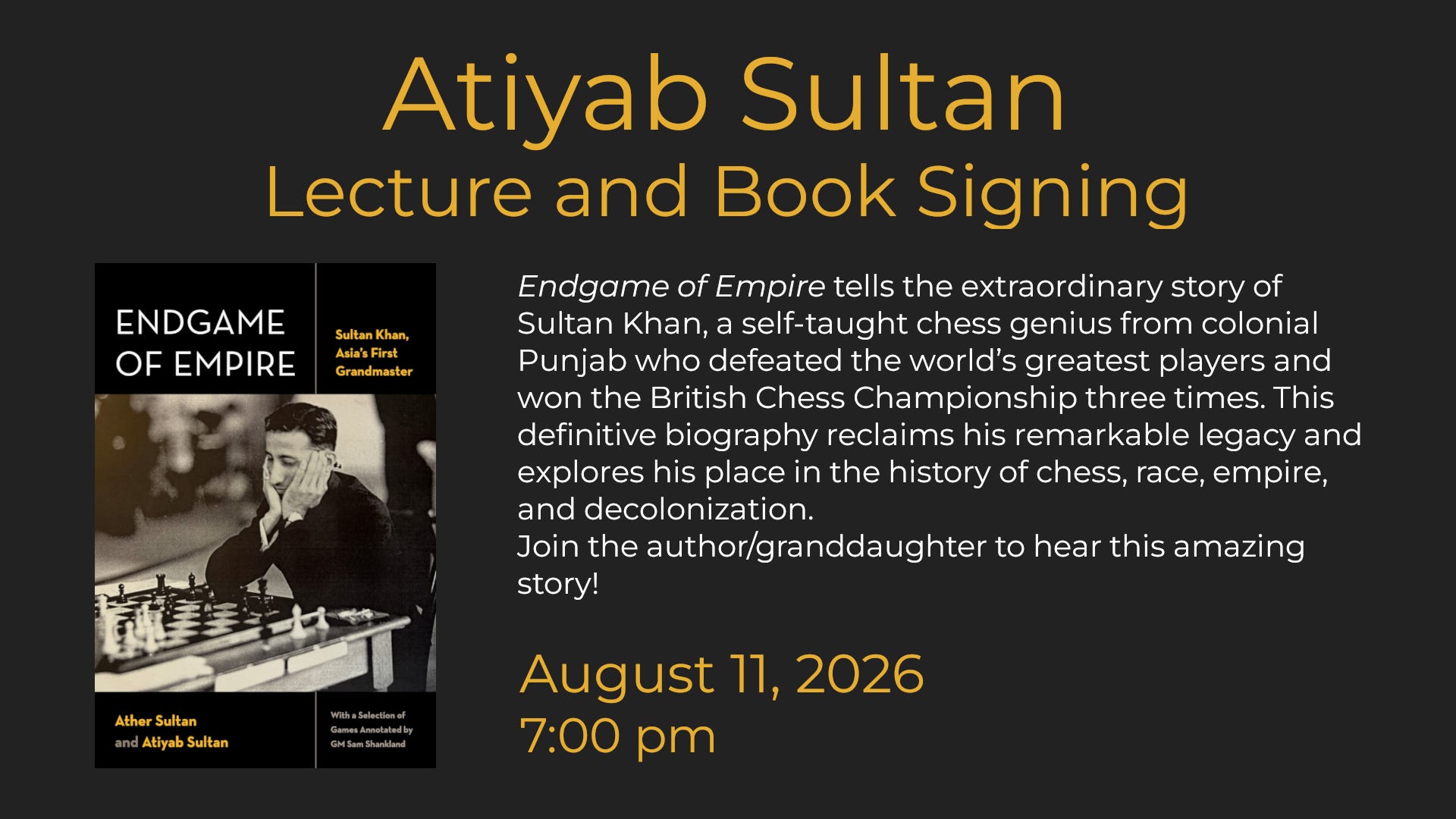
Looking ahead on the calendar, we’re looking forward to welcoming Atiyab Sultan, the grand daughter of the legendary player Sultan Khan, for a discussion and lecture about her recent book entitled Endgame Of Empire. Copies of the book will be available for sale and the author will be present to sign copies at the conclusion of the talk.
Looking further ahead on the calendar, we’re thrilled to announce our annual End-of-Summer BBQ with GM (grill master) Cameron Hull. GM Cam will be grilling up some of the finest hot dogs and burgers in the West Village on September 1st. If you intend to attend, please be sure to register in advance.

In other summer news, our Summer Camps are going strong with GM Djurabek Khamrakulov onsite all summer long, as well as an additional GM for most weeks this summer! This means that the top two groups will receive GM instruction. If you haven’t registered yet, it’s not too late.
August 3, 4, 5, 6, 7 (GM Elshan Moradiabadi)
August 10, 11, 12, 13, 14 (GM Elshan Moradiabadi)
August 17, 18, 19, 20, 21
August 24, 25, 26, 27, 28
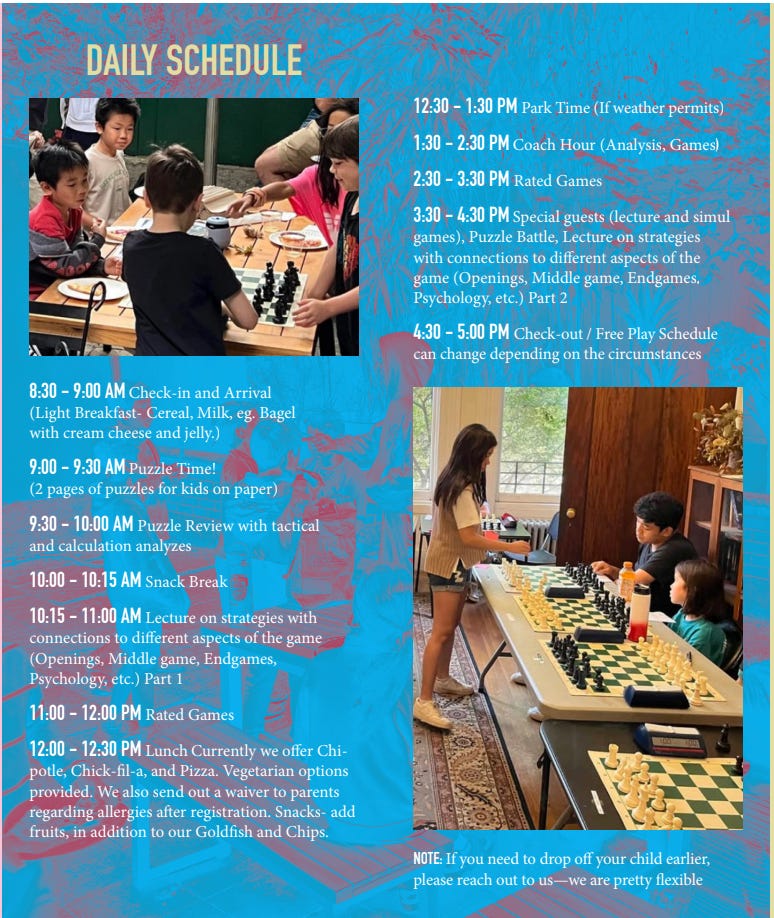
For all questions related to camp, please reach out directly to Kevin at kevinf@marshallchessclub.org
Looking back over the last two weeks, we have had a plethora of events for our members to participate in.
The Morning Under 1600 on July 26 had 30 players registered and was won by Atticus Chen, Matthew Serrell, and Ben Lomot who scored 3 out of 3 to win $175 each.
The Rated Beginner Open on July 26 had 34 players registered and was won by the following players who scored a perfect 3 out of 3 to win $106.25 each: Brooks Harris, Joe Danzi, Constantine Tam, and Max Alejandro Oro-Hahn.
The Monthly Under 1800 on July 26 had 25 players registered and was won by Sebastian Goodrich who scored 4.5 out of 5 to win the $417 first-place prize. James Rao won the second-place prize of $167, while William Chan and Ryan Isaiah Saavedra won $52.50 each for their 3.5 out of 5 score. Avrora Okonova and Elliot Zemman won class prizes of $125 each, for their 3.5 out of 5 and 2 out of 5 performances respectively.
The Monthly Under 2400 on July 26 had 69 players registered and was won by Paris Prestia who scored a near perfect 4.5 out of 5 to win the $1,117 first-placed prize. The following players won $265 each for their 4 out of 5 score: Jason Jiang, Kevin Zhang, WCM Wan Qin Li, and Adrian Harrison Sommerstein. Marissa Lu won a class prize of $335 for her 3 out of 5 score.
The Morning Masters on July 25 had 10 players registered and was won by Gordon S Arai Lee who scored a perfect 3 out of 3 to win the $80 first-placed prize, while Evan Kauffmann and Daniel Yassky won $30 each for their 2 out of 3 performance.
The Under 2000 Morning Action on July 25 was sold out with an even 40 players registered and was won by Jayden Feng, Viaan Suthar, and Zane M Winston who scored a perfect 3 out of 3 to win $163.33 each. The following players scored 1 out of 3 to share in the remaining prize funds winning $26.25 each for their 1 out of 3 performance: Michael Szwarc, Benjamin Abramowitz, Henry Chenghan Gu, Walter Cimafranca, Nathan Zhang, Vasu P Varun, Juan Corredor, and Ross Abramowitz.
The Thursday Action on July 23 had 46 players registered and was won by Daniel Austin Wang who scored a perfect 4 out of 4 to win the $242 first-placed prize, while FM Leif Pressman, Oliver Chernin and Roman P Malyshev scored 3.5 out of 4 to win $134.33 each. Najee-Ana Carmel Walthrust and Jeremy Graham scored 3 out of 4 to share in a class prize, winning $60.50 each and the Upset prize went to Corbin William Wood.
The Marshall Masters on July 21 had 32 players registered and was won by Leandro Nicholas Ulloa Centeno and Tim Shvarts who scored 3.5 out of 4 to win $360.50 each, while FM Aditeya Das, FM Leif Pressman, NM Nathaniel Mullodzhanov, and IM Jay Richard Bonin scored 3 out of 4 to win $33.50 each. The following players shared in the remaining prize funds winning $35.67 each for their 2.5 out of 4 performance: Michael Glick, Bohan Wang, and Akhil Velampalli.
The Monday Under 1800 that concluded on July 20 had 32 players registered and was won by Gary Chan who scored 5 out of 6 to win the $214 first-place prize, while Sean Pagaduan and Kalil Shi scored 4.5 out of 6 to win $133.50 each. Kevin Liam Collins and Will Rose shared in a class prize, winning $80.50 for their 4 out of 6 score.
The FIDE Monday that concluded on July 20 had 37 players registered and was won by Daniel Frank Johnston who scored 5 out of 6 to win $370, while IM Jay Richard Bonin and Sasha Arthur Kagle scored 4.5 out of 6 to win $185.50 each. The following players shared in the remaining prize funds, winning $46.50 each for their 3 out of 6 score: Stephen Hrop, Andrew Colwell, Takki Tanaka, and Liam H Kim.
The 14th NY International Super Swiss Championship that concluded on July 19 had 70 players registered including 13 Grandmasters, 12 International Masters, and 18 FIDE Masters. It was won by GM David Brodsky and GM Safal Bora, who scored an impressive 7 out of 9 to win $3,000 each, while GM Karthik Venkataraman, IM Oleksii Bilych, and GM Oliver Barbosa won $1016.67 each for their 6.5 out of 9 performance. FM Linxi Zhu and CM Alexander Sukhiashvili won a class prize of $550 each for their plus scores in the event as well.
We look forward to seeing you at the club soon!
Endgame Corner, by IM Silas Esben Lund
For this week’s column, I will analyse two games that involve exchange sacrifices. Incidentally on the same square! And in both cases, White will be left with an anchored bishop on c4. An anchored bishop is a bishop-pawn formation where the two pieces defend each other: the pawn defends the bishop, and the bishop the pawn. It’s a very strong formation with strategic ramifications for the whole position.
Let’s analyse the first game: Game no. 1 Enevoldsen, Jens vs. Fred, Aatos
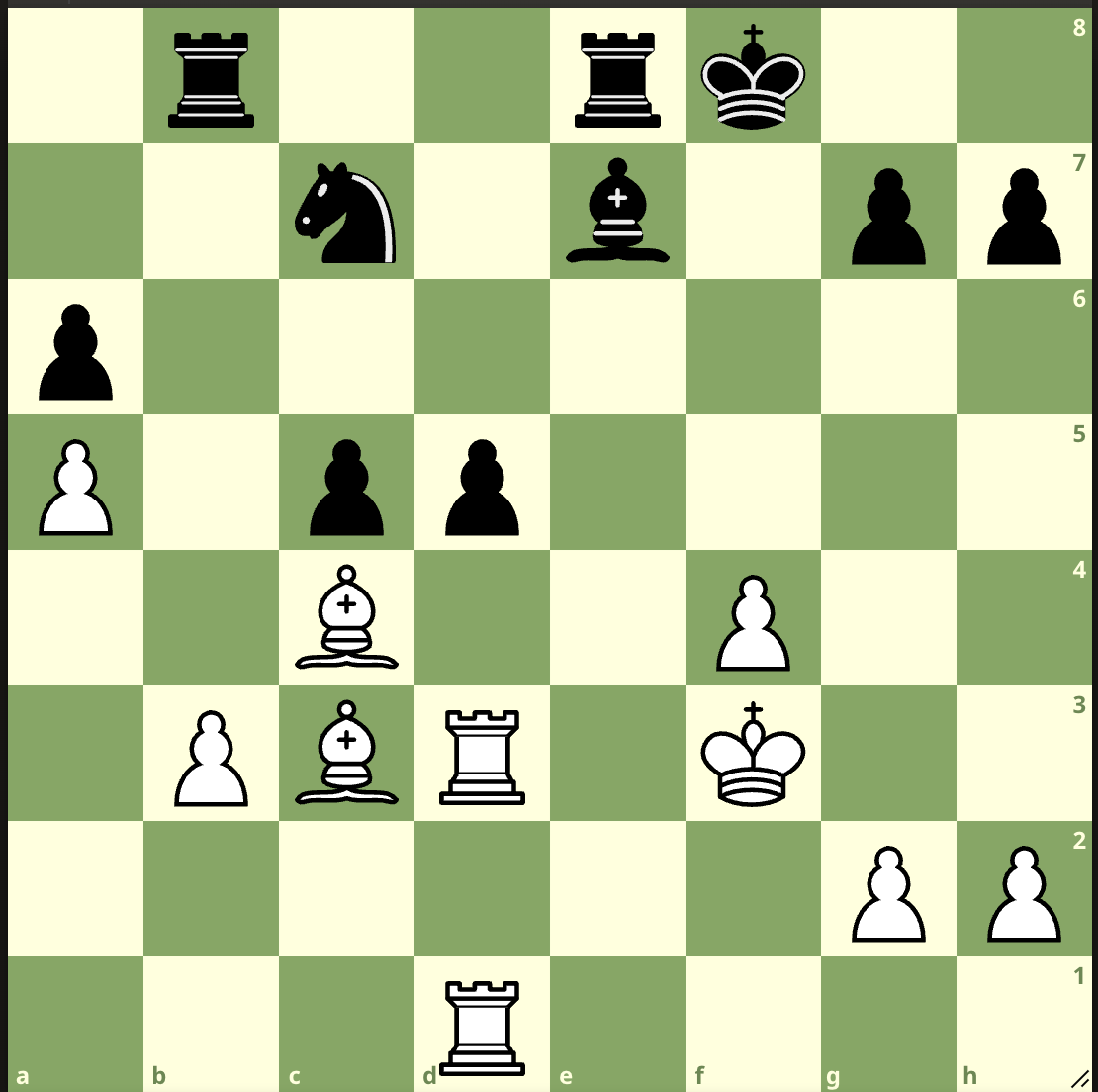
White to move.
You can play through the games with analysis here.
30. Rxd5 (Black’s idea was 30. Bxd5 Nxd5 31. Rxd5 Rxb3 with an active position.)
30... Nxd5 31. Rxd5 White has pawn and light-squared bishop for a rook, but the anchored bishop on c4 is a monster: It defends b3, attacks a6, and also helps control squares on the long diagonal a2-g8. The anchored bishop makes it difficult for Black to activate his rooks - mainly because it closes two files, but also because it controls many squares from its central outpost. Thus, this anchored bishop is a cornerstone of White’s position that defends his weaknesses and allows for the other pieces to flourish. In fact, the anchored bishop on c4 never moved again for the remainder of the game!
31…Bf6 A logical move: Black wishes to exchange extra pieces on the board and win the simplified endgame as he is up an exchange.
32. Bxf6 gxf6 33. Rd6 (More precise is 33. Rd7 Re7 34. Rd6 Kg7 35. Rxa6 Black can no longer play Ra8 to trade off a pair of rooks.)
33... Kg7
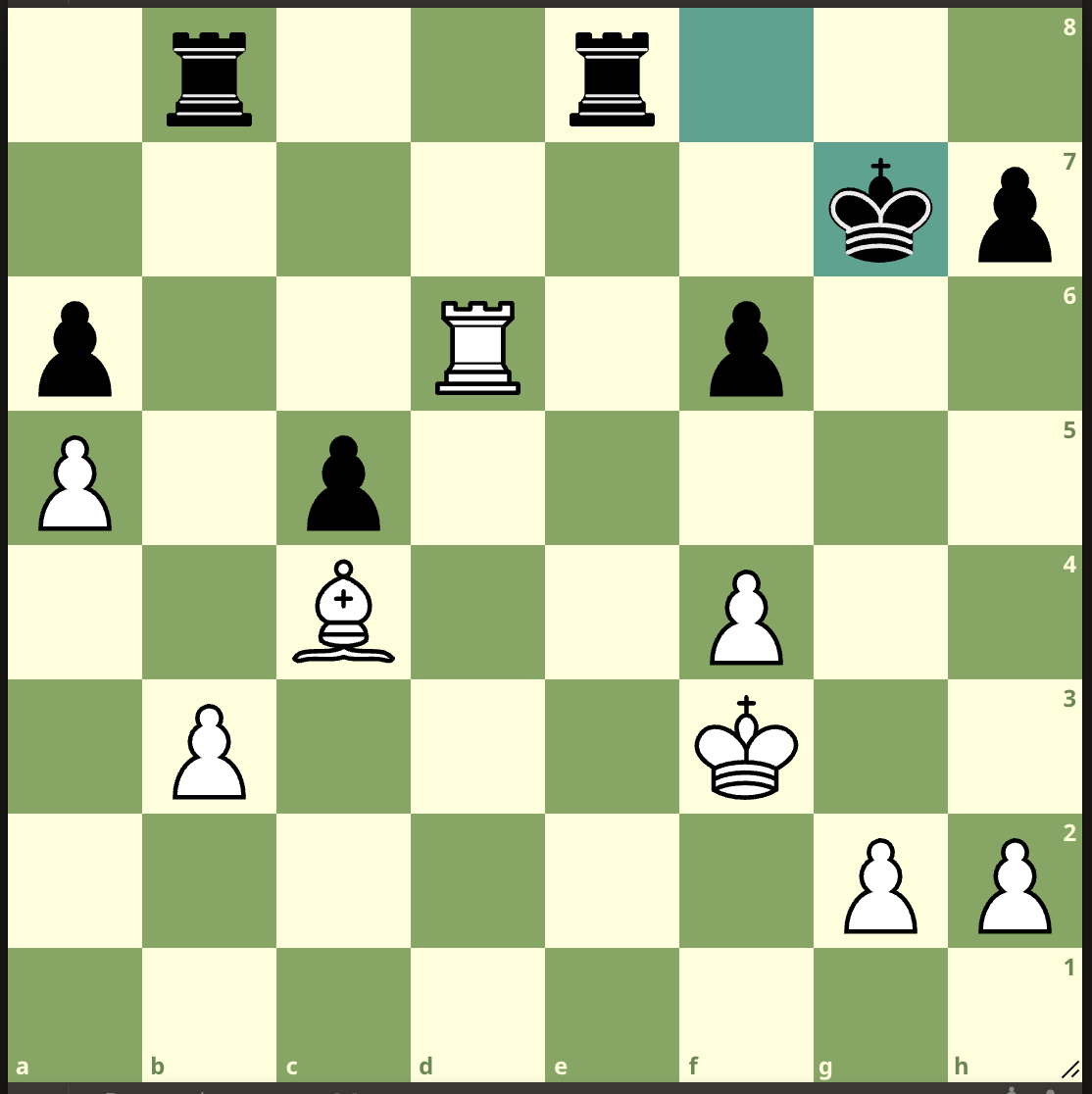
34. g4 (White was probably unsure if the exchange of rooks after 34. Rxa6 Ra8 35. Rxa8 (the pawn on a5 is hanging) Rxa8 36. a6 leads to a won position. The position IS winning, but this is not easy to realize for a human player. The moment where White trades off his extra rook and thereby trades down to the pure endgame an exchange down, must be considered with care. As long as White possesses the extra rook, he can still control the dark squares, and the pieces work well together.)
34... Re7 (Black could try 34... Ra8 to make it harder for White to grab the a6-pawn.)
35. Rxa6 Rc7 (Black can try to activate his rooks with 35... Rbe8 36. Rd6 Re3+ However, White easily escapes the checks: 37. Kg2 Rc3 38. a6 Rc2+ 39. Kf3 Rc3+ 40. Rd3)
36. Ke4 Rd8 37. Kf5 Rf8 38. Rd6 Re7 39. a6
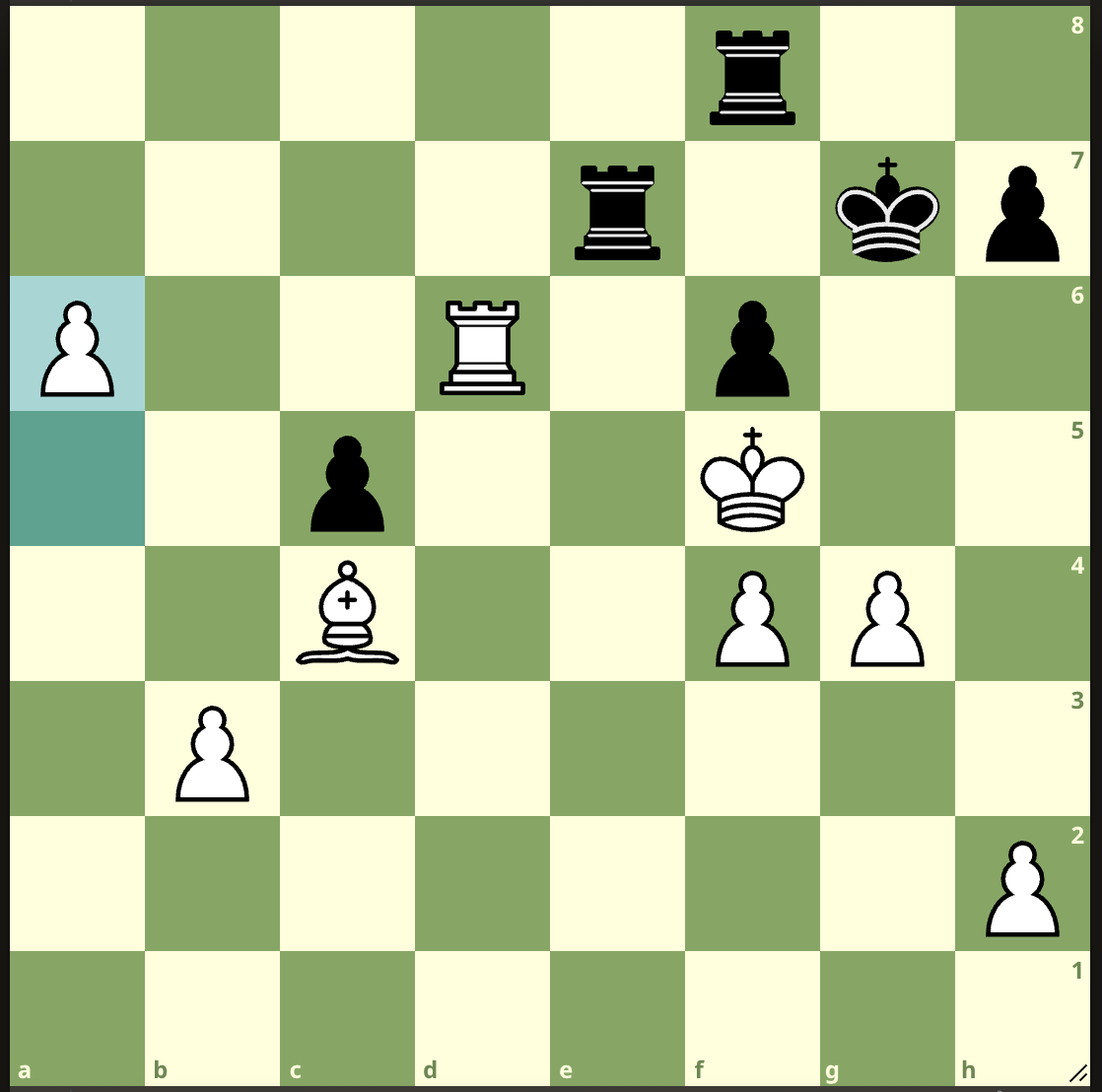
White completely dominates the position. 39…h5 40. h3 hxg4 41. hxg4 Rc7 42. Rb6 Rcc8 43. Rb7+ Kh6 44. Rd7 Ra8 (44... Rfe8 leads to mate: 45. g5+ fxg5 46. fxg5+ Kh5 47. Rh7#) 45. Rc7 Rac8 46. Rxc8 Rxc8 47. Kxf6 1-0
Game no. 2: Stahlberg, Gideon vs. Erdelyi, Stefan
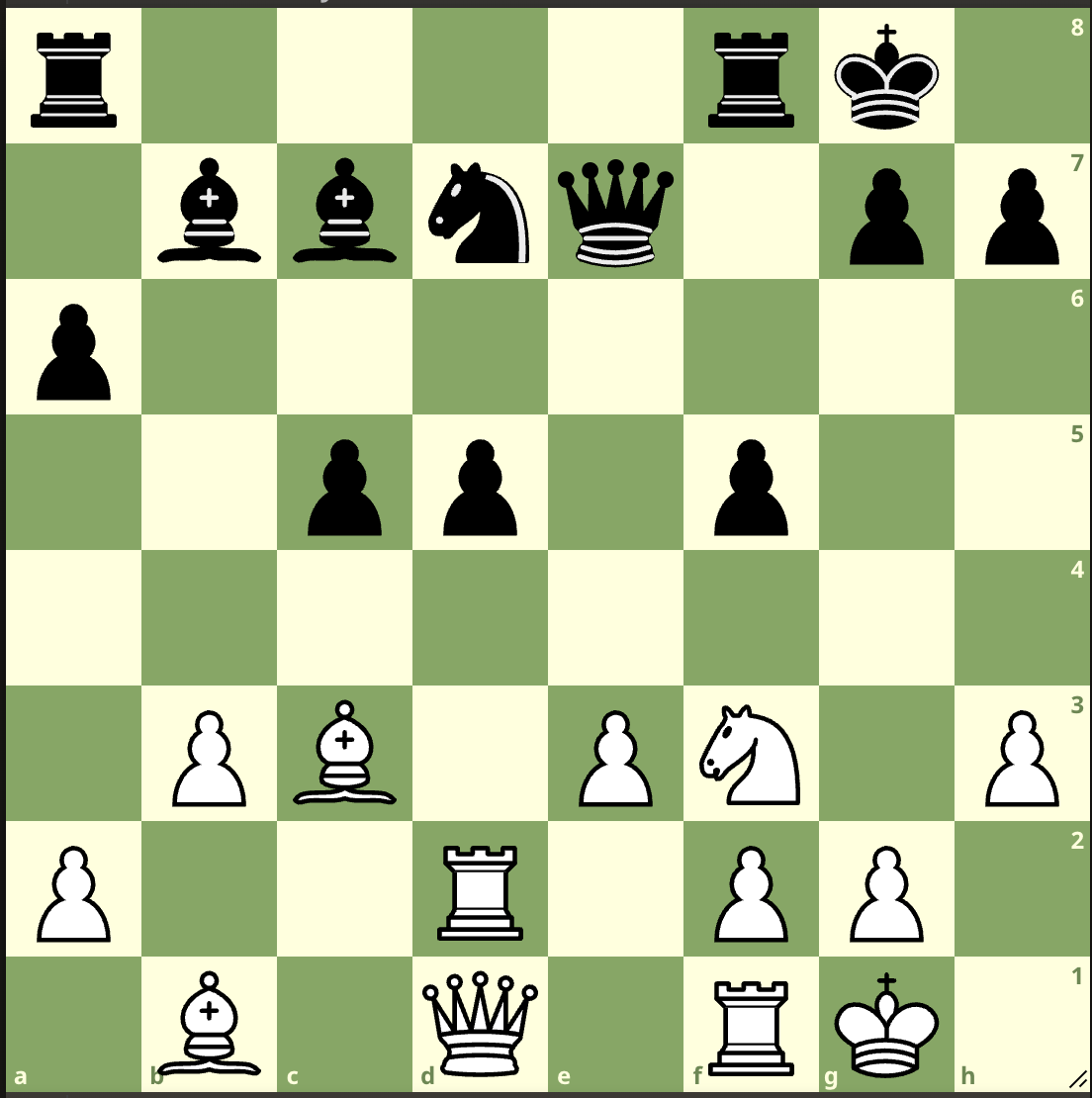
White to move.
19. Rxd5 A strong positional exchange sacrifice. 19…Bxd5 20. Qxd5+ Qf7 (20... Kh8 21. Bxf5 gives White 2 pawns for the exchange.)
21. Qxf7+ Not the only good move, but Stahlberg has seen that he wins another pawn in the coming endgame, while having the initiative. (21. Qc6 also makes sense as the black pieces are loose, and the white queen is active.)
21... Rxf7 (21... Kxf7 22. Bxf5 {is similar to the game.)
22. Ng5 Re7 (22... Rff8 23. Ne6 with a double attack against f8 and c7. The f5-pawn will drop again.)
23. Bxf5 Nf8
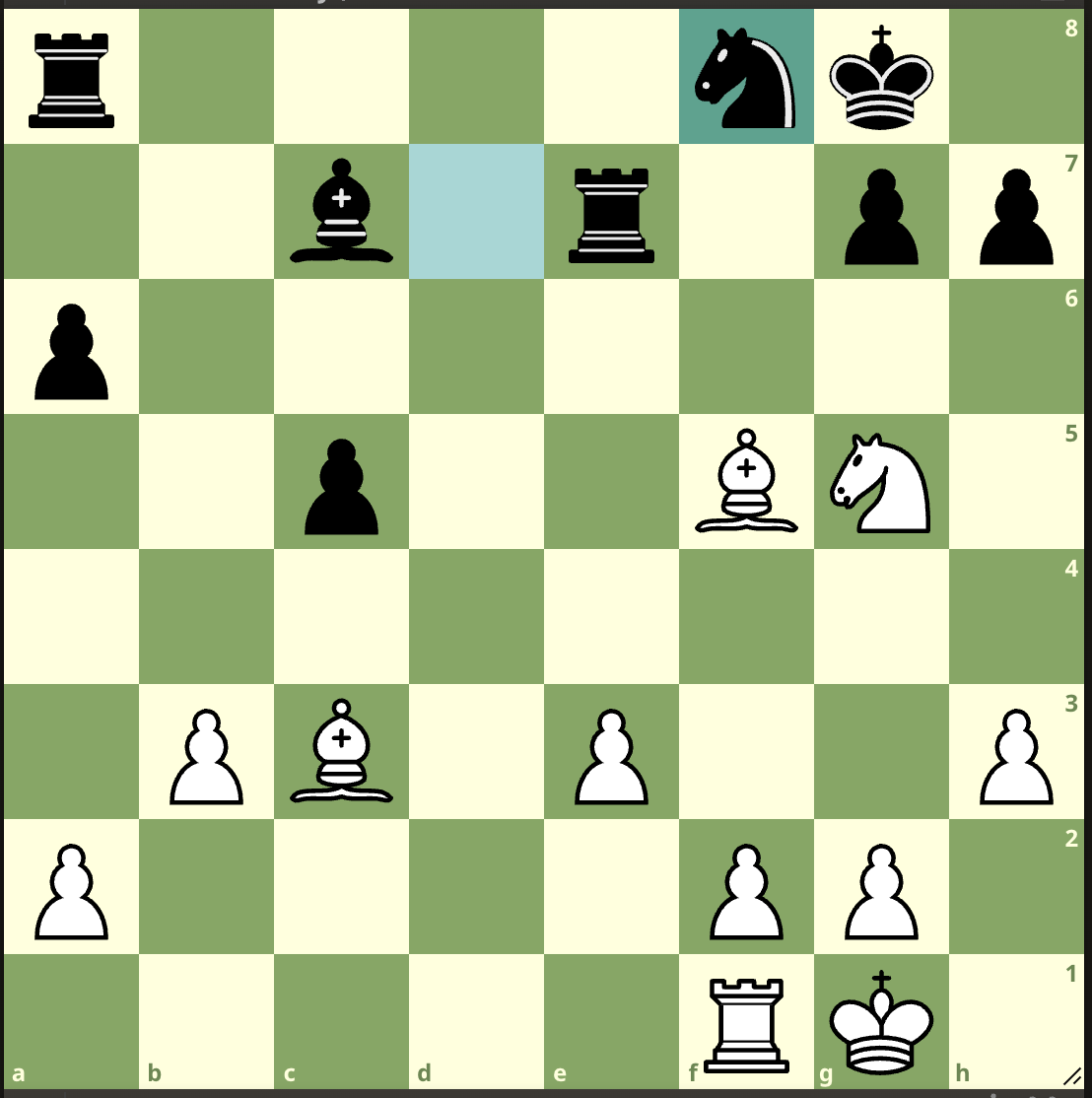
To fully understand this position, and be willing to enter it an exchange down, it is useful to ask these two questions: 1) Is my opponent able to trade off the additional pieces on the board? 2) Where are the weaknesses in the position? Find them for yourself and your opponent. As we shall see, it is hard for Black to trade down pieces (1) as White has the initiative and a solid position. As for (2), White is playing virtually without weaknesses as the a2-pawn can move, as can his kingside majority (the e-pawn is a passed pawn after all). Also, White is about to create an anchored bishop on c4 that can defend his entire queenside. In Black’s position, on the other hand, it is easy to eye weaknesses on a6 and c5. In short, White is able to play from this position without having to worry too much about his weaknesses, instead he can focus on how to attack Black’s!
24. Bd3 h6 25. Bc4+ Again the anchored bishop on c4, like in the previous game example! 25…Kh8 26. Nf3 Ng6 27. Rd1
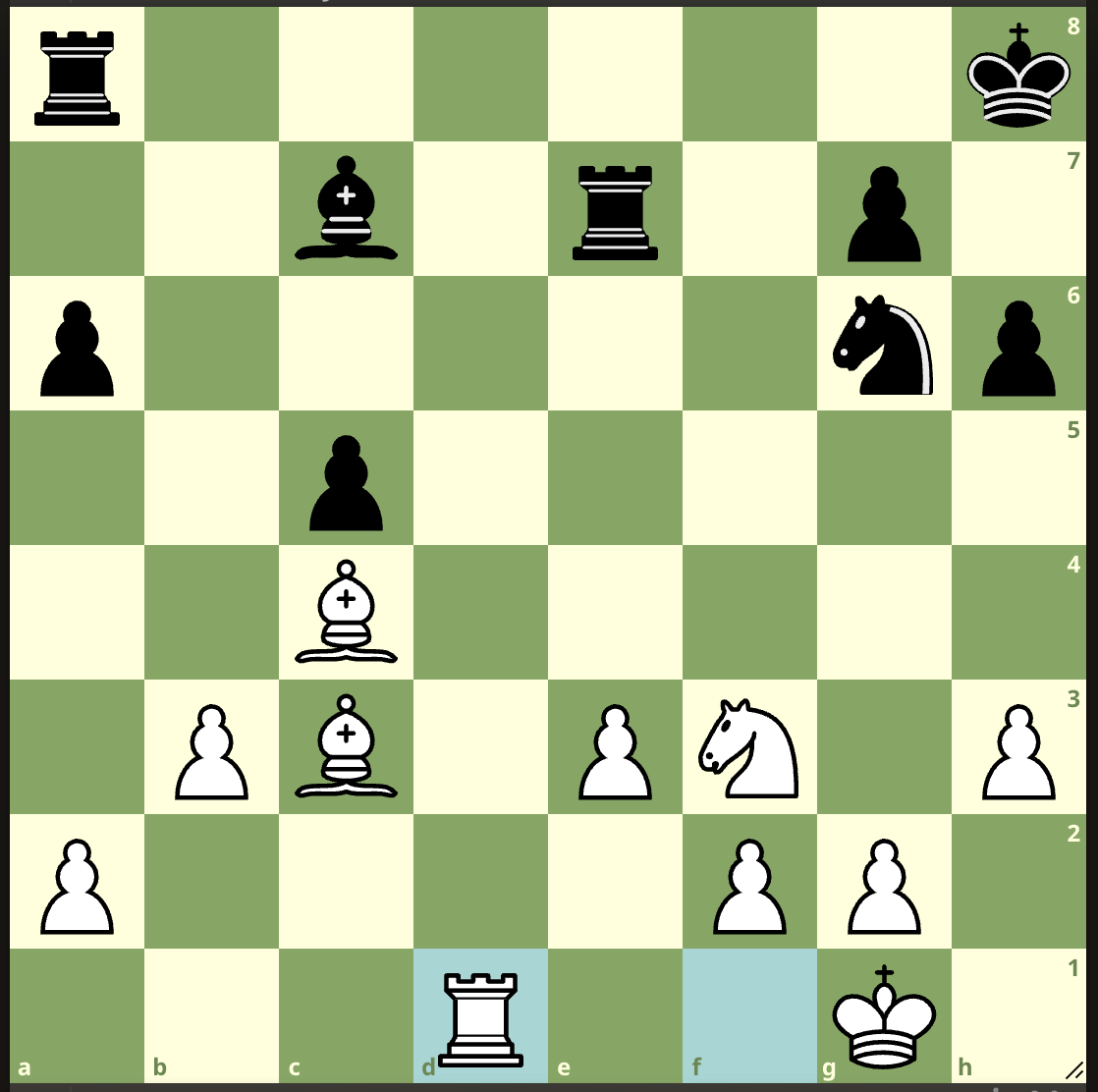
27…Ne5 (Black can also try to exchange pieces with 27... Rd8 White responds with 28. Rxd8+ Bxd8 29. Bxa6 Ra7 The pawn on a2 is not lost as White can play 30. Bd3 Ne7 31. a4 White has too many pawns for the exchange.)
28. Nxe5 Bxe5
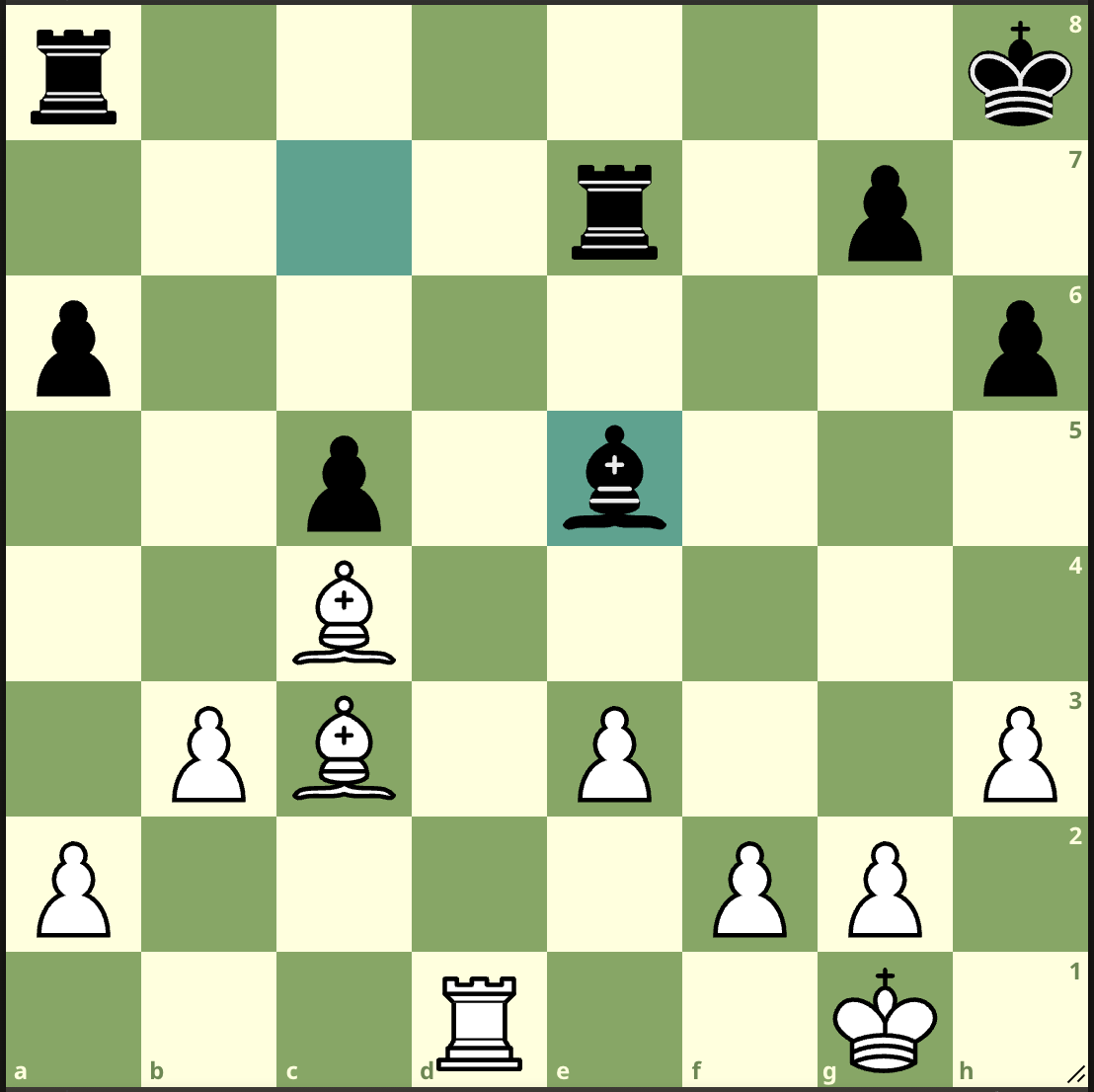
29. Be1 No unnecessary trades! 29…Bf6 30. Kf1 a5 31. a4 Bb2 32. Rd6 Ba3 33. Bc3 Kh7 34. e4 Bb4 (34... Rxe4 loses to 35. Bd3)
35. Bb2 Still no trade of bishops. (However, White also has a winning position after 35. Bxb4 but he shows good technique by not trading. When the position is ripe and there is a good reason to trade, we can do it. Until then, we (White) are the ones in charge of the position and can choose the right moment.)
35... Rae8 36. f3 Black has no counterplay. 36…Rc8 37. e5 Rf8 38. e6 Rf4 39. Rd7 White believes the moment has arrived... Rxd7 40. exd7 Rf8 41. Ke2 Rd8 42. Be6
Black resigned. A beautiful final position that exposes Black’s helplessness. White’s king simply walks to the queenside while Black’s king is cut off by the white bishops. Notice that White in this game moved the anchored bishop once from its position on c4 - and it was followed by immediate resignation from Black! 1-0
IM Silas Lund, Marshall Spectator Contributor
14th NY Intl. Game Analyzed, by Miles Lee
One of the best games I played during the 14th New York International was this 115 move battle that ended in one of the most interesting endgames: Rook and Bishop versus Rook. The endgame is famously drawn in theory, but practically very thorny to defend, offering lots of potential winning chances for the stronger side to weave a mating net. My opponent defended accurately for more than 30 moves, before making a critical error that allowed to win.
You can play through the game with an engine here.
14th NY International Super Swiss: R3 B32 NM Vyas, Miransh Purven - CM Lee, Miles
Catalan Opening: Open Defense, Classical Line
This game was played in the 3rd round of the NY International Super Swiss. I had lost the first two rounds, so was determined not to long-castle on the crosstable and play a solid game.
1. Nf3 d5
Unfortunately I'd forgotten that the second evening round started at 6, not 7, so at about 6:30 I woke up from my nap to multiple text from Carlos inquiring my location, informing me of the round time and default time. I made it to the board with 52 minutes left on the clock.
2. c4 e6 3. g3 Nf6 4. Bg2 Be7 5. O-O O-O 6. d4 dxc4 7. Qc2 b5 8. a4 b4 9. Nfd2 Nd5 10. Nxc4 c5 11. dxc5 Bxc5 (11... Ba6 Was trying to recall Ding - Carlsen 0-1 2019 but I did not recall this move. That game continued 12. Ne3 Nd7 13. Nxd5 exd5 14. c6 Rc8 Black has sufficient compensation for a material deficit.)
12. e4 Nb6 13. a5 (13. Rd1 Qe7 14. e5 Nd5 White has a moderate advantage.)
13…Nxc4 14. Qxc4 Na6 Played quickly but a poor move. a6 square should be left open for the bishop. (14... Bd4 15. e5 (15. Qxb4 Ba6 16. Re1 Nc6 17. Qd2 Did not consider developing the initiative for material.) 15... Ba6 16. Qxb4 Bxf1 17. Bxa8 Na6) (14... Nd7)
15. Nd2 e5 16. Qd5 Qxd5 (16... Qe7 17. Qxa8 Bb7 18. Qxf8+ Qxf8 19. Nb3 Saw this and evaluated as White better, being able to grab the bishop pair or force black to retreat. White can develop normally.) (16... Qc7! This is the more active try! 17. Qxa8 Be6 18. Qxf8+ Bxf8 19. Nf3 Nc5! 20. Be3 Nb3 21. Rad1 Qxa5 Black can make strong Q side passer.) (16... Be6 Giving up the pawn is OK too 17. Qxe5 Bd4 18. Qh5 Saw up to here and did not believe in either my position or my ability to play it. 18... Nc5 Not so easy for White to complete development. 19. e5 (19. Nf3 g6 20. Qh4 Qxh4 21. Nxh4 Nb3 22. Rb1 Nxc1 23. Rfxc1 Ba2) 19... Nd3 (19... Rc8 20. Nf3 Nb3))
17. exd5 White has passer, but is slightly slower in developing his rooks. I need to take care of the passer either by blockade or capture.
17…Bf5 Discouraging Nc4 18. Nb3 (18. Nc4 Bd3 19. Nxe5 Bxf1 20. Kxf1 Turns out white is still better here.)
18…Bd6 19. Be3 Bc2 20. Nd2 (20. Rfc1 Bxb3 21. Rc6 Saw this only later.)
20…Rfd8 Defending Bd6 from Rc6, and eyeing d5 pawn.
21. Rfc1 b3 Locking in White's Rooks.
22. Bf1! Nb4 23. Bc4 Bf8 24. Nxb3 Be4 25. a6 Nxd5 26. Bxd5 Bxd5 I have the bishop pair now on an open board. White has the queenside majority but it can be vulnerable on the light squares.
27. Na5 Rd6 28. Nb7 Rc6 29. Rxc6 Bxc6 30. Ra5 f6 31. Bc5 Kf7? 32. Bxf8? (32. Bxa7! We both missed this stunning idea! 32... Rxa7 33. Nd8+!)
32…Rxf8 33. Rc5 Bf3 Trying to set up a mating net, but my rook lacks available files to attack from.
34. Rc7+ Kg6 35. Kf1 Re8 Intending to develop via e6. (35... Rf7!! Extremely deep move! Surprisingly Black's king and bishop will win the queenside battle. 36. Rxf7 Kxf7 37. Nd6+ Ke7 38. Nc8+ I'd seen about this far that White wins a7, but the line goes deeper. 38... Kd7 39. Nxa7 Bd5 Surprisingly White cannot save the a6 pawn. 40. Ke1 Bc4 41. b4 Bxa6 42. b5 Bb7 43. b6)
36. Rc3 e4 37. b4 Re6 38. b5 Rb6 39. Rc5 Bd1 My bishop swings around in time to pick up the queenside pawns.
40. Rd5 Bb3 41. Rd4 Rxb5 (41... f5 42. Rd6+ Rxd6 43. Nxd6)
42. Rxe4 Rb6 43. Nc5 Bd5 44. Re7 Rc6 45. Nd7 Rxa6
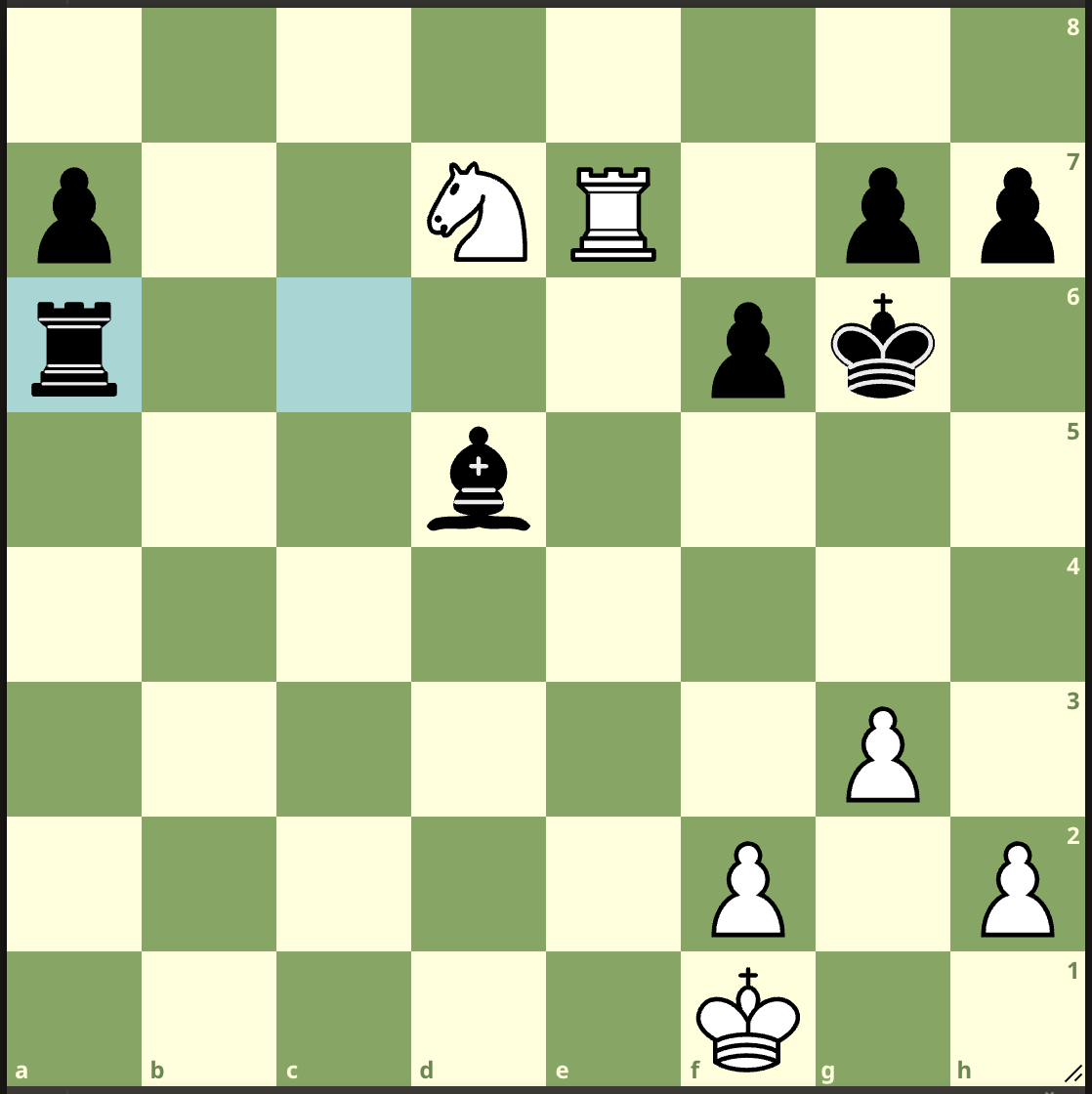
This position should now be winning. I have the extra passed pawn on the queenside, and the better minor piece. Both of us were in time trouble, and this definitely contributed to the multiple times I threw the win away.
46. Nf8+ Kh6 47. Ke2 Ra4 48. Ke3 a5 49. h4 Rb4 50. Ra7 a4 51. Ra5 Bc6 52. Ra6 Bb7 53. Ra7 Rb3+ (53... Re4+ 54. Kd3 Bc6 55. Rc7 (55. Nd7 Re7) 55... Bd5 56. Rd7 Re5 57. f4 (57. Ra7 Re8) 57... Be4+ 58. Kd4 Re8)
54. Kd4 a3 The last few moves I'd played quickly to build up a buffer of 3 minutes to run to the bathroom, but coming back to the board I realized that I had blundered the trade of my queenside passer. At least I am able to trade it for the f-pawn.
55. Kc4 Now my rook cannot hold both the bishop and the pawn.
55…Rb2 56. Rxa3 Rxf2 57. Ne6 Kg6 (57... Bc8 58. Nf4 g5 59. hxg5+ fxg5)
58. Ra7 Rb2 59. Nc5 Bc8 60. Ra3 Rg2 61. Kd4 Kh5 62. Ke4 Kg4 63. Ra7 Bf5+ 64. Kd4 Rd2+ (64... g5 65. hxg5 fxg5 66. Ke5 Rxg3 (66... Rf2 67. Rf7 Rf3 68. Rf6 Re3+ 69. Kd6 Rxg3) 67. Ra4+) (64... Rxg3 65. Rxg7+ Kxh4 This is a very clean 2 pawns with the bishop dominating the knight.)
65. Ke3 Somehow I had missed this move. The king is gains a tempo on my rook, and my g-pawn falls with check. Objectively this is now drawn.
65…Rd5 66. Rxg7+ Bg6 67. Nd7 Rd3+ 68. Ke2 Rxg3 (68... Kxg3 69. h5)
69. Nxf6+ Kxh4 Setting up a little trick.
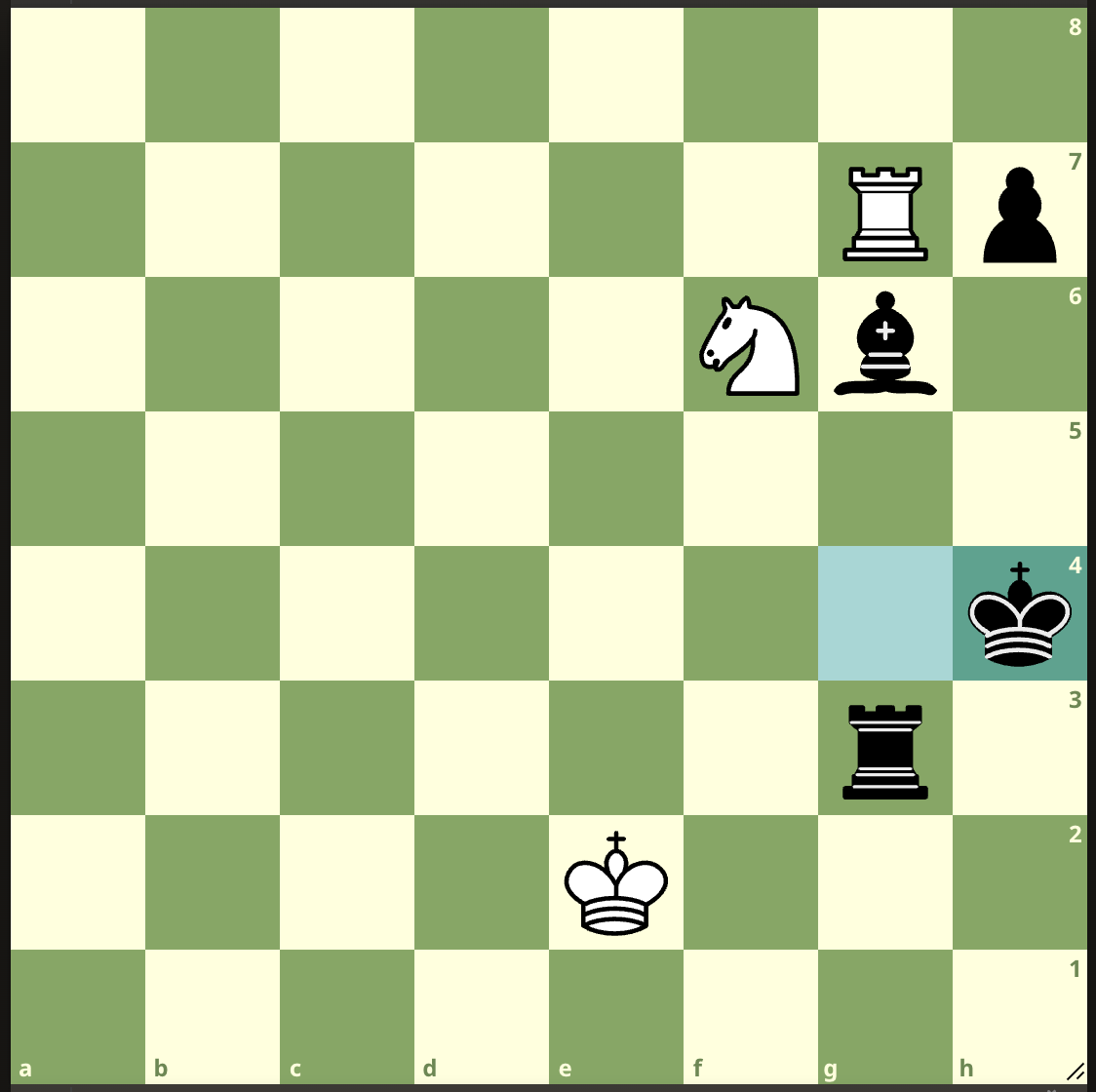
70. Kf2 My opponent doesn't bite. (70. Nxh7?? Bd3+ 71. Kd2 Rxg7)
70…Rg5 71. Nxh7 White grabs my last pawn, but the knight is trapped. I will have the infamous R+B vs B endgame, which is objectively drawn, but difficult to defend.
71…Rf5+ 72. Ke3 Kh5 73. Re7 Kh6 74. Nf8 Rxf8
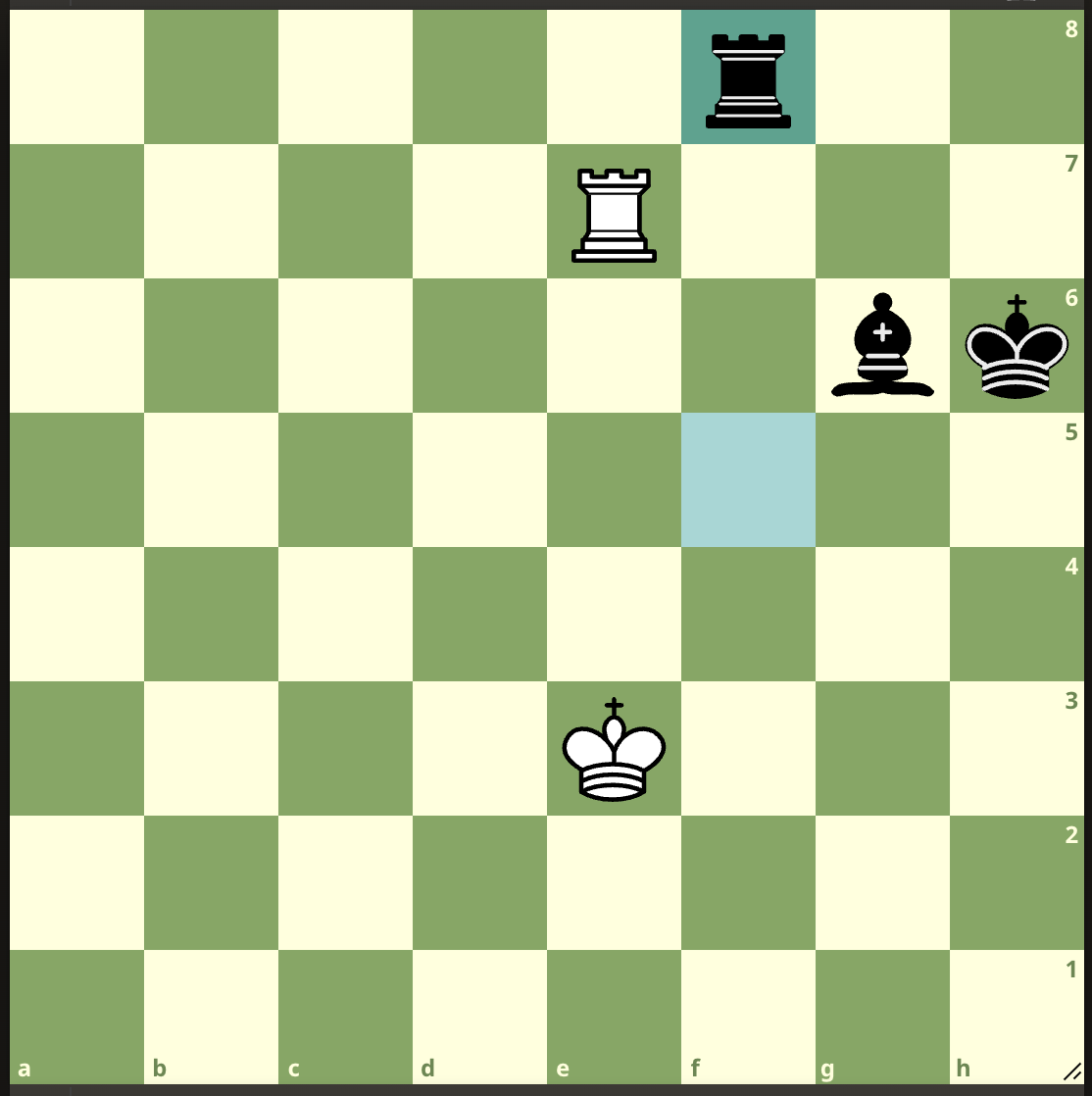
From here the position is technically drawn, but the rook and bishop offer practical winning chances in a real, over the board game. 75. Kd4 Kg5 76. Rg7 Kf5 77. Rd7 Bf7 78. Ra7 Rd8+ 79. Kc5 Be6 80. Ra1 Rc8+ 81. Kd6 Kf6 82. Ra7 Rc1 83. Rh7 Rd1+ 84. Kc5 Ke5 85. Rh5+ Bf5 86. Rh8 Rc1+ 87. Kb4 Be4 88. Kb3 Kd4 89. Rd8+ Bd5+ 90. Kb2 Rc7 91. Rh8 Rb7+ 92. Kc2 Be4+ 93. Kc1 From my opponent's play in this endgame, it looks like he has chosen the Cochrane Defense, where the defender uses the rook to harass the attacker's king from behind. The other defense is the Second Rank Defense, where the defender places the rook on the second rank and uses stalemate tricks to prevent the attacker from obtaining opposition.
93…Bd3 94. Rc8 Rb1+ 95. Kd2 Rb2+ 96. Kd1 Ke3 97. Rc3 Rb8 98. Rc7 Be4 99. Rc3+ Kd4 100. Rc7 Rb2 101. Kc1 Rf2 102. Rc8 Bd5 103. Rd8 Rg2 104. Rd7 Kc4 105. Kd1 Be6 106. Rd8 Kc3 107. Rd6??
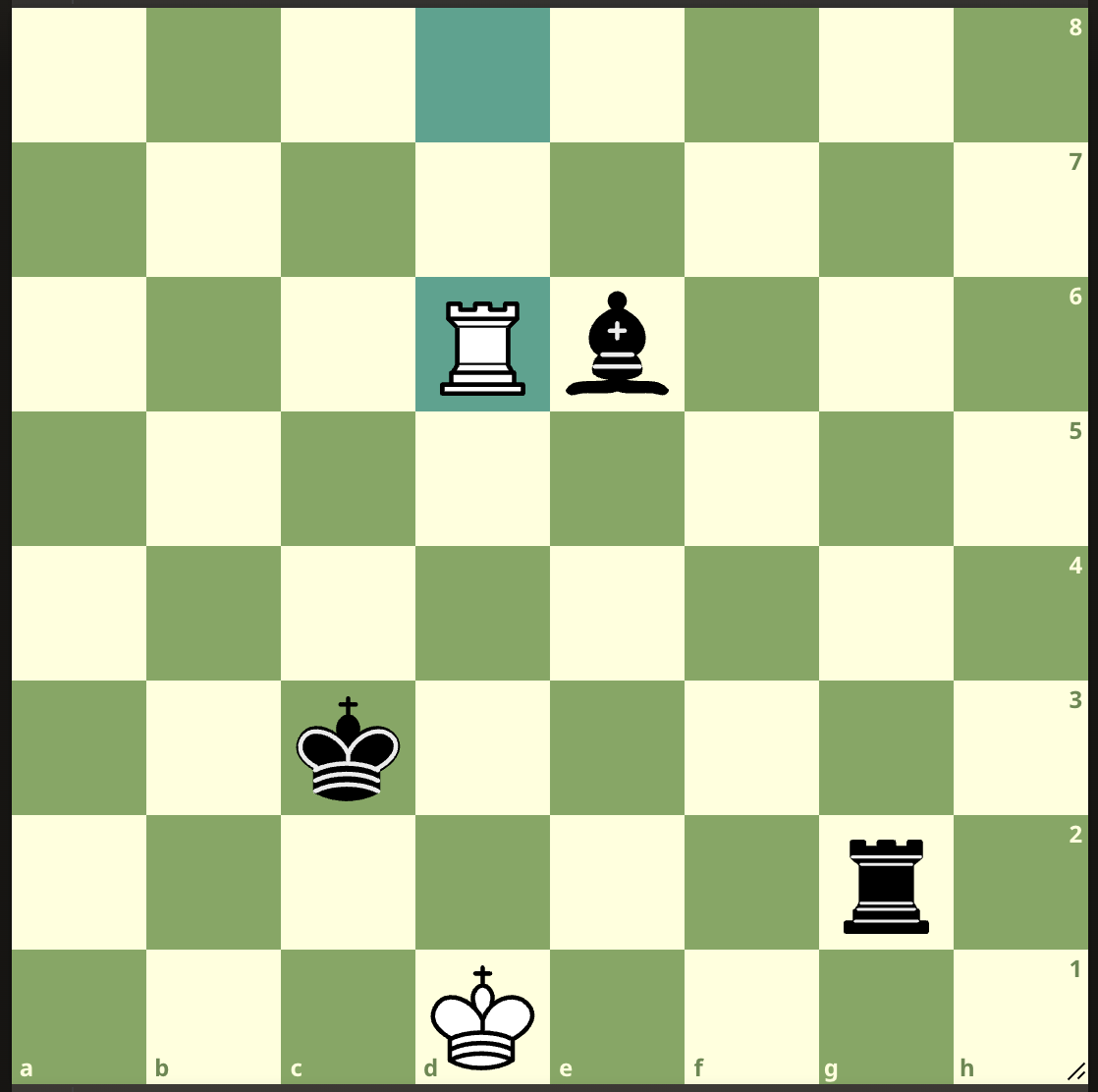
It’s hard to imagine, but this seemingly inconsequential move allows Black to construct a mating net. Better was keeping the rook on 8th rank or even simply moving the king. (107. Re8 Bc4 108. Re3+ Kd4 109. Re8 Keeping the rook on the 8th rank ensures the bishop doesn't cover any important squares.) (107. Ke1 Bc4 108. Re8! Only move.)
107…Bc4 With the idea of simply mating, and now the placement of White’s rook is suddenly a problem. It’s unable to prevent mate by blocking or checking. So White tries to move their king to the side to allow for the rook to defend against a check.
108. Ke1 Re2+ And the threat of discovered check forces the king back inside the mating net.
109. Kd1 Re8! Zugzwang. 110. Rc6 Ra8 With another mate threat. White's king and rook are poorly placed, and the rook cannot contribute to the defense. After this move I knew I had the win.
111. Ke1 Rf8 And there are no more moves to forestall mate but for giving up the rook for the bishop.
112. Rxc4+ Kxc4 113. Kd1 Kd3 114. Kc1 Rb8 115. Kd1 Rb1# 0-1
Miles Lee, Marshall Chess Club Member
Chess Toons

En Passant
FM William “Bill” Goichberg passed away Sunday Aug. 2, 2026, at age 83. Between the 1960s and the 2000s, Bill held every one of the highest roles in US Chess. He was rating statistician; he was co-editor of Chess Life; he was a member of what we now call the Executive Board three separate times; he was executive director; he was president.
England’s 11-year-old talent Bodhana Sivanandan fought her way to another world age record last Saturday. Sivanandan ended the Dole Trophy in Aix-en-Provence, France, with a historic first international master result.
Our art critic Deborah Solomon was one of 50 players to go up against a chess grandmaster for Marcel Duchamp’s 139th birthday celebration at MoMA, exploring the game as an art form.
The Saint Louis Rapid & Blitz will bring ten grandmasters to the Saint Louis Chess Club from 2 to 6 August for the fourth leg of the 2026 Grand Chess Tour. Fabiano Caruana, Vincent Keymer and Wesley So are the leading tour contenders in a field that also includes World Championship challenger Javokhir Sindarov…
Problems, Problems, curated by Alexander George
A. Salvio, 1604
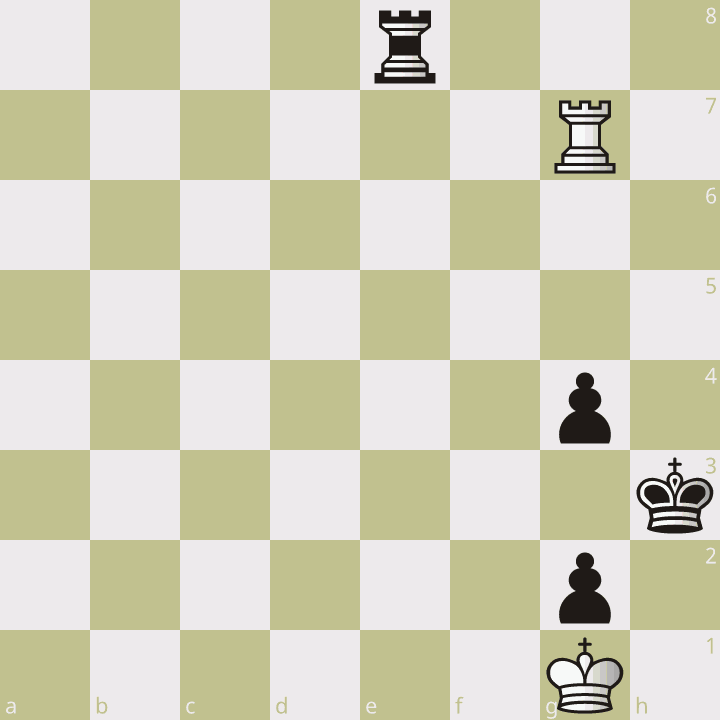
White to move and draw.
When this simple but beautiful gem appeared, the plague was raging in Europe, Shakespeare’s plays were first being performed, work on the King James Bible was just beginning, and Kepler was observing the skies.
---
Solution to last issue’s problem (G. E. Barbier and F. Saavedra, 1895):
1. c7 Rd6+ 2. Kb5 (2. Kb7? Rd7 followed by RxP and draw) Rd5+ 3. Kb4 Rd4+ 4. Kb3 Rd3+ 5. Kc2 Rd4! 6. c8=R!! (6. c8=Q? Rc4+ 7. Qxc4 stalemate) Ra4 7. Kb3 and White wins.
---
Alexander George
Editor’s Note
As always, if you have any feedback, comments, or would like to submit an article please contact us directly at td@marshallchessclub.org.
Enjoy, and thanks for reading!
The Marshall Chess Club
23 West Tenth Street New York, NY 10011
212.477.3716

Thanks for reading The Marshall Spectator! Subscribe for free to receive new posts and support the club.