

The Marshall Spectator
January 7, 2025


In This Issue:
From The Skittles Room
Endgame Corner, by IM Silas Esben Lund
No Haircut Until 2100, by NM Anthony Levin
Chess Toons
En Passant
Problems, Problems, curated by Alexander George
Editor’s Note

Welcome back, fellow chess players, to this edition of the Marshall Chess Club’s fortnightly bulletin, The Marshall Spectator.
Happy New Year! In celebration of the year ahead, we are looking forward to a festive party for our members next Tuesday, January 13. Please register in advance so that we know how many to anticipate, and come enjoy some music, drinks, and an informal chess game or two to start the new year.

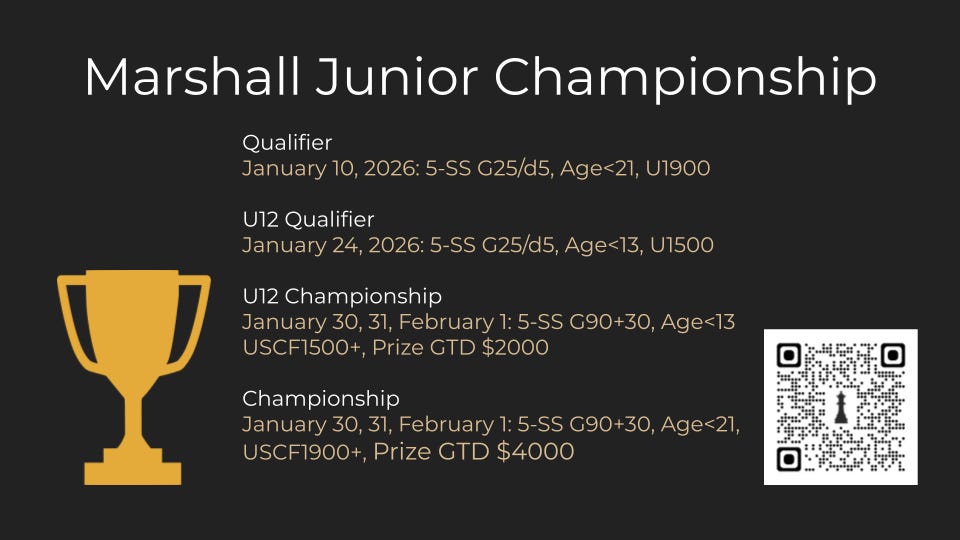
Looking ahead to 2026, we are thrilled to kick off the competitive new season with a Marshall Junior Championship. The dates and details can be found in the flier below, and you can register for this series of events here. Registration in advance is strongly encouraged, as these tournaments are likely to sell out.
We are also thrilled to welcome back IM John Donaldson for an author talk and book signing for his recent book Inside The Mind of Bobby Fischer: Revisiting his Writings and Annotations. The event will take place on January 20th, 2026, at our historic club located at 23 West 10th Street.

In other scholastic chess events news, The Marshall Chess Club is excited to announce our next offsite scholastic tournament in partnership with the Speyer Legacy School. This event will be held on Sunday January 11th, 2026. You can register your child in advance here.
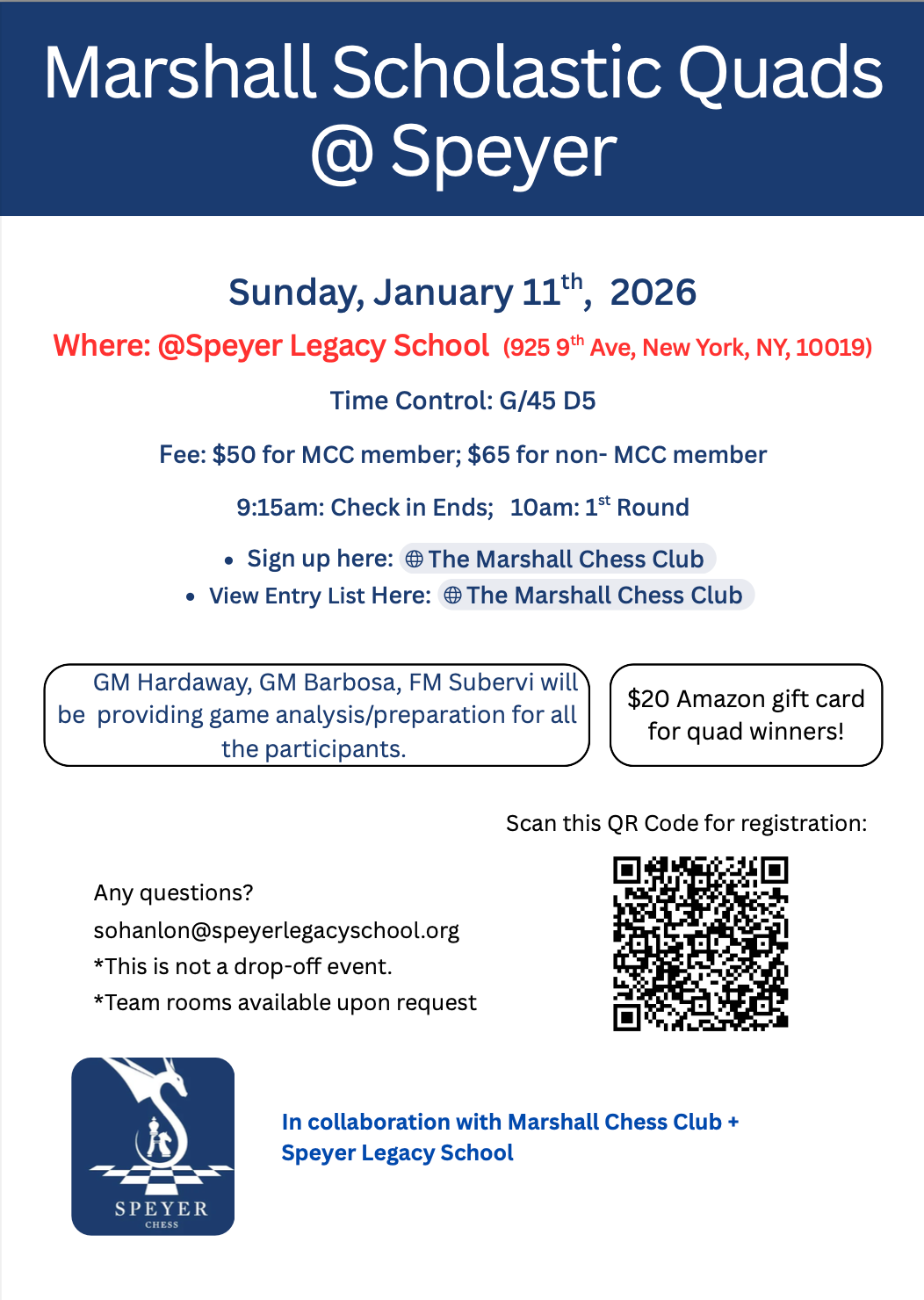
The event is open to ALL scholastic players from any school. Adults 2000+ by invite only. Format: 4 player Quad sections - Time Control: G/45, d5 Entry Fee: $50 Members; $65 Nonmembers - Prize: $20 Amazon gift card to Quad winners Location: The Speyer Legacy School, 925 9th Ave, New York, NY 10019. (Please don’t come to the club!) Round Times: CHECK-IN: 8:45 - 9:15 AM Rd1 10:00AM Rd2 12:00PM Rd3 2PM- Please note these round times are approximate. Rounds will begin approximately 15 minutes after the conclusion of the previous round. All guests must be out of the building by 4:30 PM. The event is NOT a drop off event, but there will be parents and coaches present and team rooms are available by request. For any questions, please contact sohanlon@speyerlegacyschool.org.
Finally, If you have a moment to help a fellow chess club member with a research project, please take a moment to fill out the form below. NM Mark DeDona, on behalf of researchers at Sacred Heart University, is seeking players rated 0-2000 to complete this brief questionnaire, available here. He is researching the impact of practice and motivation on the improvement of amateur chess players. The form takes about 10-15 minutes to complete, and your participation is greatly valued! If you have any questions, feel free to contact him directly at dedonam@mail.sacredheart.edu.
Looking back over the last two weeks, we have had a plethora of events for our members to participate in.
The Rated Beginner Open on January 4 had 29 players registered and was won by the following players who scored a perfect 3 out of 3 to win $121 each: Mishbah Mozumder, Aurora Golovicher, Kristina Pyfrom.
The Morning Under 1600 on January 4 had 21 players registered and was won by the following players who won $79.33 each for their perfect 3 out of 3 score: Marko Scekic, Carlos Chavez, and Joshua Rada.
The Marshall Premier Under 2000 that ended on January 4 had 41 players registered and was won by Theodore Chachere who scored 4.5 out of 5 to win $667. Kobi Cornwell won a class prize of $200 for a 3 out of 5 performance, while Myra Nigam won $200 for a 3.5 out of 5 score. Eli Stern and Darren Wu shared in the remaining prize funds, winning $133.50 each for their 4 out of 5 performance.
The Marshall Premier FIDE Open that ended on January 4 had 52 players registered and was won by IM Kassa Korley who scored a near perfect 4.5 out of 5 to win the $1,000 first-place prize, while GM Safal Bora, GM Mackenzi Molner, and FM Haari Muthukumar won $250 each for their 4 out of 5 score. IM Jay Bonin and Isaac Statz won $125 each for their 3.5 out of 5 score.
The Morning Masters on January 3 had 5 players registered and was won by Surya Suresh who scored 2.5 out of 3 to win $38, while Rishan Malhotra scored 2 out of 3 to win $25.
The Under 2000 Morning Action on January 3 had 34 players registered and was won by Dylan Kang, Dario Golden and Farirai Gumbe who scored 3 out of 3 to win $142 each.
The Afternoon Action on January 2 had 13 players registered and was won by Jack Levine who scored 3 out of 3 to win $98, while FM Andrew Jiang won $65 for his 2.5 out of 3 score.
The Thursday Action on January 1 had 16 players registered and half of them won a prize! Alec Hyunmook Choi and Michael Glick won $62.50 for their 3.5 out of 4 score, and Levi Horace Kitchiner Valentine won $38 for his 3 out of 4 performance. IM Jay Bonin and NM Bryan Weisz won $19 each for their 3 out of 4 score, while the following players won $12.67 each for their 2-point performance: Patrick Tomporowsi, Paolo Gentile, Aileen Lou.
The Thursday Open that concluded on January 1 had 20 players registered and was won by Quan Anh Le who scored 5 out of 6 to win $400, while George Berg and Jonah Romero won $120 each for their 4 out of 6 score. Adam Samuel Darack and Alexander Lapanowski won $60 each for their 3.5 score, while Ken Jennings won a $40 prize for this 2.5 out of 6 performance.
The New Year’s Day Action on January 1 had 27 players registered and was won by William Ren who scored 7 points out of 10 round to win the $324 first-place prize. FM Olson Ortiz, Omar Cunningham, and Armaan Chandragupta Jain won $126 each for their 6.5 out of 10 score, while Arjun Murti won $108 for this 5.5 performance.
The Morning Under 1600 on December 28 had 18 players registered and concluded with the following players winning $56.25 each for their 2.5 out of 3 score: Gabriel Bussa, Nathan Kuo, Linus Chang, and Ryan Saavedra.
The Rated Beginner Open on December 28 had 27 players registered and was won by Joshua Rada, Ben Zobrist, and Ted Chang who scored 3 out of 3 to win $112.67 each.
The Sunday Quads on December 28 had 61 players registered and many happy individual winners. The following players won $50 each for winning their quad: Anson Leong, Nico Alvarado-Yoshida, Alec Choi, Chris DeDona, Avin Pawar, Oliver Liu, Shawn Epelbaum, Oscar Finkin, Ryan Saavadra, Matthew Liu, Noah Spiegel, and Matthew Marin. The following players shared the top spot in their quad, winning $25 each: Daniel Svoyskiy, Noah Gillston, Kai Waters, Viaan Suthar, Justin Rosales, and Samuel Zheng.
The Saturday Game 50 Under 1800 on December 27 had 24 players registered and was won by Gilberto Astor who scored a perfect 4 out of 4 to win the $144 first-place prize, while the following 5 players won $33.60 for their 3 out of 4 performance: Mark Neuwirth, Nicholas Kan, Siqia Weng, Mingyang Li, and Michael Chen.
The Saturday Game 50 Open on December 27 had 22 players registered and was won by Dylan Kang who scored a perfect 4 out of 4 to win $132, while Richardson Qiao and Matt Chan scored 3.5 out of 4 to win $77 each.
The Under 2000 Morning Action on December 27 had 23 players registered and was won by Gavin Liu, Rhyan Grennan, and David J Yoo who scored 3 out of 3 to win $58.33 each, while Gabriel Negussie and Dario Golden won $37.50 each for their 2 out of 3 performance.
The Morning Masters on December 27 had 6 players registered and was won by Isaac Statz, Winsley Wu, and Jack Yang who scored 2 out of 3 to win $25 each.
The FIDE Blitz on December 26 had 36 players registered and was won by GM Aleksandr Lenderman who scored a perfect 9 out of 9 to win the $180 first-place prize. IM Do Valle Lucas scored 7.5 to win $90, while FM Marcus Ming Miyasaka and Benjamin R Medina scored 6.5 out of 9 to win $45 each. Noah Hsu won $45 for his 5.5 out of 9 score, while Mark DeDona and Jayden Feng won $22.50 each for their 6 out of 9 performance.
The Afternoon Action on December 26 had 28 players registered and was won by Gavin Liu and FM Marcus Miyasaka who scored a perfect 3 out of 3 to win $175 each.
The Marshall Masters on December 23 had 17 players registered and was won by IM Lokumannage Susal Thewjan Silva who scored a perfect 4 out of 4 to win $226.67, while IM Jay Bonin and IM Levy Rozman won $113.33 each for their 3 out of 4 score, while CM Aiden Li won $56.67 for his 2.5 out of 4 score.
The Monday Under 1800 that concluded on December 22 had 34 players registered and was won by Cameron Hull, who scored a near-perfect 5.5 out of 6 to win the $227 first-place prize. George Wang and Gary Chan scored 4.5 out of 6 to win $142 each, while Maxwell Montrose won $114 for his 3.5 out of 6 score, and the following players shared in a class prize, winning $11.40 each for their 3 out of 6 score: Will Rose, Zachary Gryder, Guller Dmitriy, Rafael Tushman, and Hoi Leong Wan.
The FIDE Monday that concluded on December 22 had 22 players registered and was won by FM Aditeya Das, who scored 5 out of 6 to win the $200 first place prize. Moshe Blank, FM Grant Xu, and Quan Anh Le scored 4 out of 6 to win $67 each, while Fiona Tushman won a $67 class prize for her 3 out of 6 performance. Andrew Colwell and Leo Pass won $17 each for their 2 out of 6 score.
We look forward to seeing you at the club soon!
Endgame Corner
In this and the following columns, we will discuss opposite-colored bishop (OCB) endings. The drawing tendencies are high in these endgames, which is why 2 extra pawns are usually a must to avoid a simple draw by eliminating the last pawn. But there are much more to these endgames. One of the most fascinating thing about them are their strategic nature where it is often possible to predict what will happen in 5, 10 or even 15 moves ahead of time. For today’s column, I have selected two of my own games just to get us started with this subject. Try to solve the 2 positions as puzzles, then we will go over the solutions.
You can play through the games with annotations here.
Exercise 1: Lindestrom, Torsten vs. Lund, Silas Esben
52... Bb1
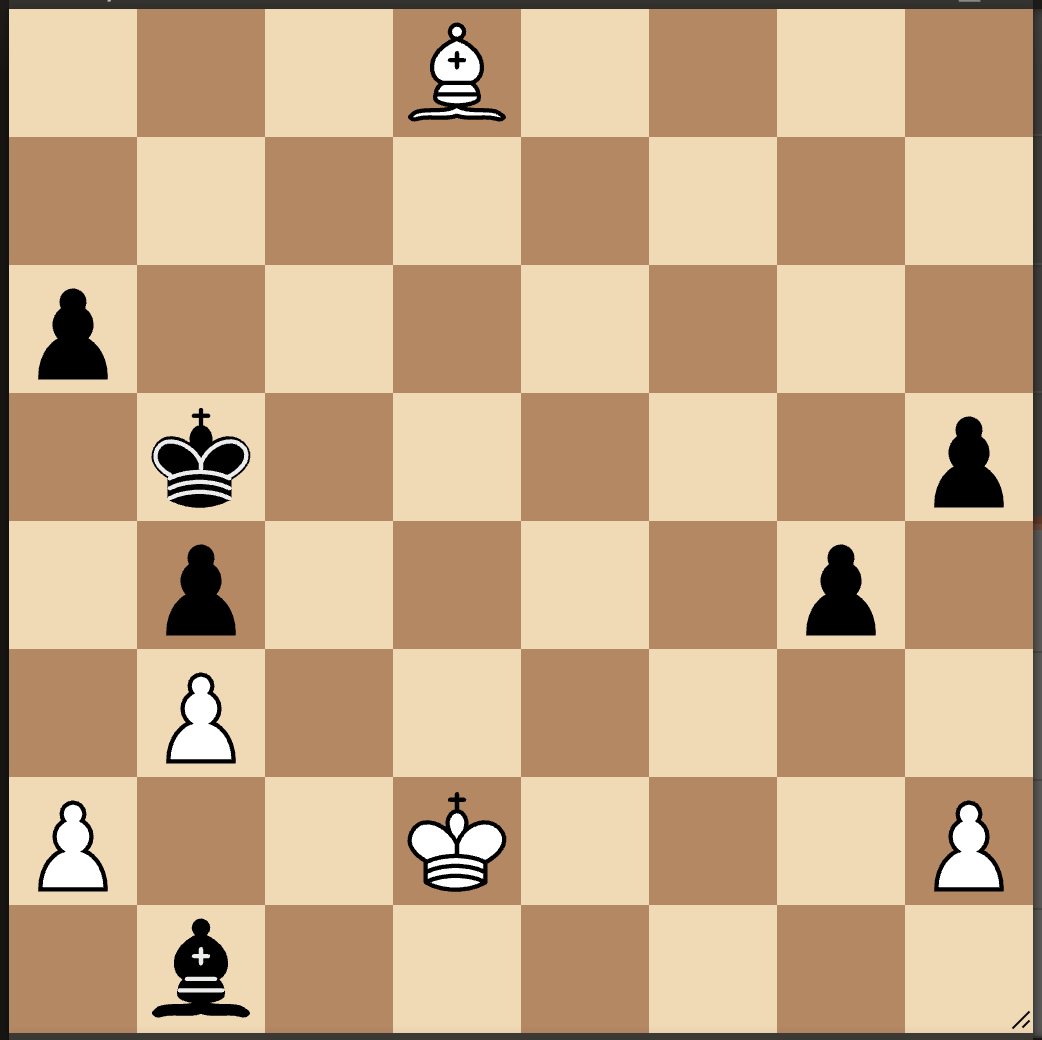
White to move and draw.
Exercise 2: Gamback, Bjorn vs. Lund, Silas Esben
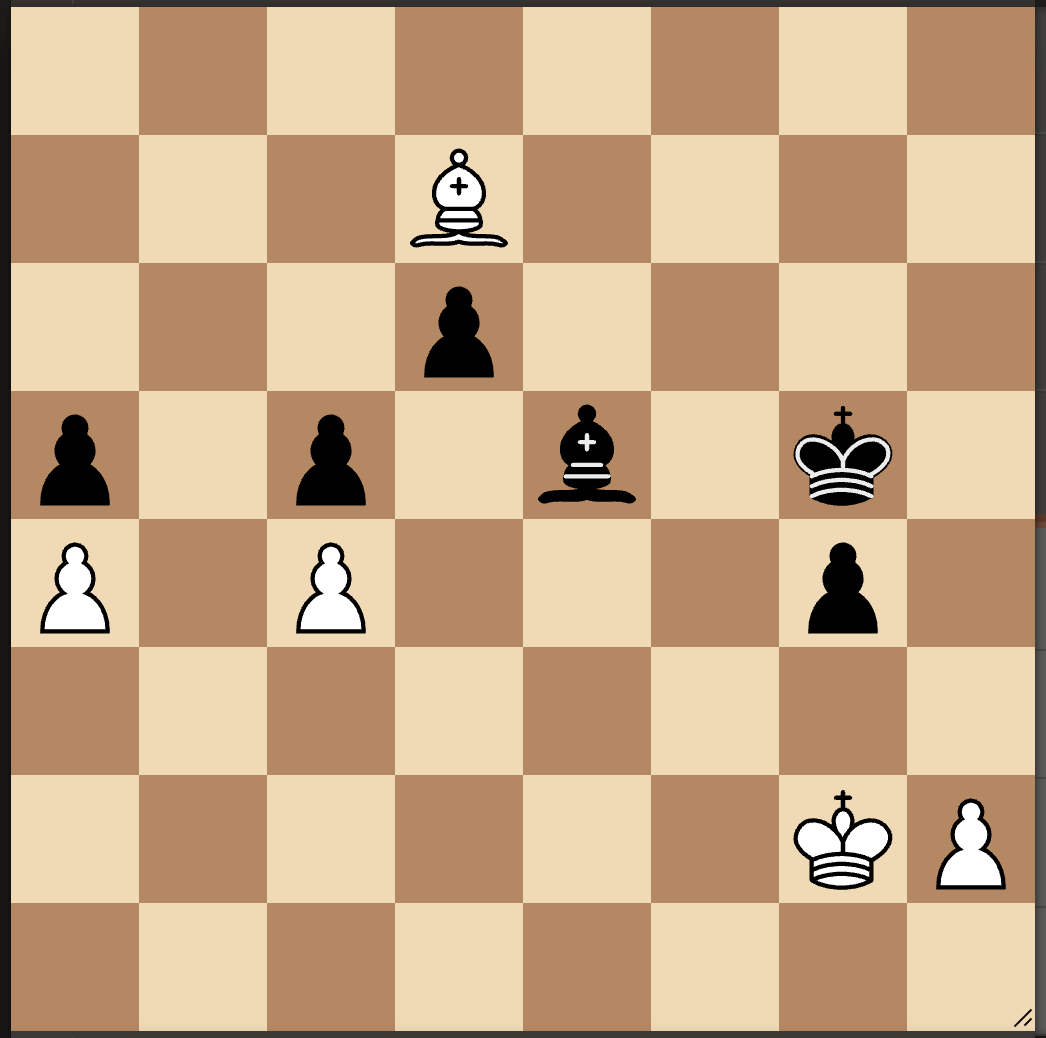
Black to move. 0-1
Lindestrom, Torsten vs. Lund, Silas Esben
Solution to Exercise 1.
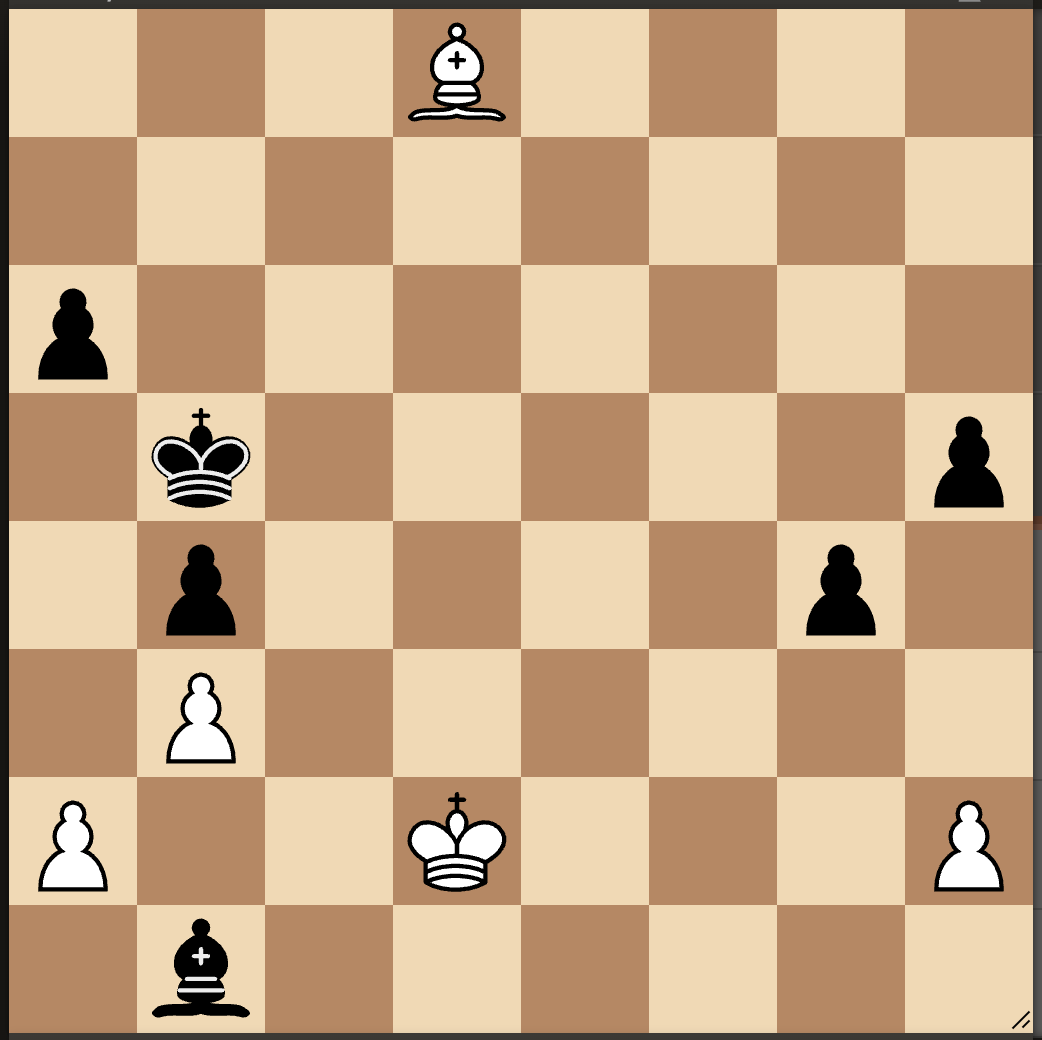
53. a3 (The game instead continued: 53. Kc1 Bxa2 54. Kb2
The bishop is trapped, but the resulting pawns versus bishop ending is lost for White. Bxb3 55. Kxb3 a5
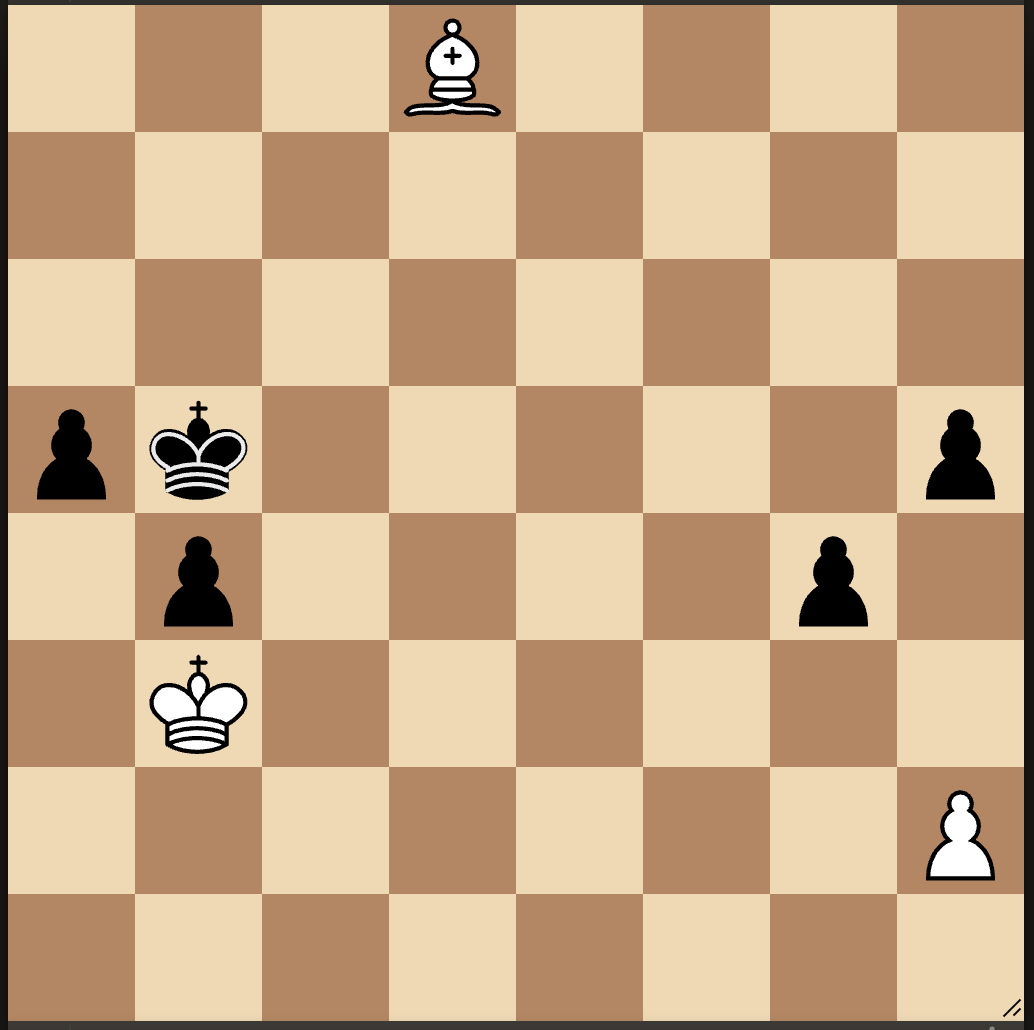
Black wins by moving the king towards the kingside at the right moment, and White will not be in time to eliminate the queenside pawns and then sacrifice his bishop on the last pawn.
56. Bf6 a4+ 57. Kc2 Kc4 58. Kb2 Kd3 59. Be7 b3 60. Bf6 Ke2 61. Ka3
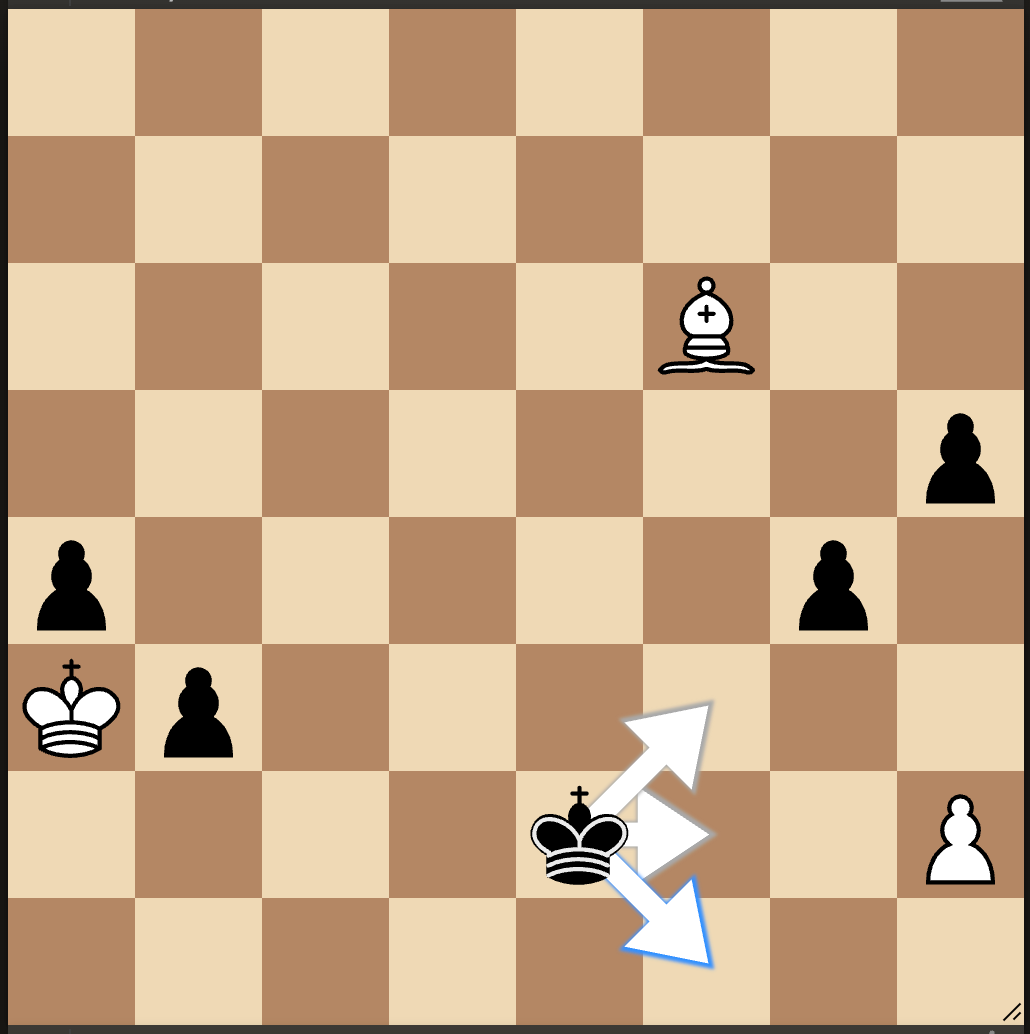
61…Kf1 These moments where the king can approach the h2-pawn from 3 different squares on an open board are never trivial, and should be considered carefully. If Black aims for the h2-pawn, all 3 king moves work. If Black chooses the winning plan in the game, only the king move to f1 works. (61... Kf3 62. Kxa4 h4 (62... Kg2) 63. Kxb3 g3
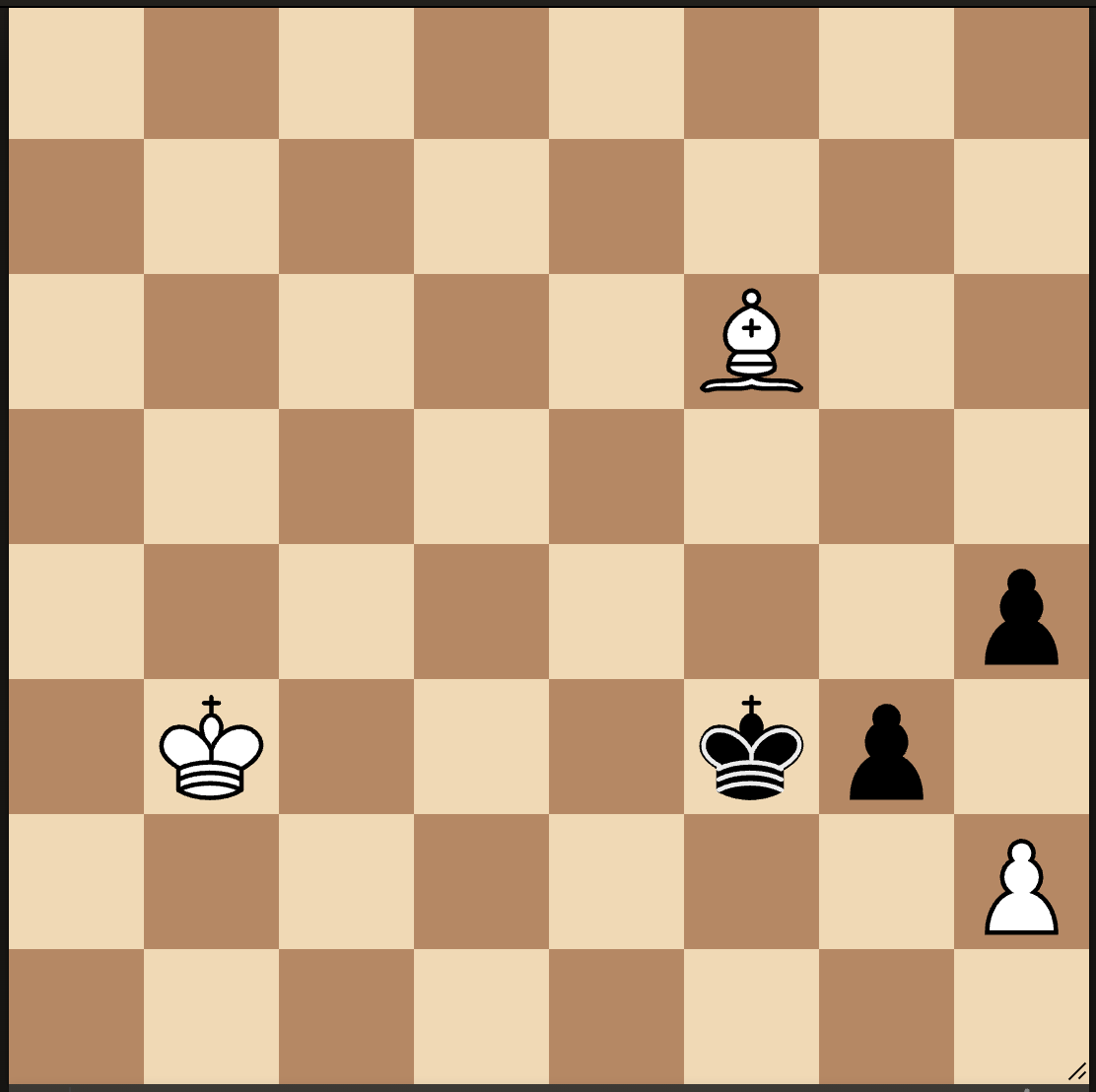
64. Be5 g2 65. Bd4 This is the difference: the black king is now far away from the promotion square g1. 65…Ke2 66. Kc2 Kf1 67. Kd3 g1=Q 68. Bxg1 Kxg1 69. Ke3 Kxh2 70. Kf2) (61... Kf2 62. Kxa4 Kg2 (62... h4 63. Bxh4+ {with check.)) 62. Kxa4 h4 (Or 62... Kg2) 63. Kxb3 g3 64. hxg3 h3 White resigned. 0-1) 53... bxa3 54. Kc3 Again, the king should approach the a-pawn with care. (54. Kc1 Bf5 55. Be7 Kc6 56. Bxa3 (56. Kd2 a2 57. Bf6 h4 with threats on both sides.) 56... h4
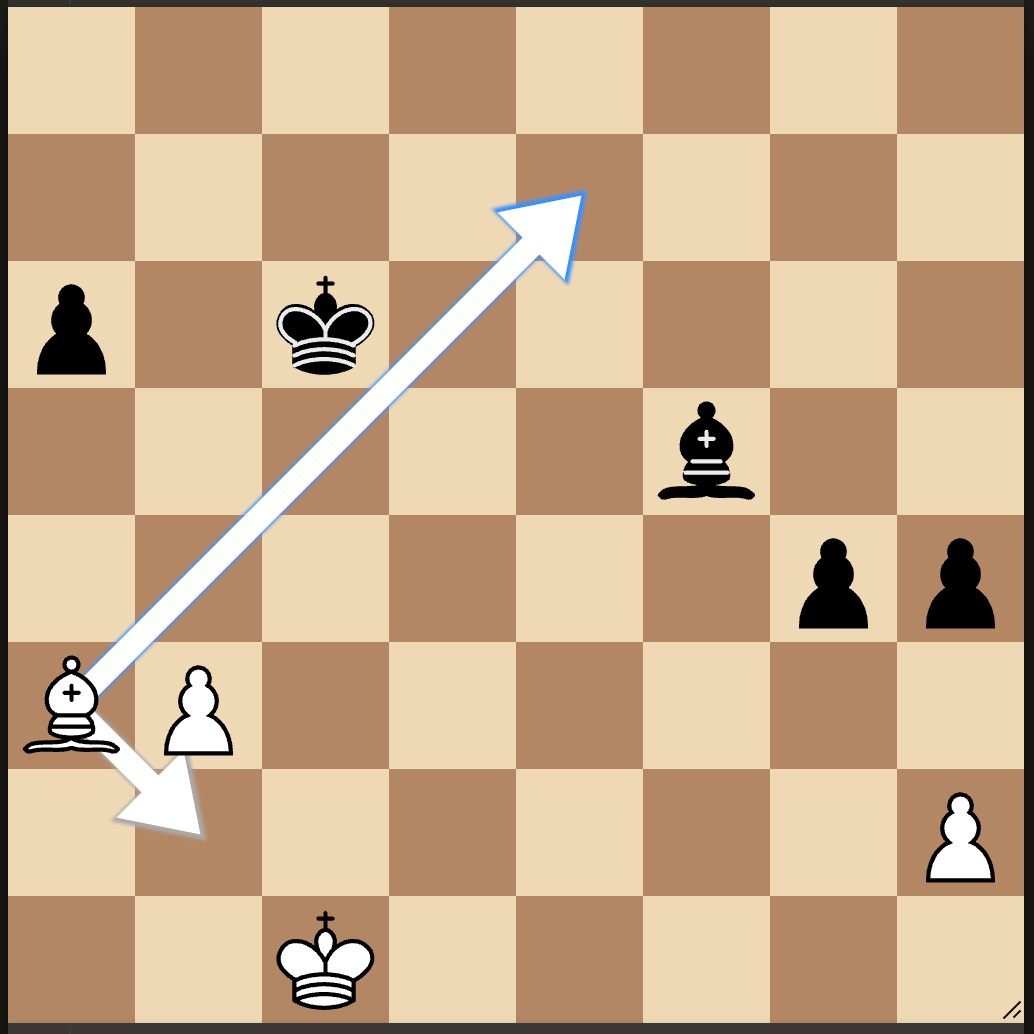
White is helpless against the coming breakthrough, mainly due to the awkward placement of the bishop on a3. That bishop is not able to get onto the h2-b8 diagonal. 57. Be7 (57. Bb2 Kd5) 57... g3 58. hxg3 h3) 54... Kc6 55. Be7 Kd5 56. Bf6 Ke4 57. Be7 Right on time. White’s idea is to capture the a3-pawn if he has access to the d6-square afterwards. Once on the h2-b8 diagonal, White can simply sacrifice the bishop on g3 and aim for the ‘wrong bishop’ fortress in the a1-corner. Kf3 (57... a2 58. Kb2 Kf3 59. Bd6) 58. Bxa3 Kg2 59. Bd6 h4 60. b4 g3 61. Bxg3 hxg3 62. hxg3 The white king simply stays around the a1-corner. 0-1
Solution to Exercise 2: Gamback, Bjorn vs. Lund, Silas Esben
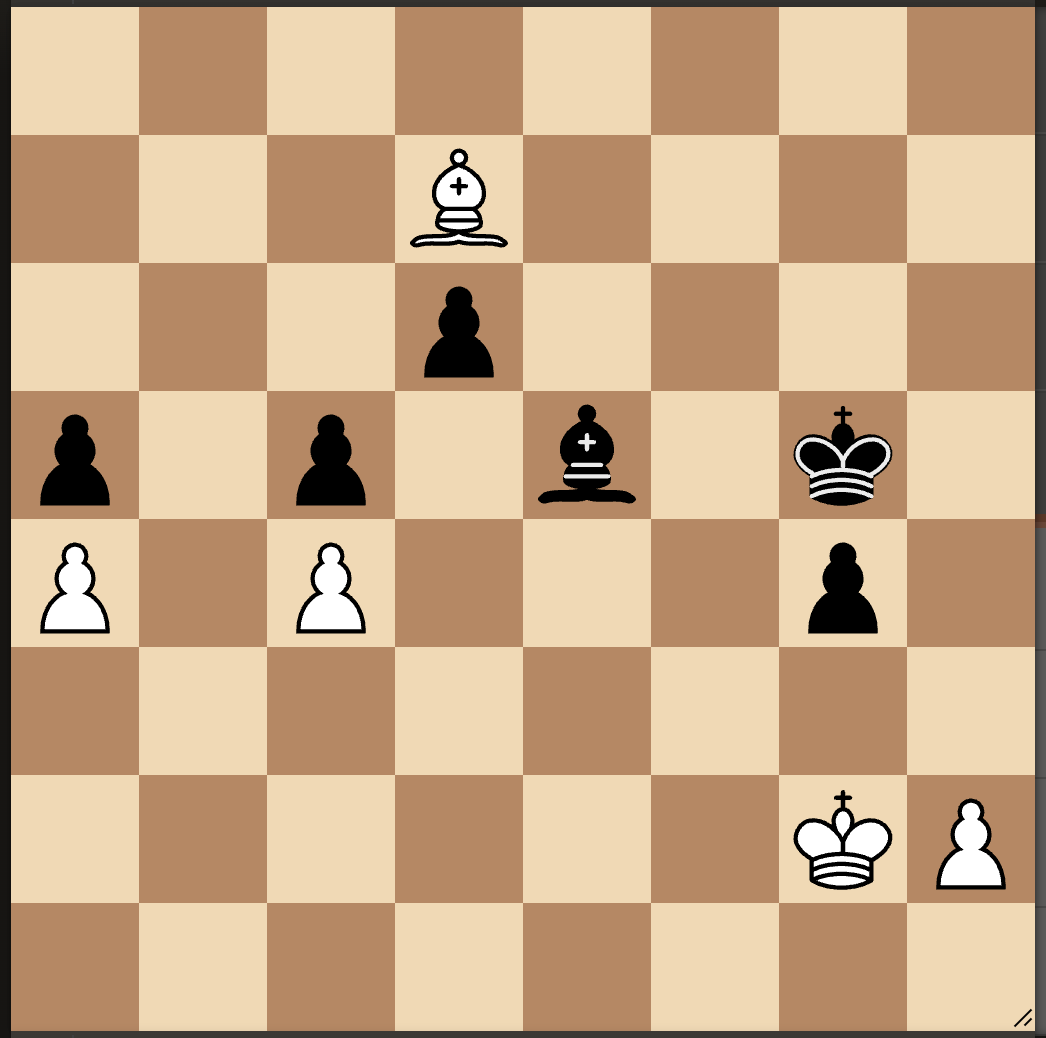
69... d5 70. cxd5 c4 71. Bb5 c3 72. Bd3 Such pawn sacrifices are not uncommon in OCB endings. The point here is to create a passed pawn on the c-file. We also notice the one-diagonal principle: Black’s bishop on e5 is able to stop the d5-pawn while simultaneously attacking h2 and controlling g3 (so the White king cannot attack g4). All is done on one diagonal.
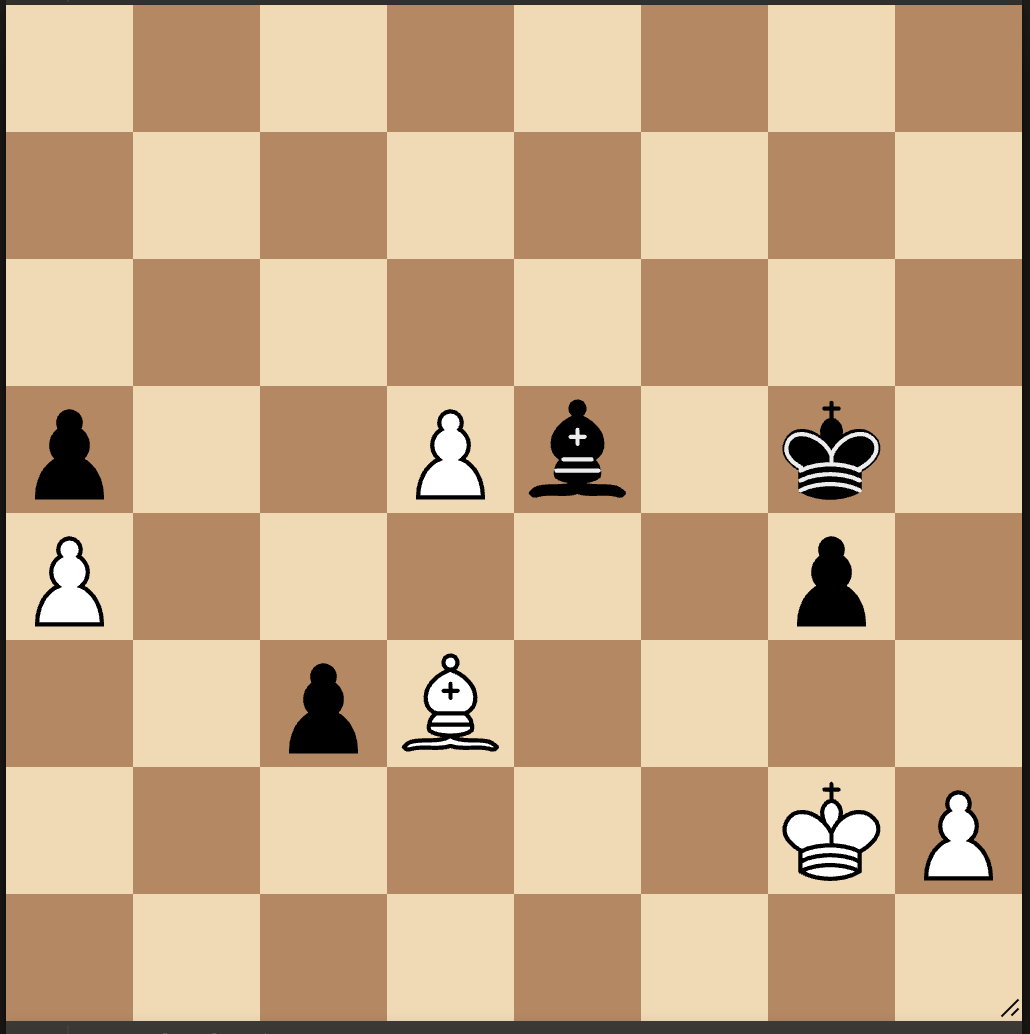
72…Bf4 The right plan to proceed: Black is planning Kf6-e5 to attack the d5-pawn and also aim for d4-e3-d2 to support the c3-pawn. 73. Bc2 (73. h3 g3 74. Kf3 Kf6 is similar to the game.) 73... Kf6 74. h3 g3 75. Kf3 Ke5 76. h4
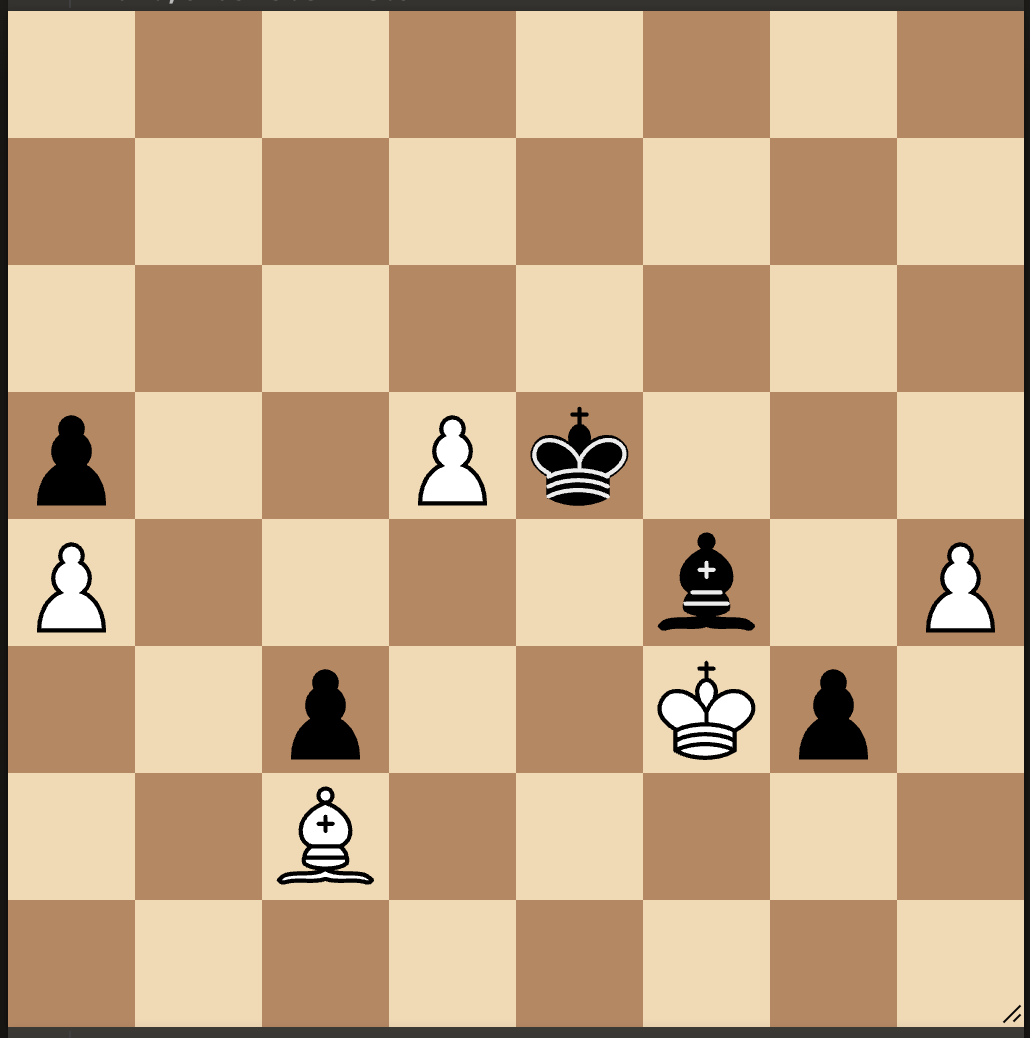
Kxd5 77. h5 (77. Kxf4 g2) 77... Kd4 78. h6 Bxh6 79. Kxg3 Ke3 80. Kg4 Kd2 81. Bg6 c2 82. Bxc2 Kxc2 Black is simply winning. Even if White could reach a1 (which he cannot), Black has the right bishop. 83. Kf5 Kb3 84. Ke4 Kxa4 85. Kd3 Kb3 86. Ke2 a4 87. Kd3 a3 88. Kd4 a2 89. Kd5 a1=Q 90. Kc5 Qe5+ 91. Kc6 Bf4 92. Kd7 Qd6+ 93. Ke8 Qc7 94. Kf8 Bg5 95. Kg8 Bf6 96. Kf8 Qe7+ 0-1
IM Silas Esben Lund, Marshall Spectator Contributor
No Haircut Until 2100, by NM Anthony Levin
Inspired by GM Aman Hambleton’s challenge in 2017, when he didn’t cut his beard until he achieved the grandmaster title, I decided—in my infinite wisdom—to go down a similar route, and I’m still on it. In this post, I’ll share with you the background of how I got here, how it’s going, and my best game from this period.
To start: a year ago, in October, I looked like this.
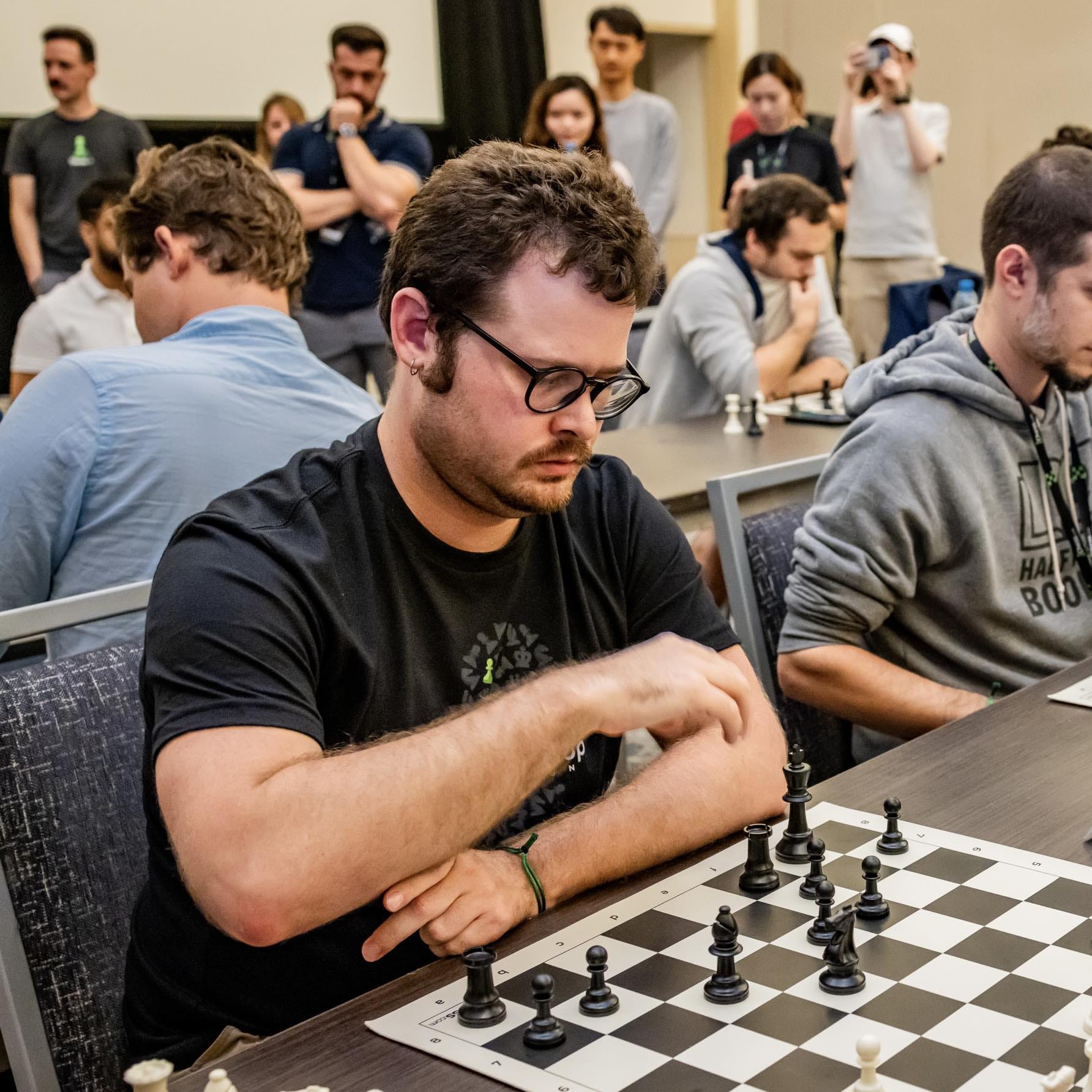
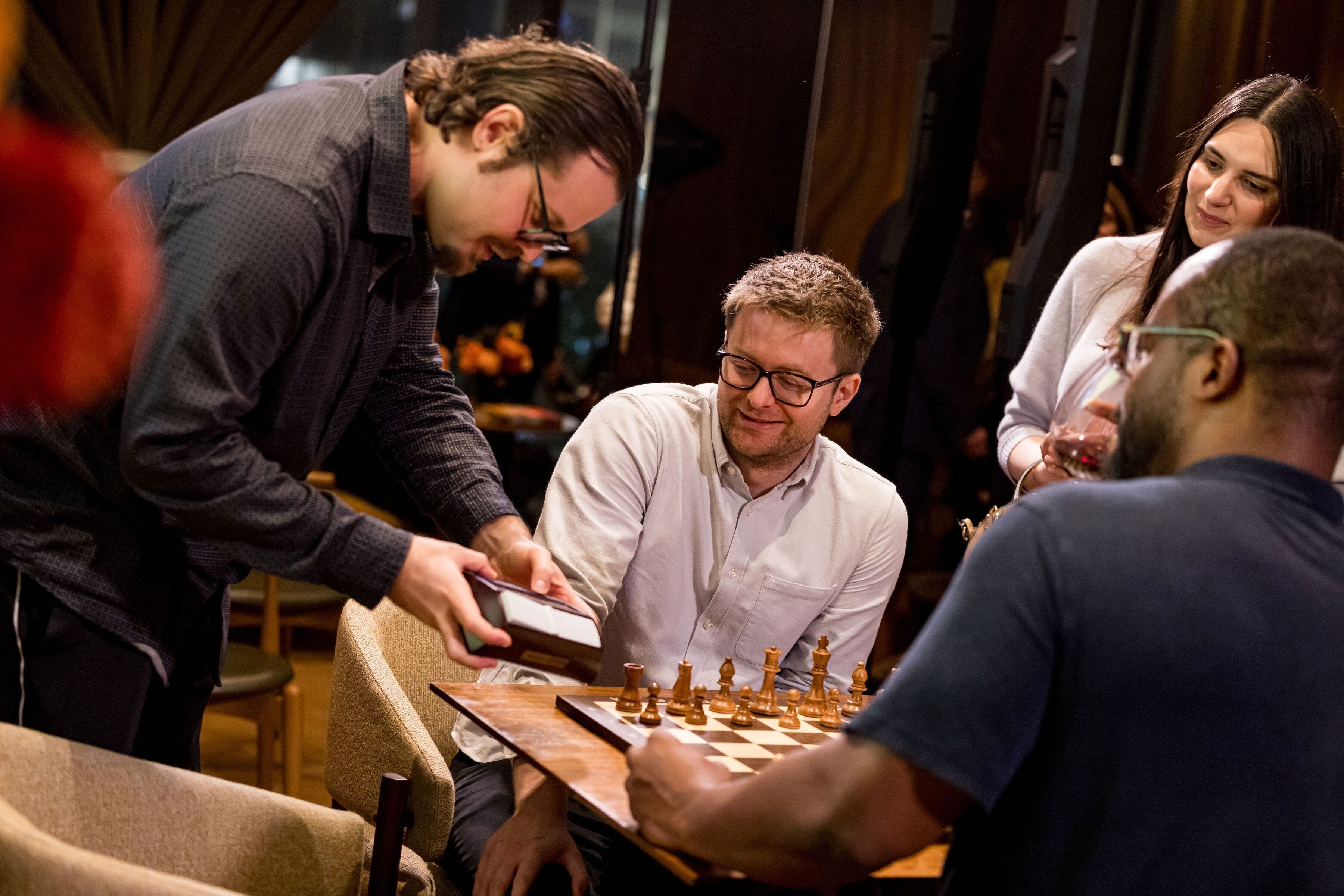
At the start of November, a month ago, I looked like this (below). Strangely enough, I had just met the man himself—Aman Hambleton—the guy who shaved his beard when he became a grandmaster. This is me setting up the clock for his casual blitz game with Jonathan Corbblah.
Okay, it doesn't look so long in that one, so here's a selfie I just took to document one more example.

So how did we get here?
I got my last haircut some time around August 2024. A few months later, around the time I would normally get my haircut, I decided to hold off a little. I didn’t have a goal in mind; I just wanted to let it grow a bit further, see what I’d look like.
More time passed. I prolonged the haircut month after month. I was curious how I’d look, and I figured at some point I’d hit the point of “Okay, now we really do have to get this cut.” This is what I looked like when I traveled to Iceland to play in the Reykjavik Open, still with no specific hair-tied goal just yet.
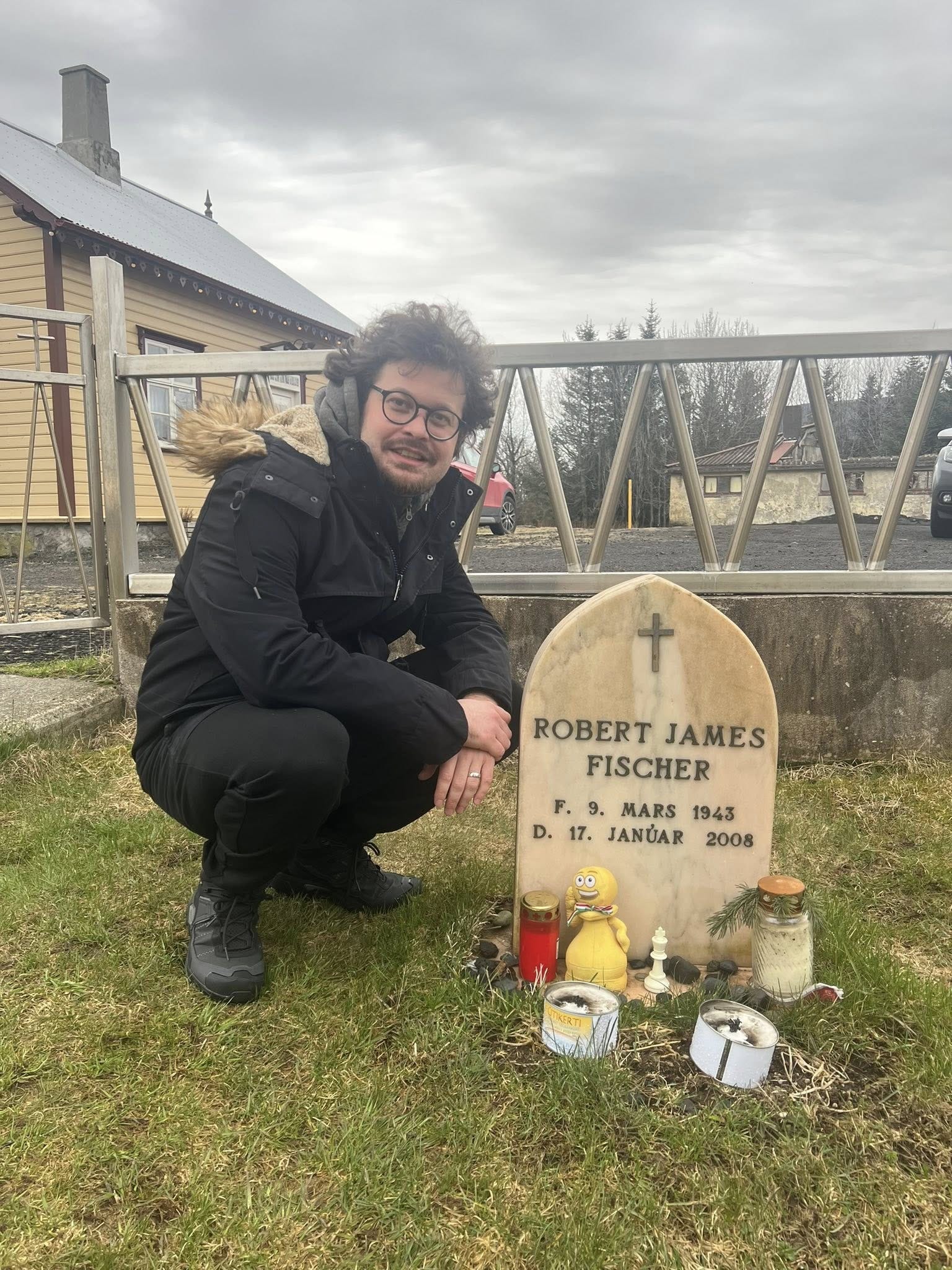
I was at my then-peak of 2028 FIDE and optimistic. Like many chess players, I considered myself to be underrated, and thought I should get a rating jump if I played outside of the United States, but Reykjavik was a wakeup call. I didn’t do too well and lost 18 points. I stewed on it for a few weeks, and that’s when I think I landed on this goal. (You can read about my Reykjavik experience here, by the way.)
You can take a look for yourself how the journey’s been going. After even more disappointing months, I really hit my stride in the August and September rating updates, where cumulatively I gained 90 points. This happens from time to time with kids, but less frequently with a 32-year-old. I won 15 games, drew seven, and my only loss in those two months came against GM Mike Rohde—a fighting game where I had my chances. I won two tournaments and hit my all-time peak of 2065.
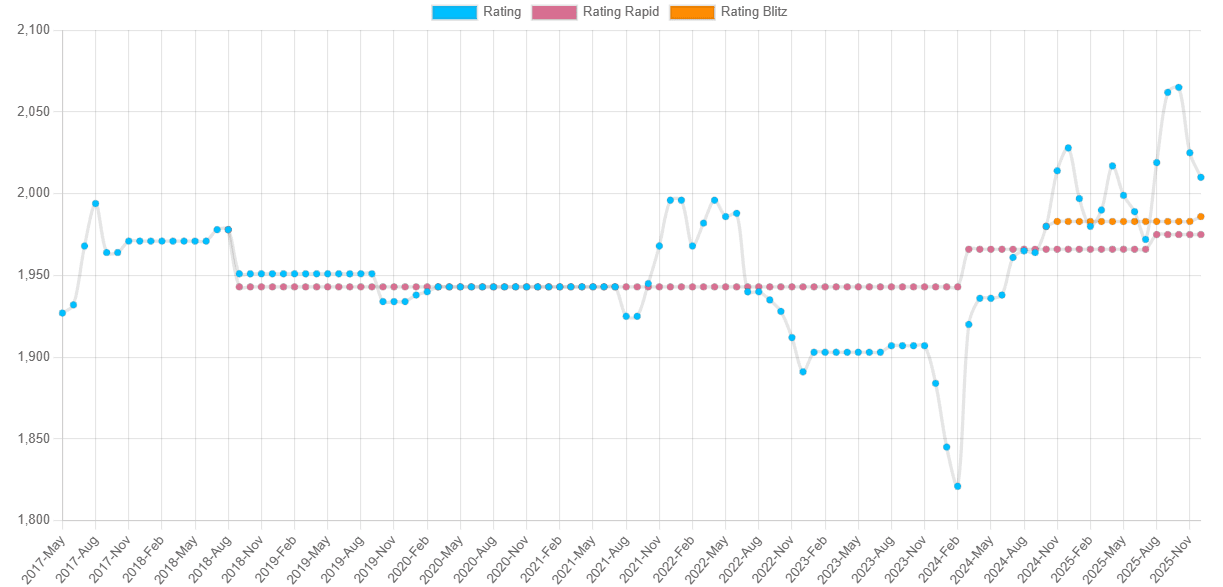
I was flying high, and I was on such a streak that I expected to win almost every game I played. I thought I’d hit the 2100 rating goal, get my haircut, and be done with it—privately, no blog, no video, no big hurrah.
Which brings me to why I’m writing this now, and it’s not just because my boss floated the idea . It’s probably a good time. I had a rocky few months since my peak and dropped down to 2010—it’s like I just came back from Reykjavik, back in April. I’m almost right where I was when I started. And I’ve come to appreciate that this is going to be a real challenge, and so it will taste that much more sweet when I reach my goal.
Here is my best game from that hot streak, against Alex Gutnik. He’s about 71 years old but still consistently rated in the 2000-2050 FIDE range—a tenacious defender and a skilled counter-attacker. In this case, he never wriggled out of the bad position he got, and I won a must-draw game the next round to win the entire tournament.
Levin, Anthony vs Gutnik, Aleksandr
Marshall FIDE Wednesday u2200
1. e4 e6 2. d4 d5 3. Nc3 dxe4 4. Nxe4 Nf6 5. Nxf6+ gxf6
He plays this pet line consistently. 6. Nf3 Nc6 7. Bc4 Qd6 8. O-O Bd7 9. c3 Ne7 10. Re1 O-O-O 11. b4 Nd5 12. Bd2 Rg8 Stockish already rates this as winning for White. There is no real kingside attack.
13. b5 Stopping Bc6. I deleted most of my opening analysis here because I may still use it, and who knows who’s reading this :). 1
13... Kb8 (13... Qa3 I was aware that this is the top engine move, but I (a) didn’t think a human would figure it out and (b) White is still better after 14. Qc2 and we play Rab1, Rb3 next.)
14. a4 c5 I was more or less prepared until this moment. I had seen c5 or c6 in my preparations, but maybe not in this exact position, and I didn’t look too deeply in how to respond. But I figured it out without much problem on my own.
15. Bf1 Prophylaxis against ...Rc8.
15... cxd4 16. cxd4 Rc8 17. Qb3 Be7 18. a5 Bd8 19. g3 He was thinking for a long time on every move. He just didn’t have a plan.
19... b6 20. Bg2 (20. a6 is also strong, but I want to reserve the possibility of opening the position. Both are. 20... Rc7 21. Bg2 Be7 22. Qd3 h5 23. Qh7 Rcc8 24. Qxf7)
20... bxa5 21. b6
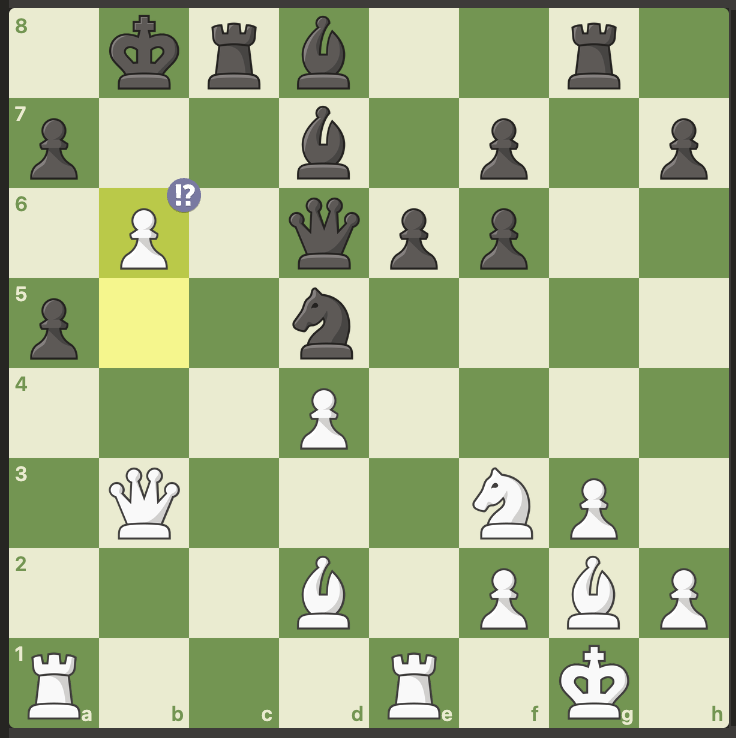
Ensuring the b-file is opened and that we don’t trade off bishops until a better moment. (21. Bxa5 Bxa5 22. Rxa5 Qb4 I rejected it because of this, but White wins directly. (22... Qb6 23. Ra6 (23. Rea1 Rc1+ 24. Rxc1 Qxa5 White is better but not winning.) 23... Qxb5 24. Qa3 Qb7 25. Nd2 Rc3 26. Qa1 Rgc8 27. Ra2 Rb1+ followed by Nb3 and c5 is winning.) 23. Qxb4 Nxb4 24. Rea1 Rc7 (24... a6 25. bxa6 Ka7 26. Rh5 Rg7 27. Rh6 Nd5 28. Nd2) 25. b6 is the point.)
21... Bxb6 22. Bxa5 Rc7 23. Nd2 Rgc8 (23... Rg4 24. Ne4 Rxe4 is the best the engine can suggest. 25. Rxe4 Kc8 26. Bxb6 Nxb6 27. Rh4)
24. Ne4 Qe7 25. Nc5 (25. Nxf6 I really wanted to make this work and calculated for 20 minutes trying to. But it loses lol. 25... Qxf6 26. Bxb6 axb6 And there is no followup. (26... Nxb6 27. Qxb6+ axb6 28. Ra8# is what you hope for...) 27. Qa3 Bc6)
25... Rxc5 26. dxc5 Qxc5 27. Bxb6 Nxb6 (27... axb6 {maybe was most tenacious, but White has many paths to victory. 28. Qa2)
28. Qf3 Bc6 29. Qxf6 Nd5 30. Reb1+ Ka8 31. Qxf7
He resigned. ...Rf8 is met with Rxa7. 1-0
There are two directions my next post can take. It will either be another struggle-bus update from an even-longer-haired me, or it will be a celebratory post when I accomplish the goal. Let's see where this goes, and thanks for following along on this journey. Truth be told, I hope it doesn't become a series—or, at least, not a long one!
[The above was reprinted from his chess.com blog with permission from the Author.]
NM Anthony Levin, Marshall Chess Club Board Member
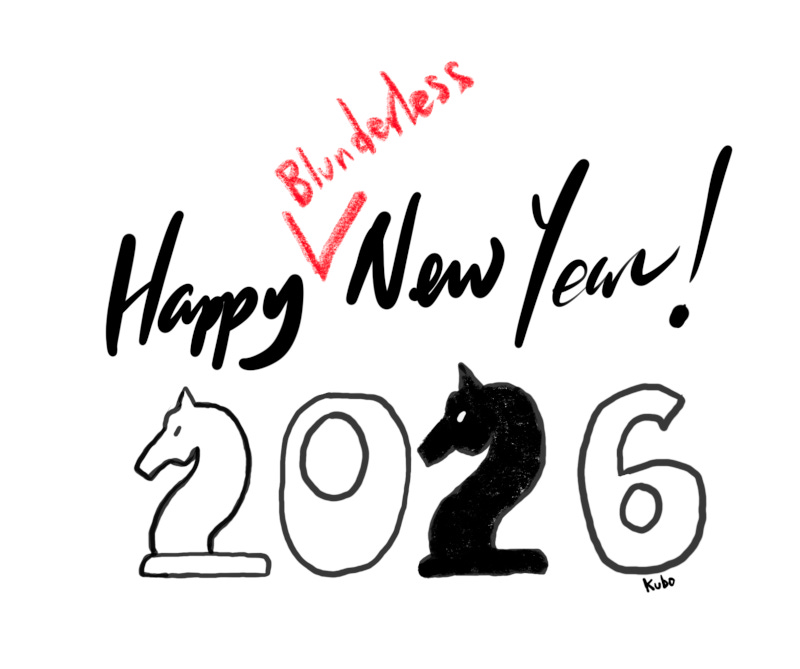
Chess Toons
En Passant
The world No 1, Magnus Carlsen, recovered from a series of mishaps to win both the World Rapid and Blitz crowns at Doha, Qatar, last weekend. The global victories were the 19th and 20th of the Norwegian’s illustrious career and may give him the edge in the longstanding debate on whether he, Garry Kasparov, or Bobby Fischer is chess’s all-time greatest master.
An Off-Broadway show called The Opening, billed as “The Second Most Famous Musical About Chess,” opens on January 8 and closes on February 8 at The Players Theatre in Manhattan.
If normal, two-dimensional chess (or its variations) isn’t enough for you, then rejoice, because thanks to the efforts of YouTuber mannymakes, who maintains a site of mind-bending chess variants, you can now play chess on the hyperbolic plane!
The Naroditsky Memorial and Fellowship Fund has surpassed $1 million, marking a major milestone in efforts to honor the legacy of GM Daniel Naroditsky.
Problems, Problems, curated by Alexander George
Ulf Andersson, Jan Timman, Eugenio Torre, 1977
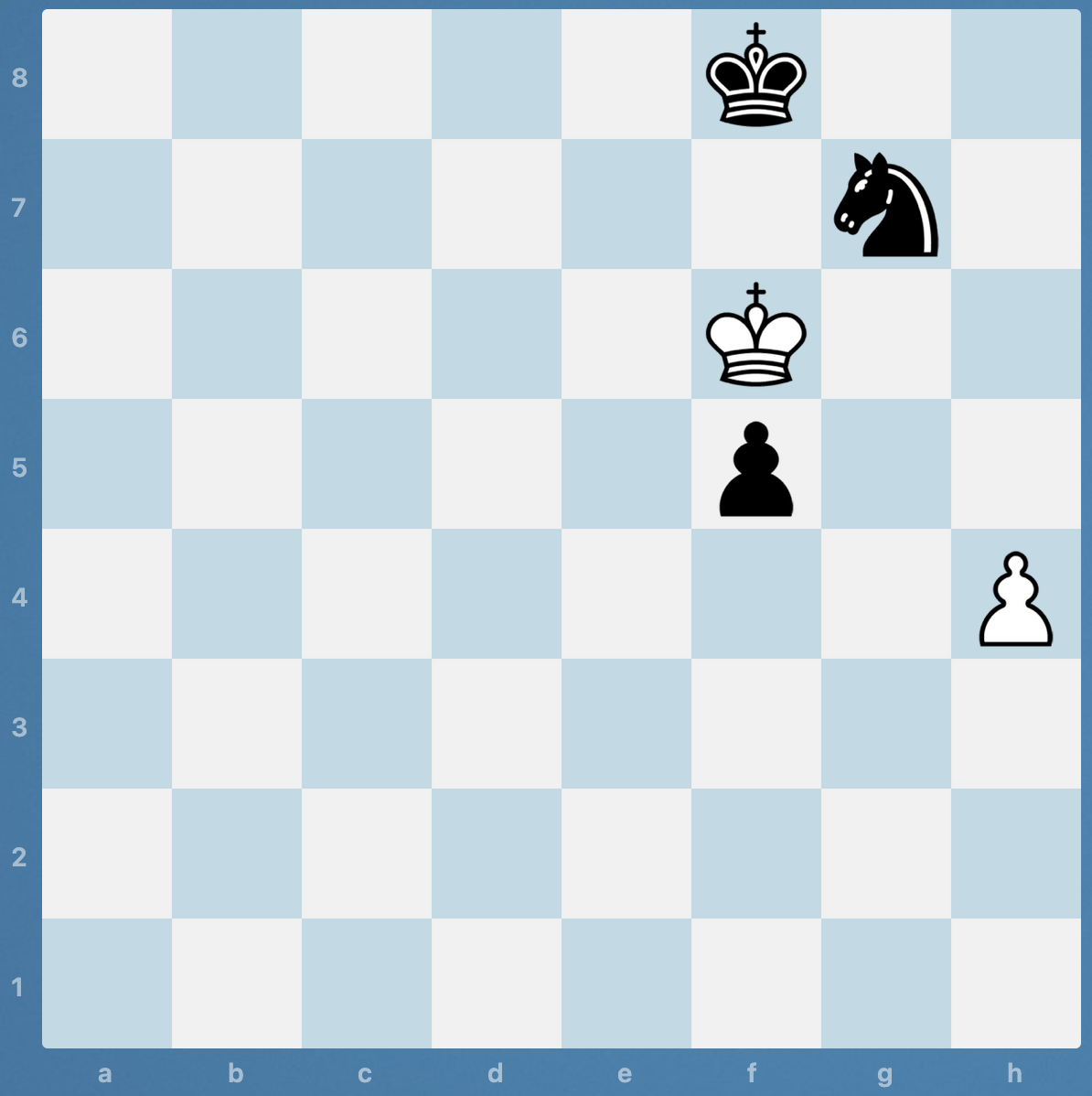
White to move and draw.
Grandmasters at the composing board.
---
Solution to last issue’s puzzle (Dawson 1914):
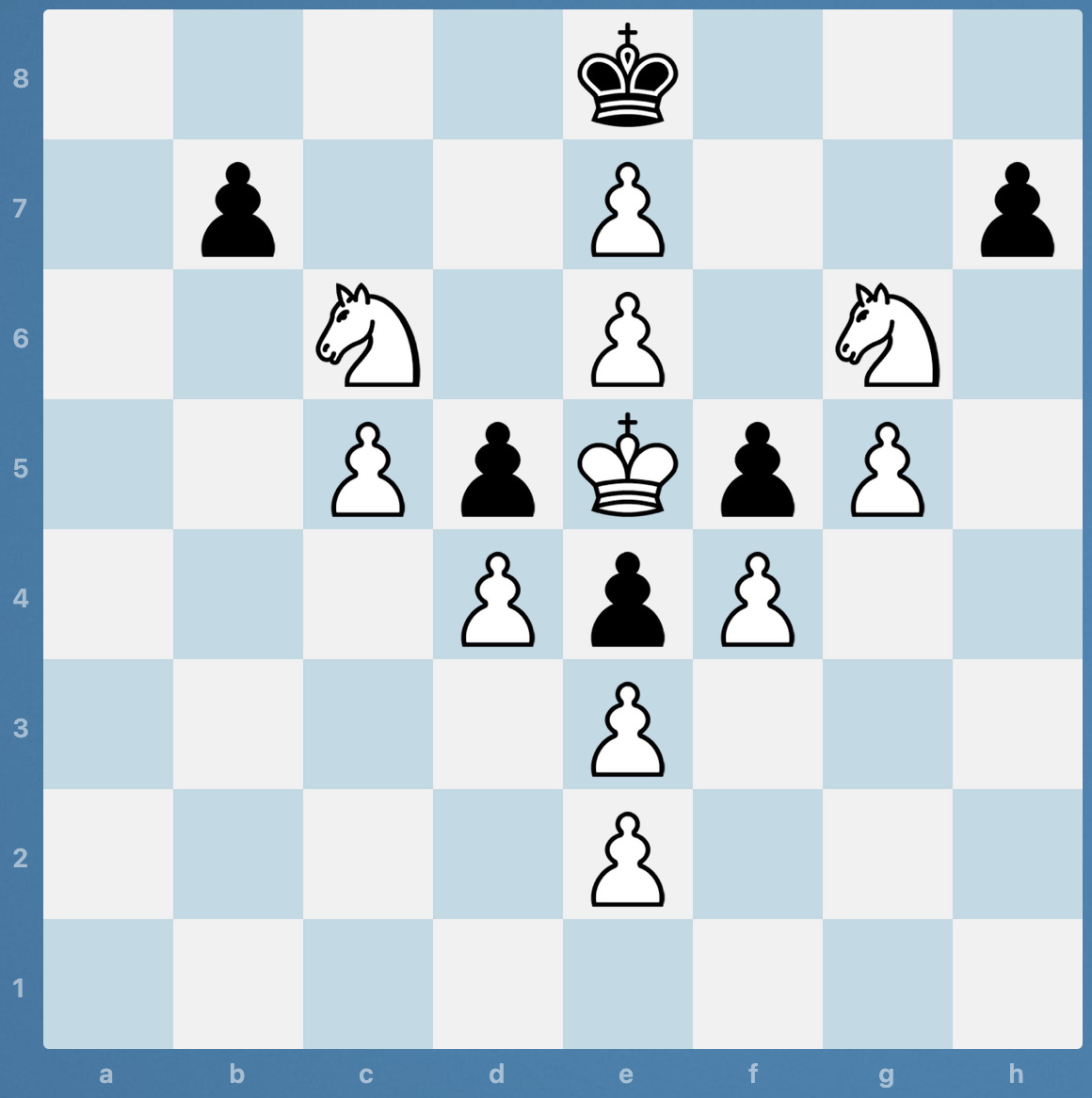
White to mate in 2.
What was Black’s last move? A quick inspection shows that the only real candidates are d7-d5 and f7-f5. But which was the last move? The white pawns must have captured 10 Black pieces, including the c8 bishop. This bishop could not have been captured on its home square, so it must have moved and the d7 pawn must have moved earlier to let it out. Hence, Black’s last move must have been f7-f5 — which allows: 1.gxf6 e.p., followed by 2.f7 mate.
---
Alexander George
Editor’s Note
As always, if you have any feedback, comments, or would like to submit an article please contact us directly at td@marshallchessclub.org.
Enjoy, and thanks for reading!
The Marshall Chess Club
23 West Tenth Street New York, NY 10011
212.477.3716

Thanks for reading The Marshall Spectator! Subscribe for free to receive new posts and support the club.
Once again. Thank you.