

The Marshall Spectator
May 13, 2026


In This Issue:
From The Skittles Room
Games Analyzed, by GM Aleksandr Lenderman
Reflections on My Recent FIDE Events, by FM Joshua Colas
Chess Toons
En Passant
Problems, Problems, curated by Alexander George
Editor’s Note

Welcome back, fellow chess players, to this edition of the Marshall Chess Club’s fortnightly bulletin, The Marshall Spectator.
Last weekend in Baltimore, US Chess hosted the K-6 National Championships and many New York teams and Marshall Members were in attendance. Congratulations to the team from Speyer Legacy School, who tied for first place in the K-1 Championship section and also got clear first in the K-6 Championship section, finishing just half a point ahead of the team from Success Academy Midtown West who finished in second-place and a full point ahead of the team from Dalton who was third in that section. The K-6 Speyer team was lead by Lucas Yang, Ian Avery Singh, and Abigail Zhou who all scored an impressive 5 out of 7 to lead their team to victory. The K-5 Championship section was won by the team from P.S. 130, led by top scorer Grayson Xiang who finished with an impressive 6 out of 7 points, while The K-3 Championship section was won by the team from P.S. 198 who finished in clear first.
Speaking of scholastic chess, we are reaching out to ask for support for a longtime friend of our club, Mr. James Lewis.

Over the years, he has been a great supporter of our community, including sending many of his students to our tournaments and camps. As a coach of a nearby school right around the corner from us, he has truly been a wonderful neighbor and friend to the Marshall Chess Club. If you are able, please consider making a donation to help support him during this time. Any amount is greatly appreciated. Thank you for your kindness and support.
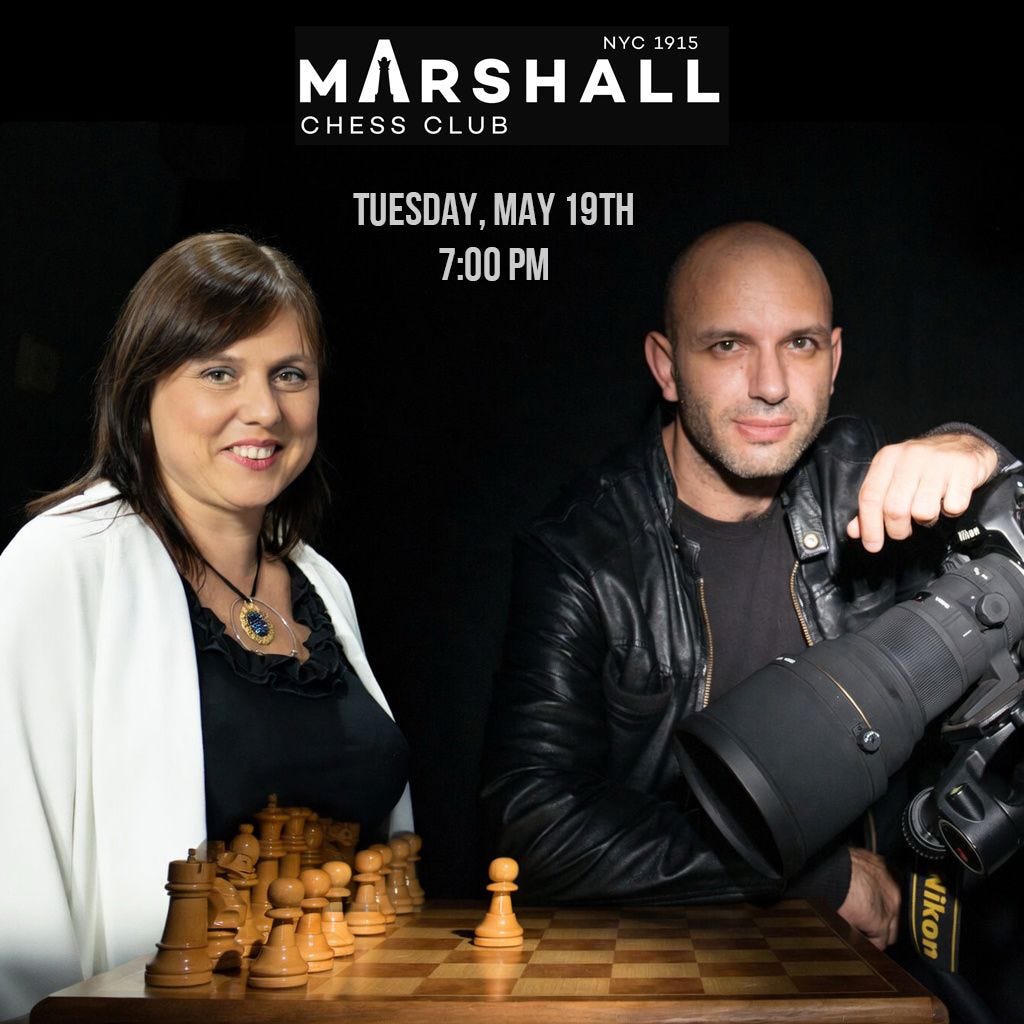
Next week we’re looking forward to a visit from Sofia Polgár, who will be joining us on May 19th, along with renowned chess photographer David Llada for our inaugural Chess and Arts Fair. The event will be moderated by IM Rusa Goletiani and Vivien Schweitzer. It promises to be a memorable event, and we look forward to celebrating this special occasion with all of you.
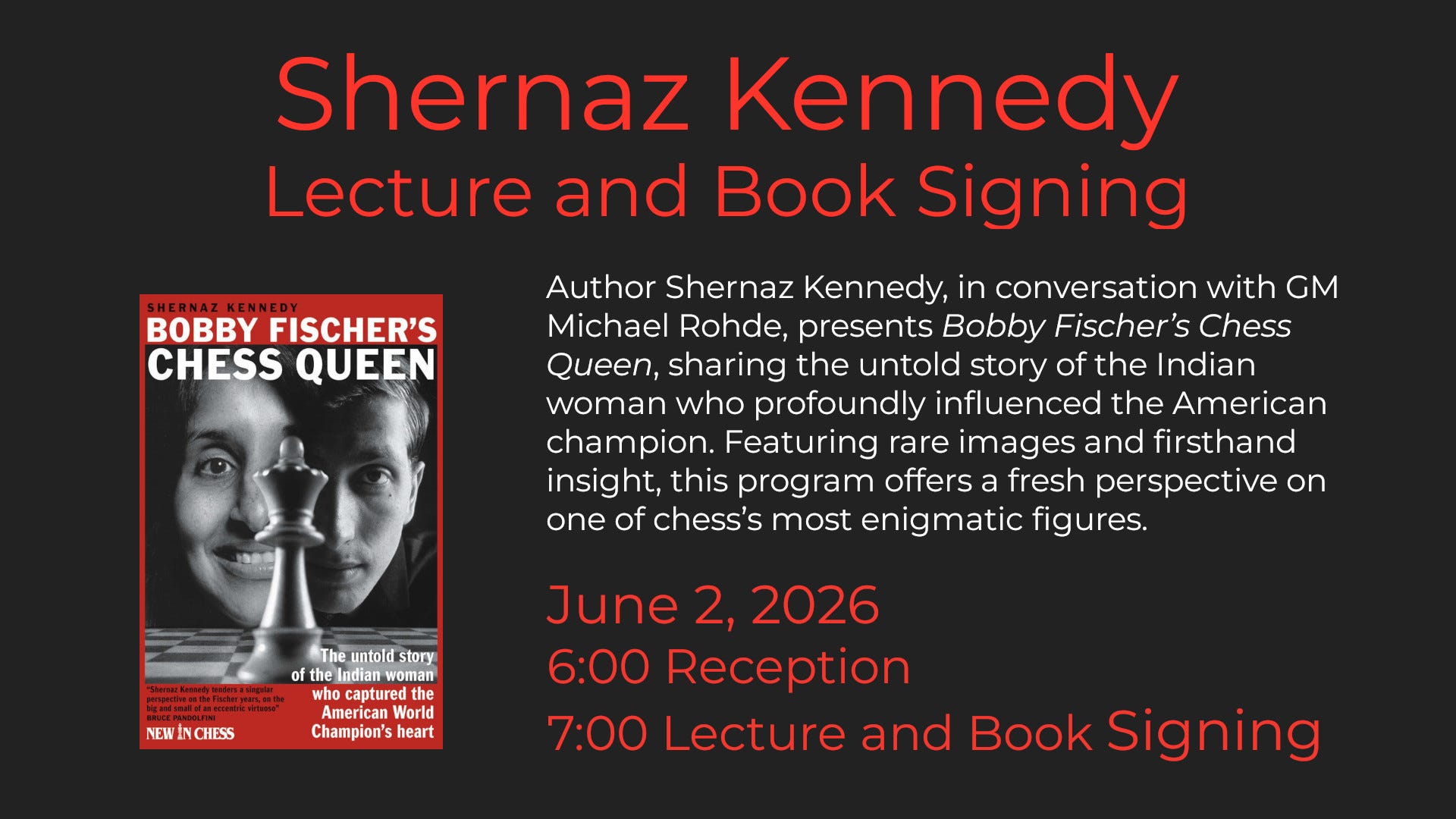
Looking further ahead on the calendar, we are looking forward to a Lecture and Book signing with Shernaz Kennedy on Tuesday June 2.
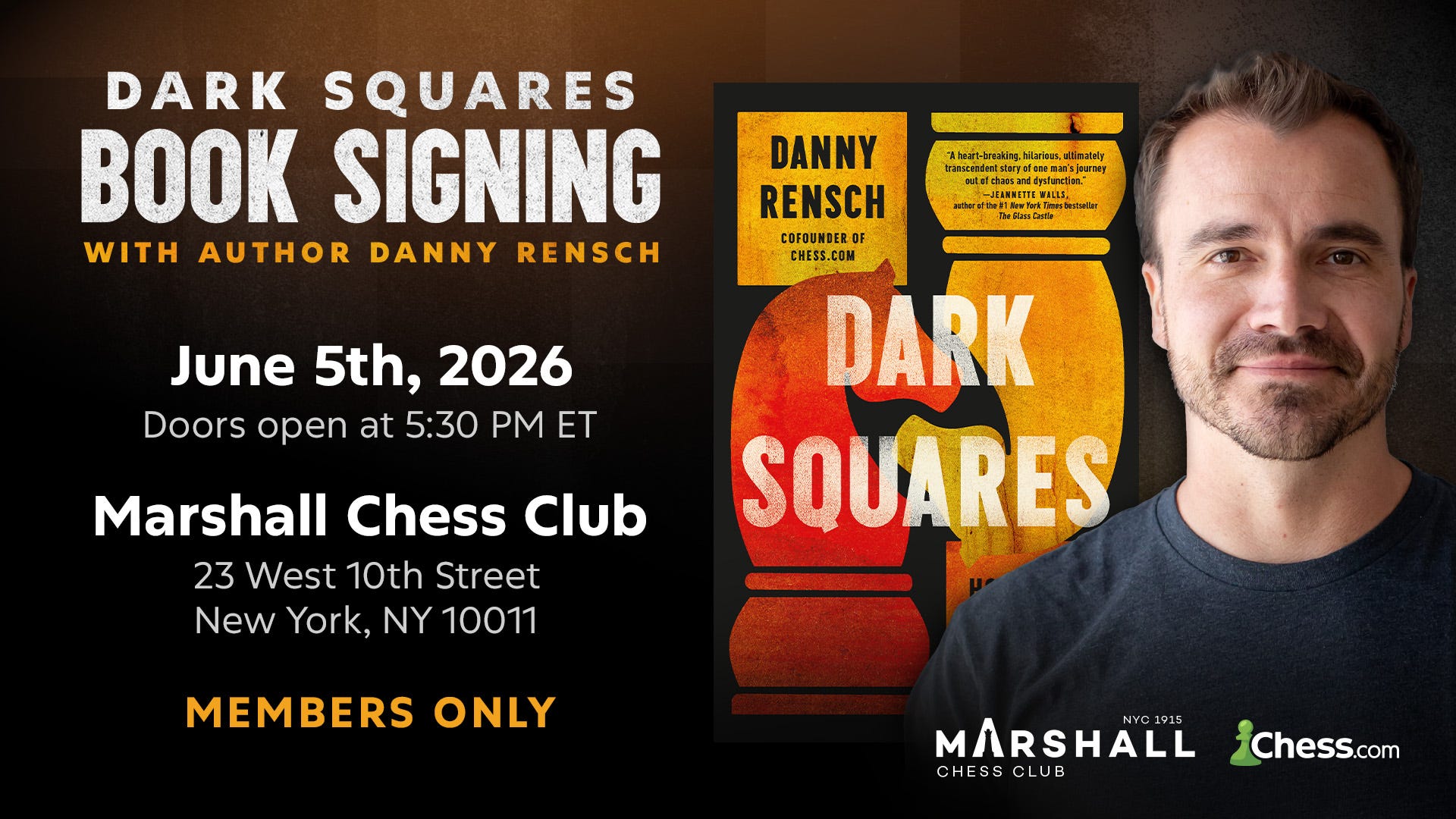
Just a few days after the Shernaz Kennedy book event, we will have another author visit the club for a book signing: Legendary Chess.com Chief Chess Officer Danny Rensch. He will visit the club to sign copies of his book “Dark Squares.”
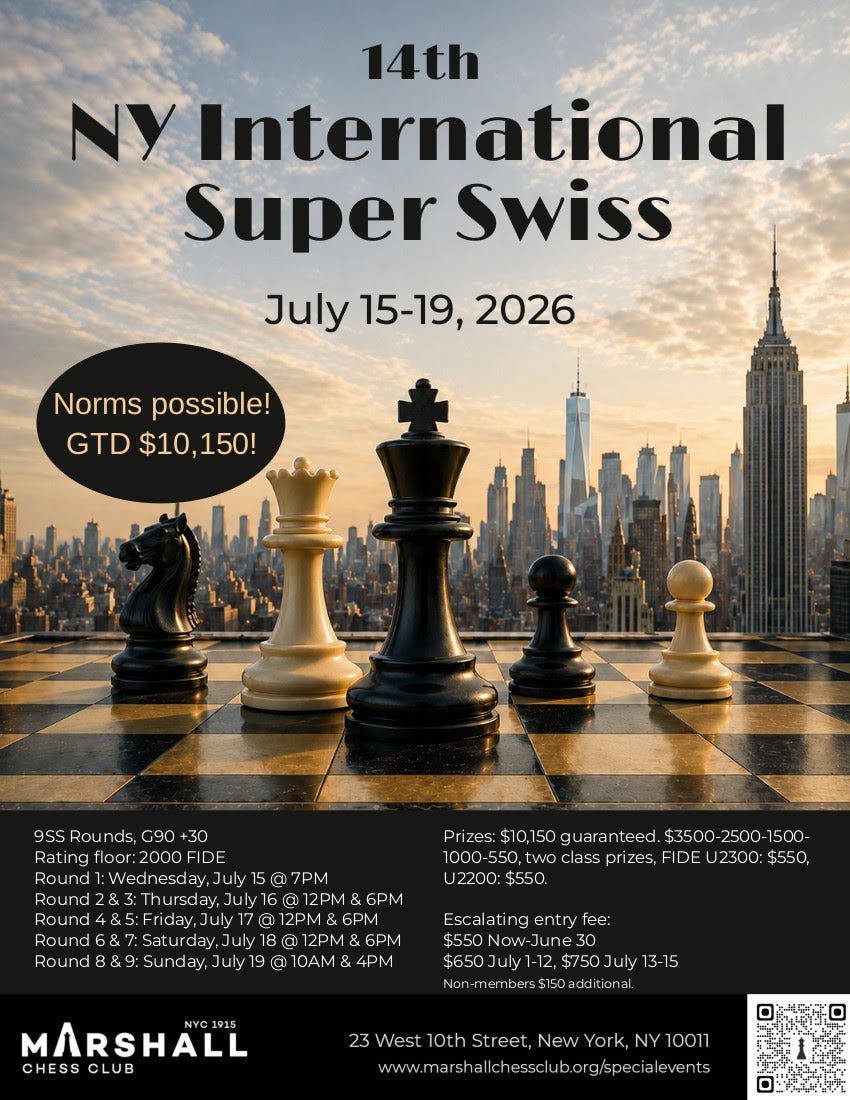
Looking further ahead to this summer, we’re thrilled to announce our annual Super Swiss will once again be held at 23 West 10th Street.
The tournament will be held from July 15-19, 2026.
Prize Fund: $10,150, Norms possible!, Rating floor: 2000+ FIDE
Escalating entry fee: $550 Now through June 30th, $650 July 1st-12th, $750 July 13th-15th.
Registration is now live on our event webpage. You can register HERE.
Looking back over the last two weeks, we have had a plethora of events for our members to participate in.
The Morning Under 1600 on May 10 had 19 players registered and was won by Logan Shmulenson and Jayden Roh who scored 3 out of 3 to win $157.50 each.
The Sunday Game 50 Under 1600 on May 10 had 16 players registered and was won by Vladimir Chesbro who scored a perfect 4 out of 4 to win the $128 first-place prize. Max Debenedittis scored 3 out of 4 winning $87, while Dheeraj Prasanth Devaguptapu and Miles Jellinek scored 2.5 out of 4 to win $33 each.
The Sunday Game 50 Open on May 10 had 20 players registered and was won by Sasha Arthur Kagle, and Jonas Michael Zeutzius who scored 3.5 out of 4 to win $134 each, while the following players scored 2.5 out of 4 to win $25.75 each: Ben Davar, Lawrence Lin, Jackson Joyce, and David J Yoo.
The Rated Beginner Open on May 10 had 39 players registered and was won by the following players who scored a perfect 3 out of 3 to win $115.75: Victoria Vetri, Jacob Gould, Matthew Bartsch, and Jeffrey Sun.
The Under 2000 Morning Action on May 9 had 35 players registered and was won by David Ologunleko, Marko Scekic and Nikola Scekic who scored a perfect 3 out of 3 to win $143.33 each, while Laksh Mehta Alex Melman, and Juan Corredor scored 2 out of 3 to win $61.33 each.
The Saturday Game 50 Open on May 9 had 45 players registered and was won by FM Justin Chen who scored $360, while Sasha Mayers and Eugene Wong scored 3.5 out of 4 to win $214.50 each.
The Saturday Game 50 Under 1800 on May 9 had 26 players registered and was won by Ozzie Kelly-Yuoh who scored a perfect 4 out of 4 to win $208, while Avery Goodrich won a $108 class-prize for a 3 out of 4 performance, and the following players won $47 each for their score: Manish Suthar, Charlie Rozenfeld, and Plato Zhang.
The Morning Masters on May 9 had 5 players registered and was won by Corin Gartenlaub who scored a perfect 3 out of 3 to win the $50 first-place prize, while Akhil Velampalli scored 2 out of 3 to win $38.
The FIDE Blitz on May 8 had 54 players registered and was won by IM Mykola Bortnyk who scored a near-perfect 8.5 out of 9 to win $378, while FM Linxi Zhu scored 7.5 out of 9 to win the $189 second-place prize. The following players won $94.50 for their performance in the FIDE Blitz event: Lev Shangin, Leandro Nicholas Ulloa Centeno, Lucas Lu, and Evan C Seghers.
The Afternoon Action on May 8 had 9 players registered and was won by Joel Martin who scored a perfect 3 out of 3 to win $68, while Arthur W Tollefson scored 2.5 out of 3 to win $45.
The Thursday Action on May 7 had 37 players registered and was won by FM Leif Pressman who scored a perfect 4 out of 4 to win $189, while Evan C Seghers scored 3.5 out of 4 to win $126. The following players won $47.50 for their performance in the event: GM Raven Sturt, FM Olson Ortiz, Sasha Arthur Kagle, Ari J Bluffstone, Bryson Wolf, and Ben Assa.
The Thursday Open that concluded on May 7 had 18 players registered and was won by FM Aditeya Das who scored 5 out of 6 to win the $360 first-place prize. Aleksandr Gutnik and Andrew Colwell scored 4.5 out of 6 to win $108 each, while Rohit Jagga and Joshua Shou scored 3 out of 6 to win $54 each and Daniel Han scored 2.5 winning $36.
The Premier Under 2000 that concluded on May 3 had 41 players registered and was won by Pranav Reddy Marri who scored 4.5 out of 5 to win the $667 first-pace prize. John Moina and Andrey Zubov scored 4 out of 5 to win $233.50 each, while Satyarjit Jandhyala won a $200 class prize for a 2.5 out of 5 performance.
The Premier Open that concluded on May 3 had 55 players and was won by FM Joshua Colas who scored a near-perfect 4.5 out of 5 to win the $1,000 first-place prize, while IM Kassa Korely and FM Zachary Tanenbaum scored 4 out of 5 to win $375 each. The following players won $35.71 for their 3.5 out of 5 score: CM Luc William Crim Hoffman, CM Carter Ho, James J Marsh, CM Aiden Linyuan Li, Quan Anh Le, NM Anthony Levin, and Colin Diamond.
The Morning Under 1600 on May 3 had 27 players registered and was won by Basil Bouzalis, Harry Steven Chalfin, and Nathaniel Neveu who scored 3 out of 3 to win $151.67 each.
The Rated Beginner Open on May 3 had 23 players registered and was won by the following players who scored a perfect 3 out of 3 to win $68.75 each: Warren Brick, James Sanderson, Matthew Smith, and Sanchit Bansal.
The Under 2000 Morning Action on May 2 had 35 players registered and was won by Nico Alvarado-Yoshida, Ashwin Agnihotri, and Andrew Chan who scored a perfect 3 out of 3 to win $143, while Craig Nemiroff and Timothy S Wang scored 2 out of 4 to win $92 each.
The Morning Masters on May 2 had 6 players registered and was won by Alisher Podavonov who scored a perfect 3 out of 3 to win $60, while Samuel Nemiroff scored 2 out of 3 to win $45.
The Afternoon Action on May 1 had 4 players registered and was won by Camden Wiseman who score a perfect 3 out of 3 to win the $38 first-place prize, while Kalil Shi and Jabari Benjamin scored 2 out of 3 to win $12.50 each.
The Friday FIDE Rapid on May 1 had 20 players registered and was won by GM Raven Sturt who scored 4 out of 4 to win the $95 first-place prize. William Del Castillo scored 3.5 points to win $48 and the following 4 players won $24 for their performance: Camden Wiseman, Joseph Segich, Victor Kenny-Maheux, and Assau Temir Mailybayev.
The Thursday Action on April 30 had 21 players registered and was won by GM Raven Sturt and FM Leif Pressman who scored 3.5 out of 4 to win $87.50 each. IM Jay Bonin and William Del Castillo scored 3 out of 4 to win $53 each, and the following players shared in the remaining prize fund winning $17.67 each for their 2.5 out of 4 score: Bryson Wolf, Cameron Hull, and Kenny Bollin.
The Monday Under 1800 that concluded on April 27 had 28 players registered and was won by Daniel Yates who scored 5 out of 6 to win the $187 first-place prize, while Sean Pagaduan won the $140 second-place prize for a 4.5 out of 5 score. Patrice Bericourt won a $94 class prize for his 3.5 out of 6 performance, while Anthony Asseviro Jr, Gary Chan, and Victor Kenny-Maheux scored 4 out of 6 to win $31.33 each. Finally, Michael A Shea, Vlado Ovtcharov, and Joey Kimmel scored 3 out of 6 to share in the remaining prize funds winning $15.67 each.
The Monday FIDE that concluded on April 27 had 27 players registered and was won by FM Aditeya Das and Ethan Kozower who scored 4.5 out of 6 to win $217 each. Quan Anh Le and Takki Tanaka scored 4 points to win $87 each, while Ruslan Polovinko scored 3.5 out of 6 to win a $44 class prize.
We look forward to seeing you at the club soon!
Games Analyzed, by GM Lenderman
FM Josh Colas won the May edition of the Marshall Premier with a strong score of 4.5/5 ahead of several strong IMs, Kassa Korley and Josiah Stearman, both of whom were previous Marshall Premier winners. This definitely did not surprise me, as I had a recent first-hand experience in last year’s Marshall Championship to realize just how strong Josh Colas can play on a good day. I was slightly better out of the opening that game with a huge time advantage before getting soundly outplayed the rest of the game and losing a key game to end my chances of fighting for first place in the Championship. Before the last round of the May Marshall Premier, Josiah Stearman was tied with Colas at 3.5/4, with Kassa right behind them with 3/4. With Josh Colas winning the last round, and Josiah not winning, this allowed Colas to clinch clear first.
You can play through the games with analysis here.
Round 5: Korley, Kassa - Stearman, Josiah
1. d4 d5 2. c4 e6 3. Nc3 Nf6 4. Bg5 dxc4 5. e4 (5. e3 Was previously featured in a different Marshall Spectator Article in a last year’s Marshall Premier last round game between IM Justin Sarkar and GM David Brodsky, which Sarkar won very convincingly thanks to good prep followed by very precise calculation.)
5... c5 (5... b5 Is also, an interesting alternative.)
6. d5 (6. Bxf6 Qxf6 7. d5 Might be a bit more accurate.)
6... Be7 7. Bxc4 Nxd5 8. Bxe7?! (8. Bb5+ was likely more accurate which leads to an interesting dynamic equality after 8... Bd7 9. exd5 Bxg5 10. dxe6 fxe6 11. Nh3)
8... Nxe7 9. Qh5 Nd7?! Inaccuracy. Qc7 was best. Not sure if Josiah simply blundered Bxe6? (9... Qc7 Seems like black keeps an extra pawn for limited compensation here. 10. Nb5 Qa5+)
10. Bxe6 O-O 11. Bxd7 Qxd7 (11... Bxd7 Might’ve been a bit more accurate.)
12. Qxc5 Here, black has very limited compensation for the pawn.
12…b6 13. Qe3 f5 14. Rd1 Qc6 15. Nge2 Ba6 16. O-O fxe4 17. Rfe1 Bd3 18. Nd4 (18. Ng3 Is slightly more accurate.)
18... Qf6 19. f3 Rad8 20. Nxe4 Qxd4 21. Qxd4 Rxd4 22. Nf2 Nf5 23. Rxd3 Rxd3 24. Nxd3 Rd8 25. Nf4 g5 Here, Black is getting some counter-play, at least. 26. Ne6 (26. Nh5!?)
26… Rd2 27. Re5 Kf7 (27... Nh4! 28. Rxg5+ Kf7 29. Nf4 Rxb2 30. Rh5 Ng6 Would allow Black much more counter-play chances.)
28. Nxg5+?! (28. Rxf5+! Kxe6 29. Rxg5 Rxb2 30. Rh5 Rxa2 31. Rxh7 Is winning for white. White’s pawns are much quicker, and they also have an extra pawn.)
28... Kg6 29. f4? (29. Nxh7 It was still possible to get into this winning endgame.)
29... Rxb2 30. Re6+ Kg7 (30... Kh5! 31. Nxh7 Nh4! Suddenly, black has enough counterplay for equality.)
31. g4 Nd4 (31... Nh4! Black needs to keep the knights on the board.)
32. Re4 h6 33. Rxd4 hxg5 34. fxg5 Rxa2 35. h4 Now, White is winning.
35… b5 36. h5 Ra4 37. Rd7+! Kg8 38. Rd8+ Kg7 39. h6+ Kg6 40. Rg8+ Kh7 41. Rg7+ Kh8
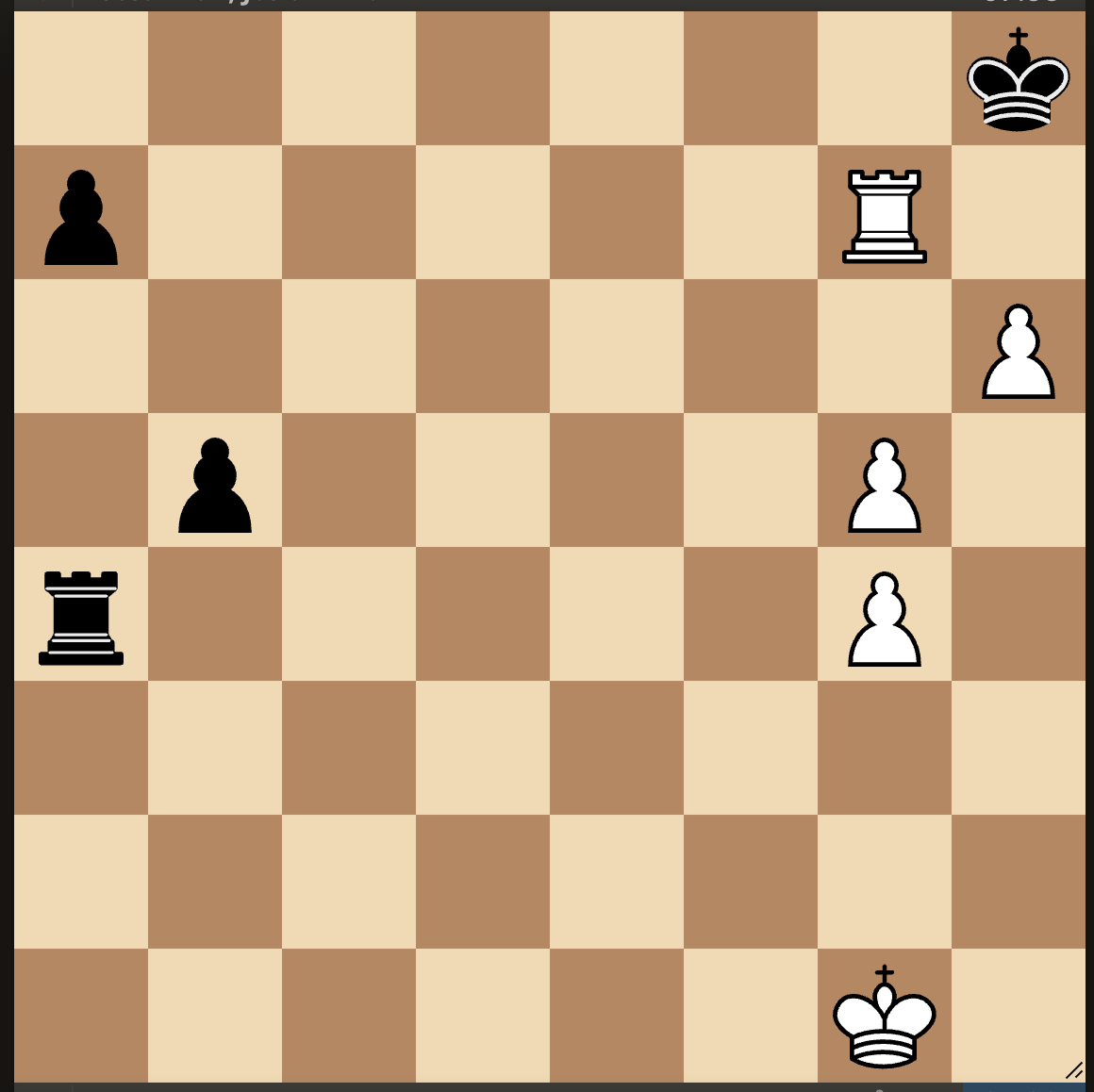
42. Kh2? This looks logical but black now has an unexpected chance to save the game. That’s why accuracy is important until the very end. (42. Kf2! Would be winning since now Rxg4 is met with Kf3 and the white king invasion, while black’s other idea is prevented. } 42... Rxg4 (42... Ra6 43. Rb7 Rb6 44. Rxb6 axb6 45. Ke3 Now, the white king is close to the b-pawns, and white wins easily.) 43. Kf3)
42... Rxg4? Now, White’s previous move is justified. (42... Ra6!! Suddenly, this is a draw, since white doesn’t have a good way to make progress anymore.
43. Rb7 Rb6! The point that now the white king on h2 is too far away from the b-pawn, and white cannot trade the rooks anymore, since it would lead to a lost pawn endgame. Therefore, white has to allow the black rook to stay on b6, behind the b-pawn, and black has enough counterplay for a draw.
44. Rxa7 (44. Rxb6?? axb6 45. Kg3 b4 $19) 44... b4)
43. Kh3 Rg1 44. Kh4 Now, the white king connects to his passed pawns, and white wins easily from here, without any more adventures.
44…Rh1+ 45. Kg4 b4 46. Rxa7 b3 47. Rb7 b2 48. Rxb2 Kh7 49. Rb7+ Kh8 50. Kf5 Ra1 51. Re7 Kg8 52. Kf6 Ra8 53. Re6 Kh7 54. Re7+ Kg8 55. g6 Rb8 56. Re5 Rf8+ 57. Kg5 Ra8 58. h7+ A very instructive endgame, showcasing the importance of accuracy until the end, and the importance of looking for unexpected resources even in lost positions. 1-0
Round 4: Dong, Kyle - Korley, Kassa
Aside from the last round encounter by the heavy-weights Kassa Korley and Josiah Stearman, there were some other games/fragments that caught my attention. I found this game by Kassa Korley to also be quite interesting.
1. c4 e6 2. g3 d5 3. Bg2 Nf6 4. Nf3 c5 5. cxd5 exd5 6. d4 h6!? An interesting wrinkle. Turns out Kassa has already played this before in an important game. (6... Nc6 This is more common. In fact, I played a game on the white side of this against Kassa a few years ago.)
7. O-O Be7 8. dxc5 Bxc5 9. a3 a5 Not sure if this was meant to be an intentional improvement or if Kassa has forgotten the exact move order of his previous game. The engine, at least at the lower depth prefers Kassa’s approach in his previous game against none other than Josh Colas, the winner of this month’s Marshall Premier. Coincidentally, it was also played in the last round of the earlier mentioned last year’s Marshall Championship, yes, the same exact tournament where Colas, literally the round before has beaten yours truly in a very nice game. (9... O-O 10. Nc3 (10. b4 Perhaps, Kassa was afraid of this improvement, and thus, decided to add a wrinkle, and started with a5 instead of 0-0?) 10... a5 11. b3 Nc6 12. Bb2 Be6 13. Rc1 Qe7 14. Nb5 Ne4 15. e3 Rfd8 16. Ne1 Bb6 17. Nd3 Bf5 18. Qe2 Ng5 19. Nf4 Be4 20. h4 Bxg2 21. Kxg2 Ne6 22. Nd3 Rd7 23. Ne5? Nxe5 24. Bxe5 f6 (24... d4) 25. Bb2 d4! 0-1 (53) Colas,J (2271)-Korley,K (2402) New York 2025 Black has a good position and went on to win)
10. Qc2 Bb6 11. Nc3 O-O 12. Bf4 Nc6 13. Rac1 (13. Rad1)
13... Re8 14. Na4?! Inaccuracy. Rfd1 was best. Seems like the wrong plan for white, as the white knight likely isn’t going to be able to come to c5 easily. Meanwhile, the e4 square is abandoned, and the white knight gets de-centralized. (14. Rfd1)
14... Ba7 15. Qd3 Qe7 16. Nc3 Bg4 17. h3 Bh5 18. Nxd5 Nxd5 19. Qxd5 g5 20. Bd6 Qxe2 21. Qb3 a4 22. Qxb7 Bxf3
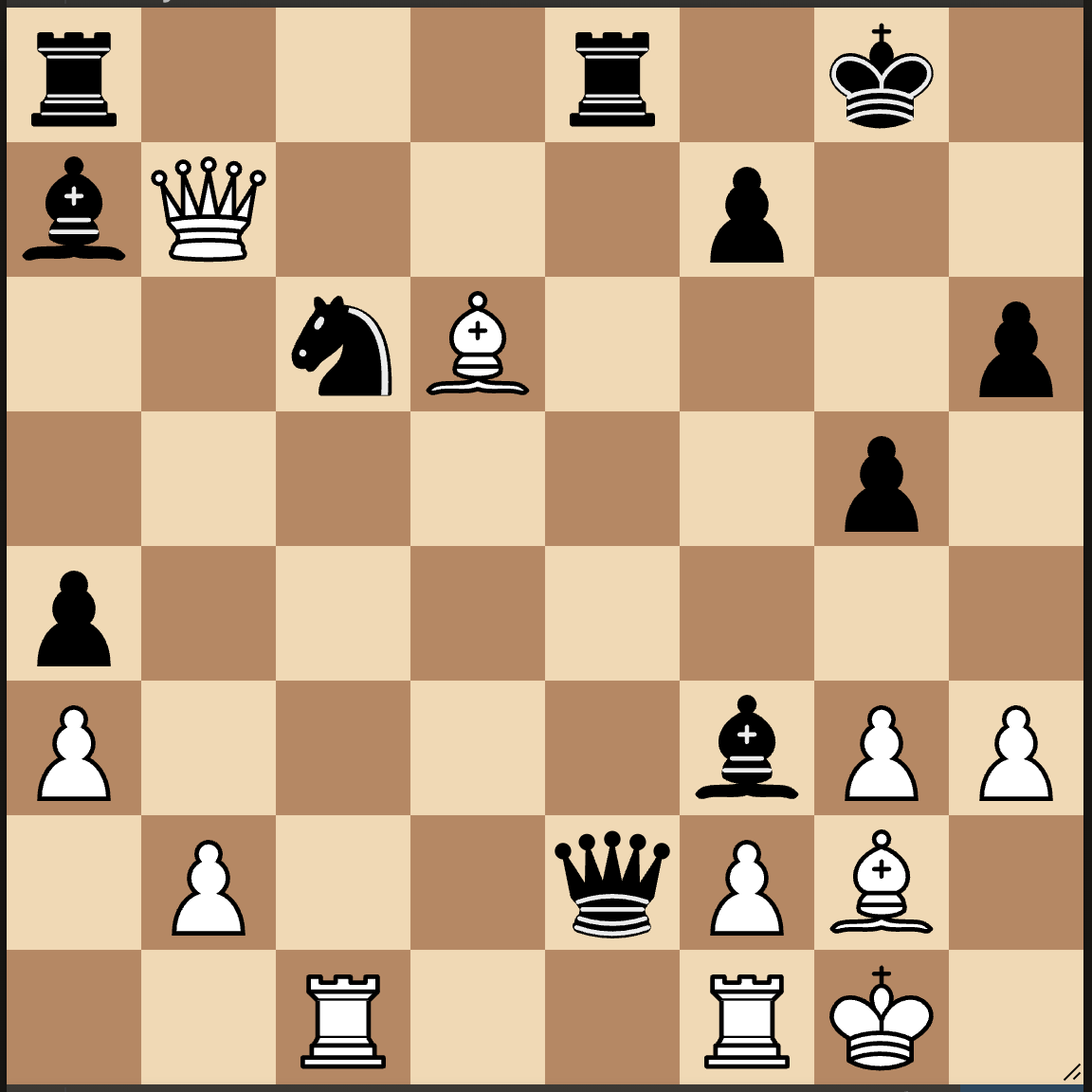
Here comes the critical moment of the whole game.
23. Bxf3? Blunder. Rxc6 was best. Based on a miscalculation. (23. Rxc6! Would keep the position dynamically equal instead.)
23... Qxf3 24. Qxc6 Bxf2+! A very nice tactic and a cold shower for White.
25. Kh2? Mistake. Rxf2 was best. (25. Rxf2 Re1+! Would be a winning removal of the guard tactic for Black. 26. Rxe1 (26. Kh2 Qxf2+) 26... Qxc6)
25... Bxg3+! 26. Kg1 Qxc6 27. Rxc6 Re6 White loses material after Rd1 Rd8, so white resigns. A very nice game by Kassa, showing good prep, with good dynamic follow-up, putting emphasis on active pieces, and ending with very good tactical alertness. 0-1
Round 2: Das, Aditeya - Andrew Zhang
This game from round 2 by FM Aditeya Das caught my attention. Even though it seemed like a smooth win by Adi, black had an unexpected chance in the middle game to turn the tables.
1. e4 c6 2. d4 d5 3. e5 c5 4. Nf3 Nc6 5. dxc5 Bg4 6. c3 e6 7. b4 Bxf3 8. Qxf3 Nxe5 9. Bb5+ Nc6 10. O-O Nf6 11. Re1 Be7 12. Bf4 O-O 13. Nd2 Rc8 14. a3 a6 15. Bd3 Re8 16. Qh3 Bf8 17. Nf3 h6 18. Ne5 Nxe5 19. Bxe5 Nd7 20. Bd4 Qc7?! Inaccuracy. Nb8 was best.
21. c4 e5 22. Bb2 Nf6?! Inaccuracy. d4 was best.
23. f4? Mistake. cxd5 was best.
23… e4 24. Bc2 Qxf4 25. cxd5 Nxd5?! Inaccuracy. b6 was best.
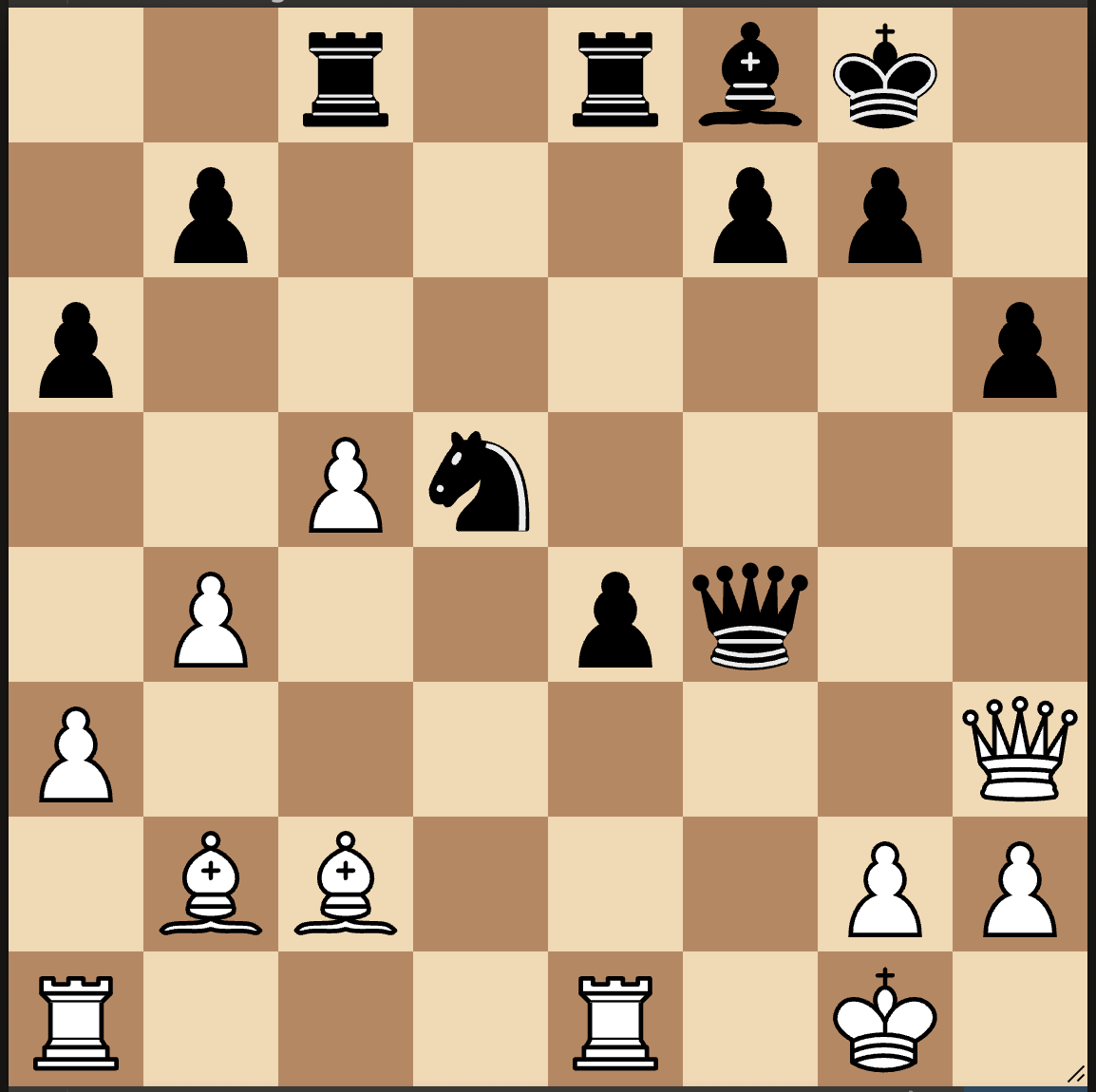
Up to this point, Adi played the game quite well, also showing good opening prep and good middle game play. However, here, he makes a miscalculation, which goes unpunished.
26. Rxe4?? Blunder. Bxe4 was best. (26. Bxe4! After this simple move White is winning. } 26... Rxe4 { Perhaps, Adi feared this but white is winning after. 27. Qxc8 Rxe1+ 28. Rxe1 Qd2 29. Re8! Qd1+ 30. Kf2 Qd2+ 31. Re2 Qf4+ 32. Ke1!)
26... Qg5?? Blunder. Rxe4 was best. Black misses a huge opportunity here. (26... Rxe4 27. Bxe4 (27. Qxc8 Qe3+) 27... Qxe4 28. Qxc8 Was probably Adi’s plan. However, this is rudely met with. 28... Nf4! 29. Qg4 Ne2+)
27. Qd3 Now, white wins easily.
27… g6? Mistake. Rxe4 was best. 28. Qd4 f6 29. Bb3 Red8?! Inaccuracy. Kh7 was best.
30. Rd1 1-0 White wins. 1-0
Round 2: Zhu, Linxi - Xu, Ryan
This game also caught my attention for very strong opening play by Linxi, followed by Ryan Xu finding a lot of nice defensive resources.
1. e4 c5 2. Nf3 d6 3. d4 cxd4 4. Nxd4 Nf6 5. Nc3 a6 6. f3 e5 7. Nb3 Be6 8. Be3 Be7 9. Qd2 O-O 10. O-O-O Nbd7 11. g4 b5 12. g5 b4 13. Ne2 Ne8 14. f4 a5 15. f5 Bxb3 16. cxb3 a4?! Inaccuracy. d5 was best.
17. Ng3?? Blunder. Kb1 was best. (17. Kb1)
17... axb3 18. axb3 Ra1+?? Blunder. d5 was best. (18... d5!)
19. Kc2 Qc8+? Mistake. Rxd1 was best.
20. Bc4 Rxd1 21. Kxd1?! Inaccuracy. Rxd1 was best.
21… Qa8 22. h4 Nc5 23. Qg2 Nc7?! Inaccuracy. Bd8 was best. 24. f6 Bd8?! Inaccuracy. Re8 was best.
25. Bxc5 dxc5 26. Nf5 Ne6
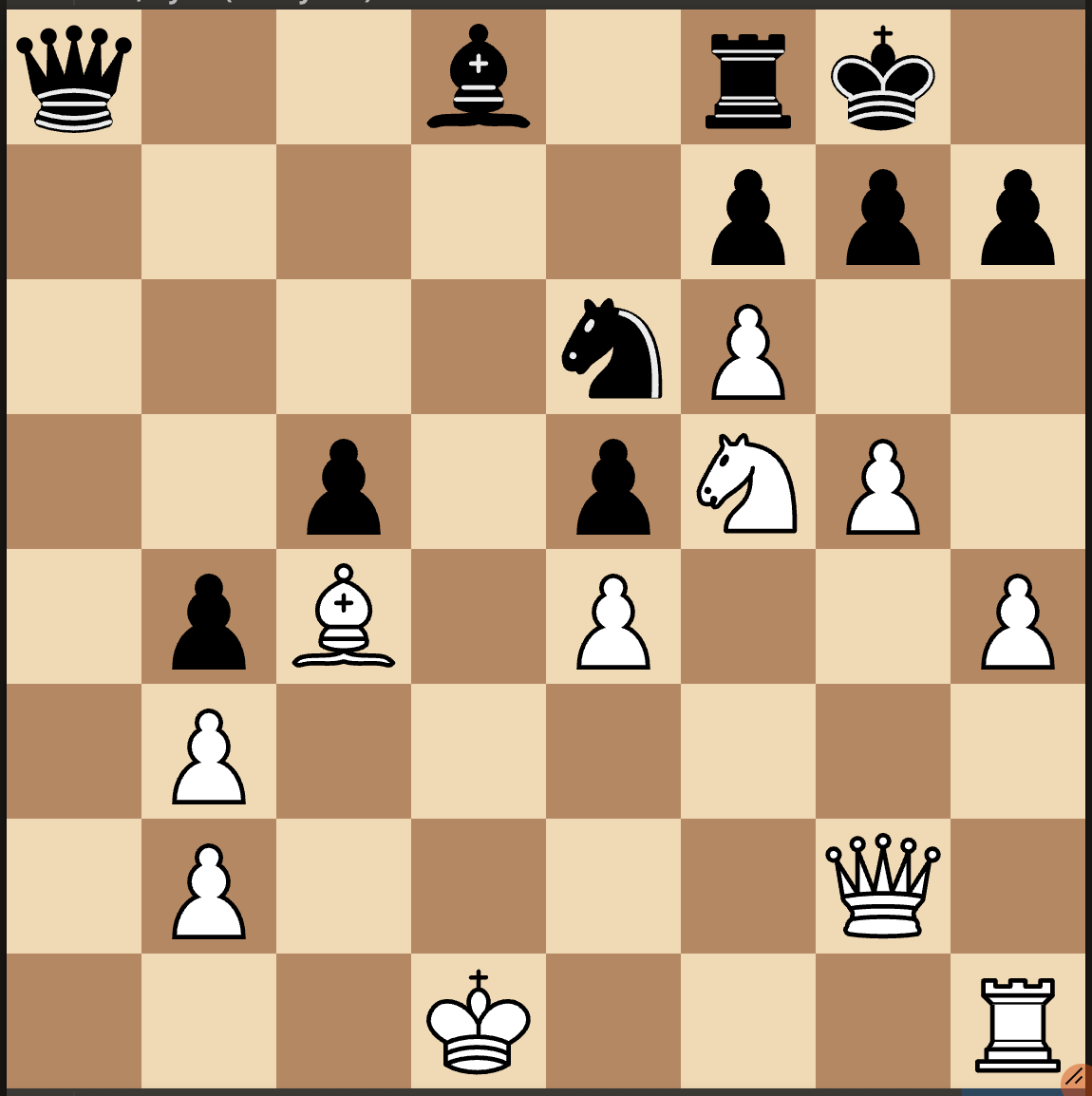
In this position, white has full control of the game. However, Linxi here, goes for a concrete and tempting option, but it happens to allow opponent too much counter-play.
27. Bxe6?? Blunder. fxg7 was best. It turned out to be a big mistake to trade off the c4 bishop since it is an anchor to White’s king. (27. Nxg7) (27. fxg7! Should win for White.)
27... fxe6 28. Nxg7?! Inaccuracy. Ne3 was best. From here, Black starts playing great dynamic chess. Black finds 4 only moves in a row to get back into the game.
28... Qa2! It is very important to start with Qa2 in order to meet Kc2 (the move White wants to play) with c4, opening up the game. (28... Qa1+? 29. Kc2) 29. Qc2 (29. Kc2 c4) 29... Qa1+! Only now, black plays this, continuing to disrupt white’s harmony.
30. Qc1 Qa6! Again, precise. Not letting the white king escape comfortably, and keeping up the pressure with threats like Qd3+.
31. Kd2 Bxf6!! Now, a very important piece sac in order to open up new lines for the Black rook.
32. gxf6 Rxf6 (32... Rd8+ Was even better.)
33. Qxc5 Rg6?? Blunder. Rf3 was best. (33... Rf3!)
34. Rg1 Rxg7 35. Rxg7+ Kxg7 36. Qxe5+ White was able to get into a queen endgame up a pawn, but even if it is winning, queen endgames are tricky, and this one is no exception. It is hard to win.
36… Kf7 37. Qf4+ Kg7 38. Qc7+ Kg6 39. Qg3+ Kf7 40. Qf2+? Mistake. Qf4+ was best. (40. Qc7+ Kg6 41. Qe7 Seems like this was the best plan for White but it is far from obvious.)
40... Kg8? Mistake. Ke7 was best. 41. e5? Mistake. Qg3+ was best. Now, black can defend comfortably.
41…Qc6 42. Qg3+ Kf7 43. Qf4+ Ke8 44. Qd4 Qg2+ 45. Kd3 Qf1+! 46. Kc2 Qe2+ 47. Kb1 Qf1+ 48. Ka2 Qa6+ 49. Kb1 Qf1+ 50. Kc2 Qe2+ 51. Kc1 Qe1+ A very exciting game and very resourceful play by Black in a difficult position. 1/2-1/2
GM Aleksandr Lenderman, Marshall Spectator Contributor
Reflections on My Recent FIDE Events, by FM Joshua Colas
Over the past few weeks, I had the opportunity to compete in both the FIDE Premier and Under 2400 sections, where I was fortunate enough to finish in first place in both events. The Marshall has always been one of my favorite places to play since I grew up competing there, so anytime I get the chance to return, it really feels like home. The events were run very professionally, and the atmosphere made it enjoyable to compete throughout the weekend. Overall, I felt I played solid, practical chess and stayed calm in a lot of critical moments. The game below was one of my favorites from the tournaments, and I included some annotations to share my thought process throughout the game
You can play through the game with annotations here.
Colas, Joshua vs Das, Aditeya
1. c4 e6 2. Nf3 Nf6 3. g3 d5 4. d4 Bb4+ 5. Bd2 Be7 6. Bg2 c6 7. Qc2 Main Closed Catalan
7…O-O 8. O-O Nbd7 9.b3 An interesting move order.
9…b6 10. Nc3 Ba6 11. Bf4 Rc8
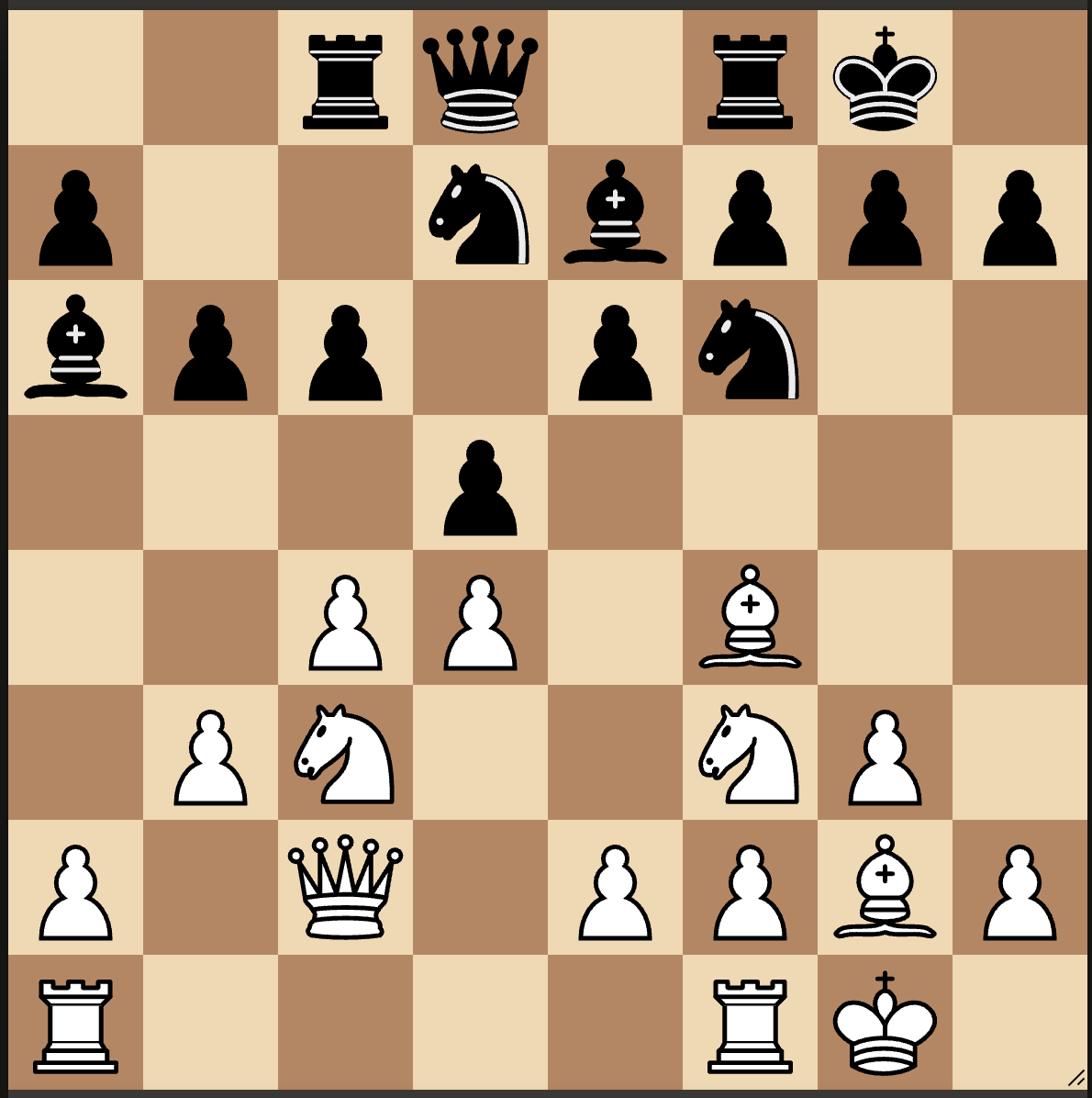
(I was planning after 11... dxc4 12. bxc4 Bxc4 13. Nd2 Ba6 14. Bxc6 Rc8 15. Qa4 I saw up to this point and was unsure of Black’s next move.)
12. Rfd1 Nh5 (12... dxc4 13. bxc4 Bxc4 14. Nd2 Ba6 15. Qa4 Bb7 16. Qxa7 Another interesting position)
13. Bc1 f5 A typical idea in these Catalan positions.
14. e3 Bd6 15. Bb2 h6 16. a4 Qe7 (16... dxc4 17. Ne5 White’s initiative is now coming through the center. (17. Qe2 The initial move I calculated comes with fewer complications.) 17... Bxe5 18. dxe5 cxb3 19. Qxb3 Qe7 20. Ba3 c5 21. f4 ⩲)
17. a5 b5 18. c5 Bc7 19. Na2 g5 (provoking 19... Bxa5 20. Nc1 Qd8 21. b4 ±)
20. Nb4 Nb8 21. Ne5 With the idea to trade Black’s most active minor piece.
21…Bxe5 22. dxe5 g4 23. h3 gxh3 24. Bxh3 Ng7 25. Rd4 h5 26. Rh4 Improving the rook to the outpost.
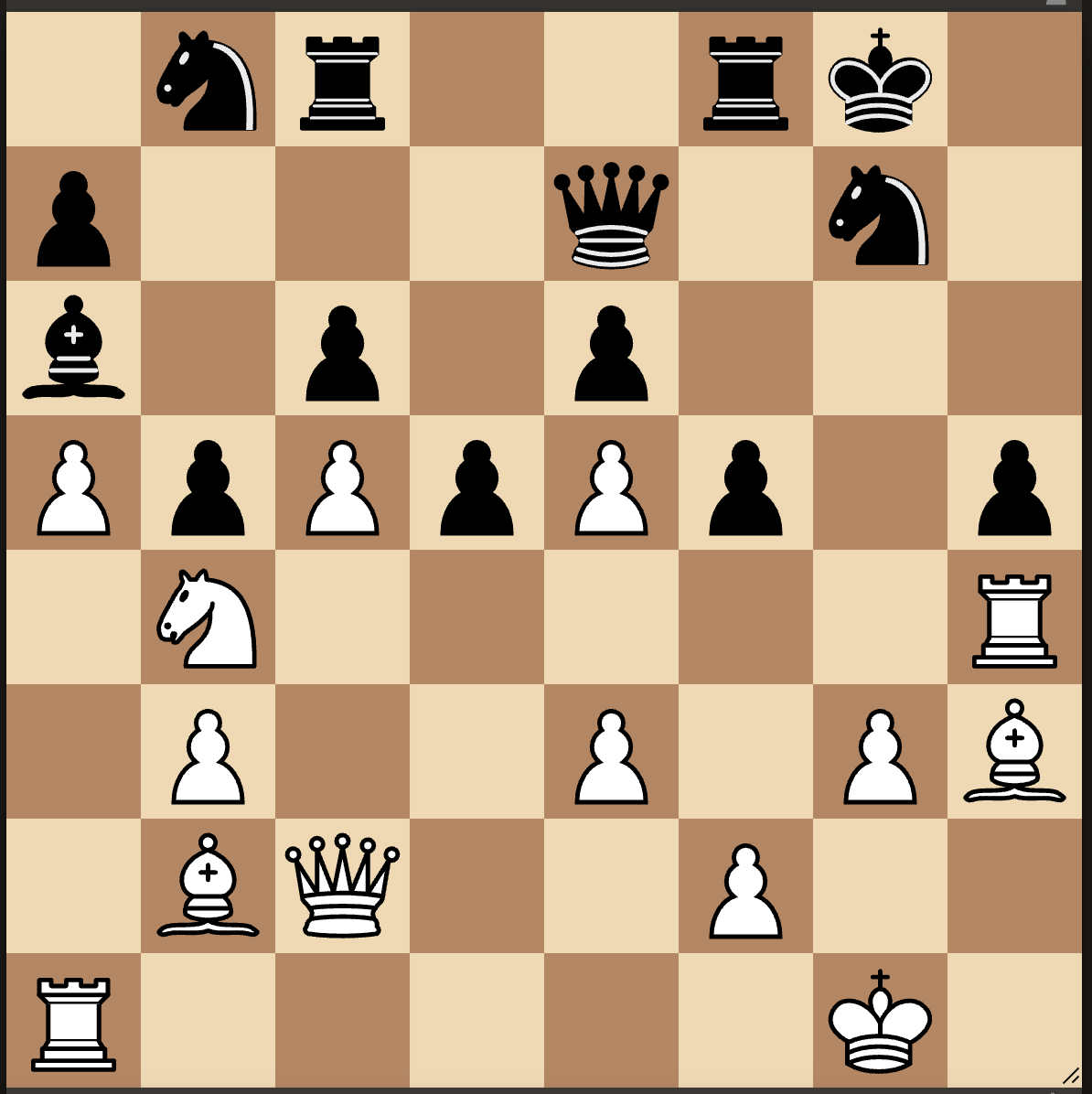
26…Kf7 27. Bg2 Rh8 28. Bf3 applying more pressure
28…Rh7 29. Kg2 Rch8 30. Rah1 Bc8 31. Nd3 Nd7 32. Nb4 Nb8 33. Bd4 Bd7 34. Qe2 Qg5 35. a6 avoiding black from playing a6 and keeping ideas along a5-d8 diagonal available.
35…Be8 36. Nd3 Kg8 37. Nf4 Nd7 = 38. Qd2 Qd8 39. Qd1 Qg5 40. Bc3 Nb8 (40... Nxc5 41. Qd4! the reason why Bc3 works here.)
41. Qa1 Qe7 42. Qa5 Kf8 43. Ra1 Kg8 44. Be2 Rh6 45. Bd4 Kh7 It’s quite difficult to find a breakthrough for White.
46. Bd3 Bf7 47. Rah1 Kg8 48. f3 Ne8 49. Bxf5 An idea I found, creating a material imbalance.
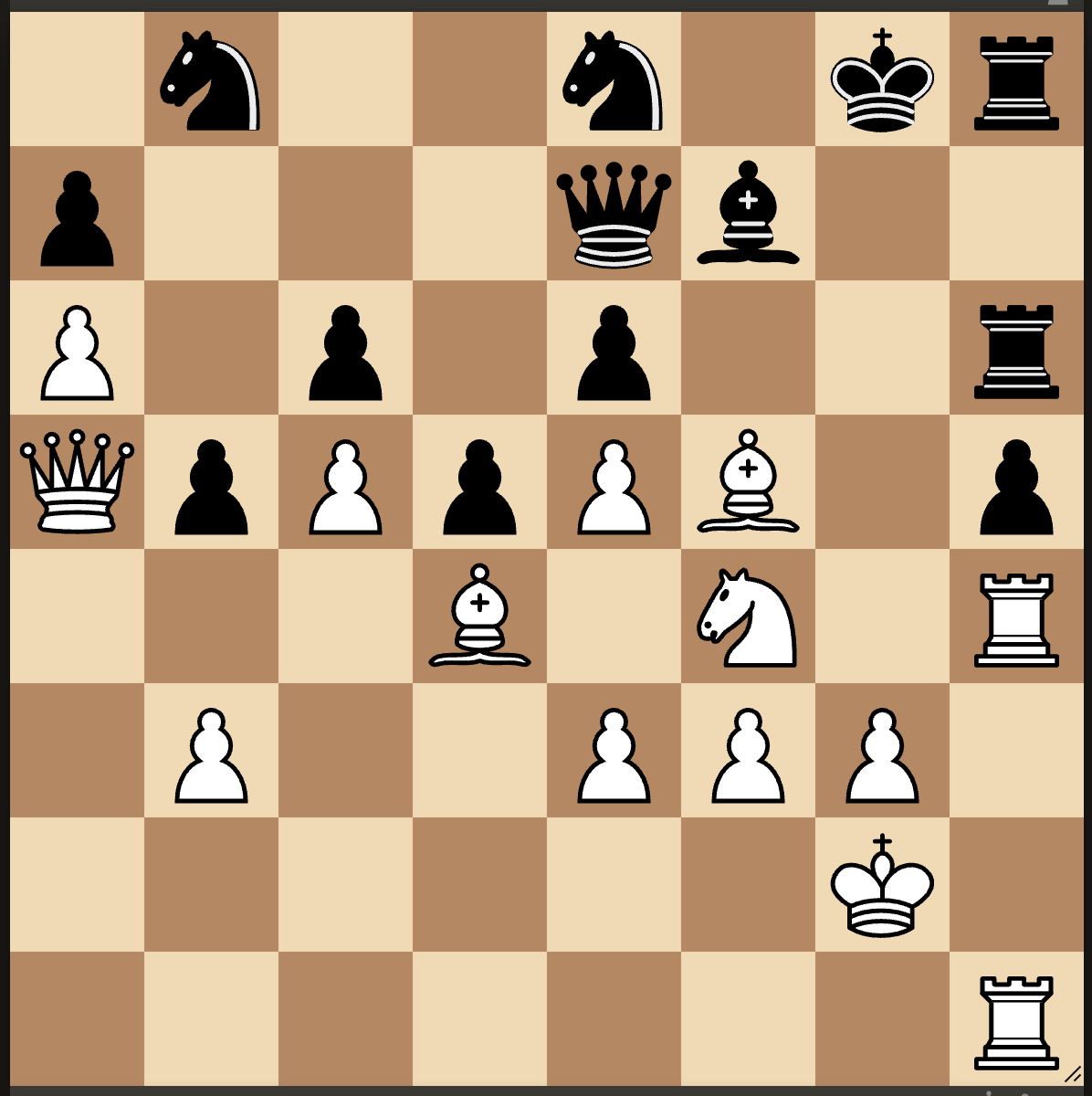
49…exf5 50. e6 Bxe6 51. Bxh8 Rxh8 52. Rxh5 I spent 4 mins making this decision and felt practical about there still being chances to win. (52. Ng6 I saw Ng6; however, I was unsure after the following variation. Qxc5 53. Nxh8 Qc2+ 54. Kf1 Qd1+ 55. Qe1 Qxf3+ 56. Kg1 But White is just winning))
52…Rxh5 53. Rxh5 Bf7 54. Rh6 keeping the rook active with pressure on c6 as well. 54…Kg7 (I noticed 54... Qxc5 allows 55. Qd8 And White starts to get the initiative)
55. Qc3+ Nf6 (55... Kxh6 56. Qh8+ Kg5 57. Qh4#)
56. Rh1 Nxa6 57. b4 Nc7 58. Ne2 Be8 59. Qd4 Bg6 60. Nf4 Kf7 (60... Bf7 61. Nd3 I intended to play either Qf4 or Qh4, but it should be equal.) (60... Be8 61. Nd3 My opponent blundered
61. Rh6 = Bh7 62. Nd3 Kg7 63. Qh4 threat of Rxh7
63…Qe6 64. Nf4 Qe5 65. Rxf6 Qb2+ 66. Kh3 Qxf6 67. Nh5+ Kg6 68. Qxf6+ 1-0
FM Joshua Colas, Marshall Chess Club Member
Chess Toons
En Passant
Faustino Oro, often hailed as the “Messi of chess,” achieved a historic milestone in his chess career, becoming the second-youngest Grandmaster in history.
Anticipation has long been part of Antetokounmpo’s approach. It played a role in him making one of the more incredible plays in NBA Finals history, a clutch block on Deandre Ayton in Game 4 of the 2021 series. “I saw the play coming,” he said after the game. As a 10-year-old, he learned chess at a church in Greece.
It took GM Axel Smith more than 29 hours to complete a 49-board blindfold simul this weekend. The Swedish grandmaster scored a dominant 41-8—but said afterward that raising awareness for a climate cause mattered more than the result or any record.
Problems, Problems, curated by Alexander George
Vladimir Bron, 1958
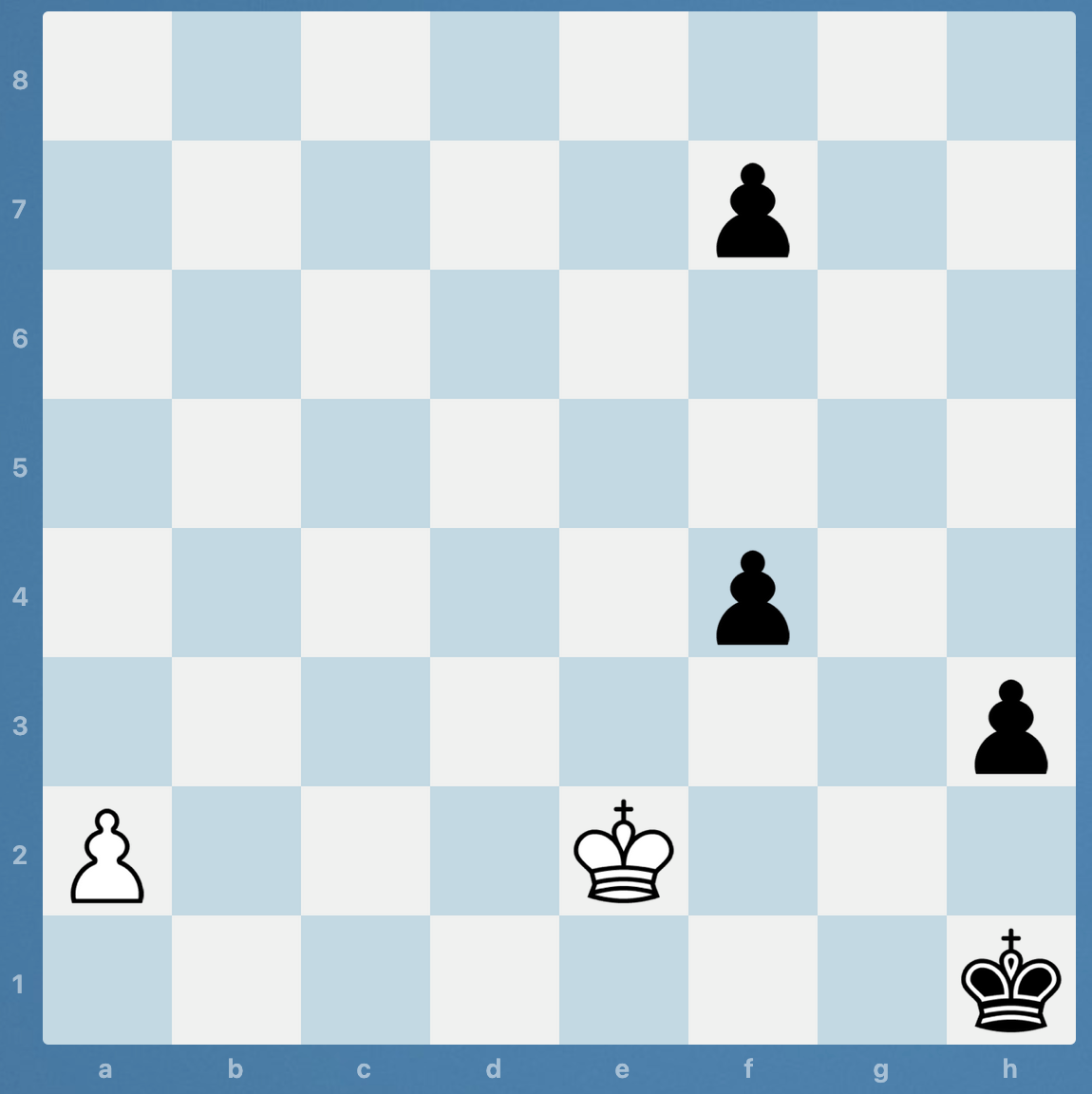
White to move and win.
This theme is known as Excelsior, the title that Samuel Loyd gave to an 1861 problem of his in which a formidable pawn trudges all the way to the other end of the board.
---
Solution to last issue’s problem (Mark Liburkin, 1930):
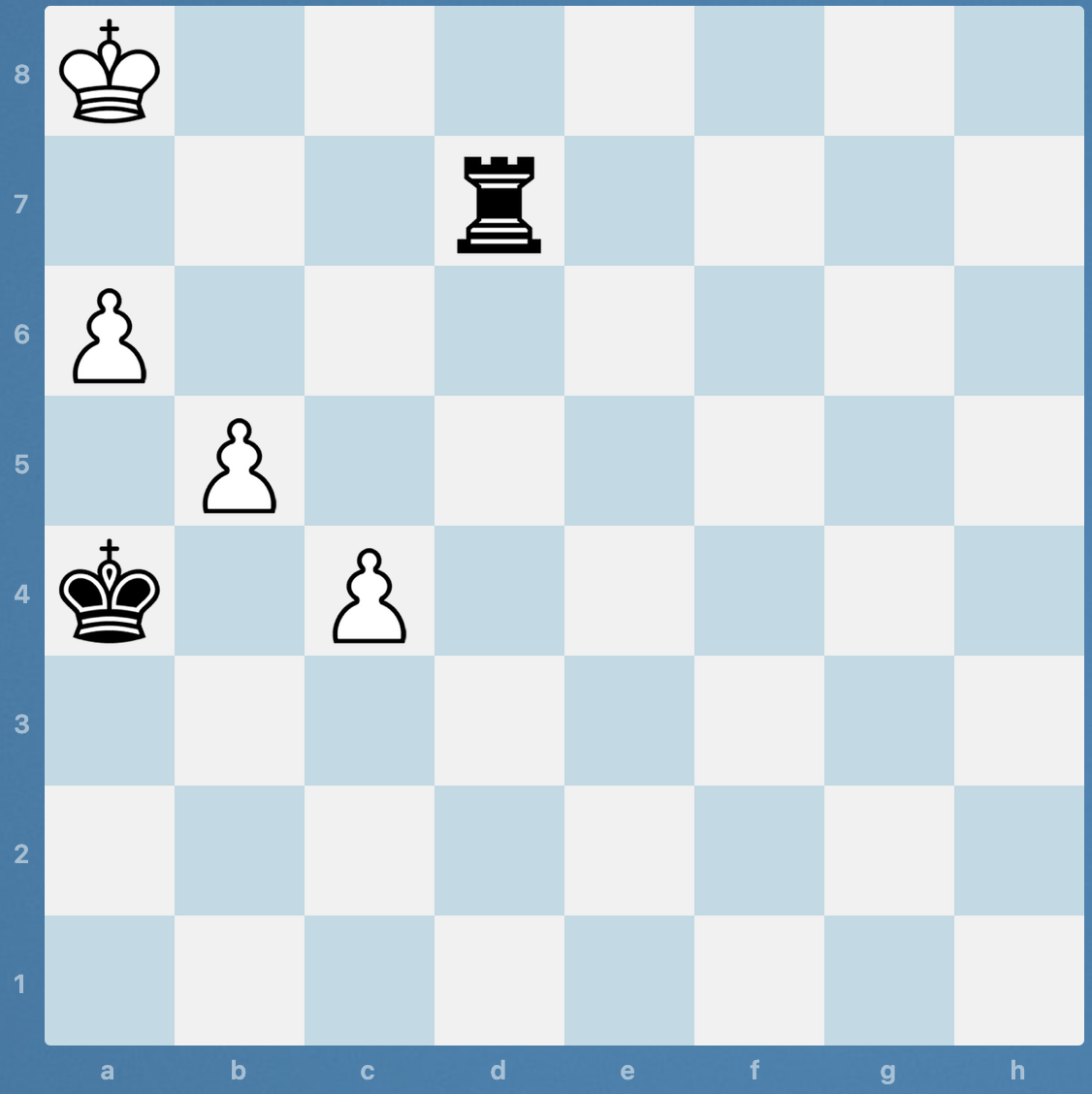
White to move and win.
1.b6 Ka5 2.b7 Rd8+ 3.b8=R (3.b8=Q? Ka6! 4.Qxd8 =) Rd7 4.Rb7 and wins.
---
Alexander George
Editor’s Note
As always, if you have any feedback, comments, or would like to submit an article please contact us directly at td@marshallchessclub.org.
Enjoy, and thanks for reading!
The Marshall Chess Club
23 West Tenth Street New York, NY 10011
212.477.3716

Thanks for reading The Marshall Spectator! Subscribe for free to receive new posts and support the club.