

The Marshall Spectator
July 8, 2026


In This Issue:
From The Skittles Room
Endgame Corner, by IM Silas Esben Lund
My Chess Journey, by Max Phillips
Chess Toons
En Passant
Problems, Problems, curated by Alexander George
Editor’s Note

Welcome back, fellow chess players, to this edition of the Marshall Chess Club’s fortnightly bulletin, The Marshall Spectator.
Congratulations to all of the Marshall members who traveled to Batumi, Georgia to compete in the 2026 FIDE World Cadet Cup. The American delegation consisted of 23 chessplayers, with eight of them finishing in the top 10 of their respective section. CM Chenxuan Ling was a top scorer for the Americans with 7 out of 11 to tie for 15th place. Marshall regulars Lev Shangin, WCM Elizabeth Zhou, WCM Allyson Yu, and WCM Abigail Zhou also traveled to George to compete in this elite event - and you can see all of their games here and the official results can also be seen here.
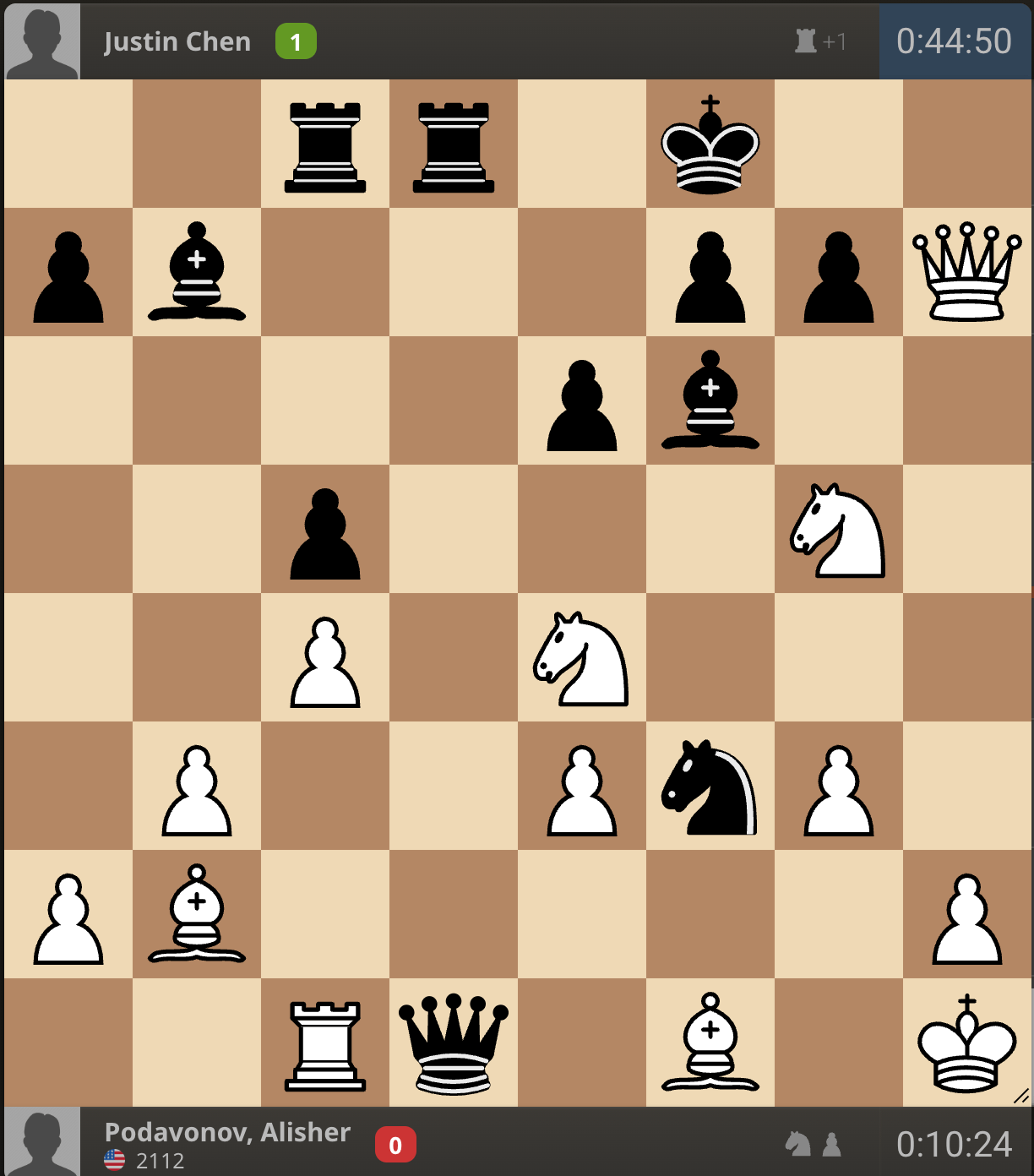
If you missed the live broadcast of last weekend’s FIDE Premier, you can review the games here. It featured a number of memorable moments, though perhaps the most interesting one occurred in Round 2, when Justin Chen found a remarkable move that caught my eye. In the below position, it is Black to move. What would you play? The move that Justin chose will be provided at the end of this From The Skittles Room.
July is a busy month for the club, with the Marshall Summer Six Day Invitational - a FIDE Norm Round Robin - running from yesterday through the weekend, as well as the 14th New York International starting just next week. Stay tuned for more great live games and commentary to follow.
With summer finally here, our Summer Camps are back in action. We’re excited to share that this summer, GM Djurabek Khamrakulov will be onsite all summer long, as well as an additional GM for most weeks this summer! This means that the top two groups will receive GM instruction.
July 6, 7, 8, 9, 10 (GM Andrei Maksimenko)
July 13, 14, 15, 16, 17 (GM Andrei Maksimenko)
July 20, 21, 22, 23, 24 (GM Andrei Maksimenko)
July 27, 28, 29, 30, 31 (GM Andrei Maksimenko)
August 3, 4, 5, 6, 7 (GM Elshan Moradiabadi)
August 10, 11, 12, 13, 14 (GM Elshan Moradiabadi)
August 17, 18, 19, 20, 21
August 24, 25, 26, 27, 28
We are also excited to share some additional perks if you register multiple weeks in advance this summer:
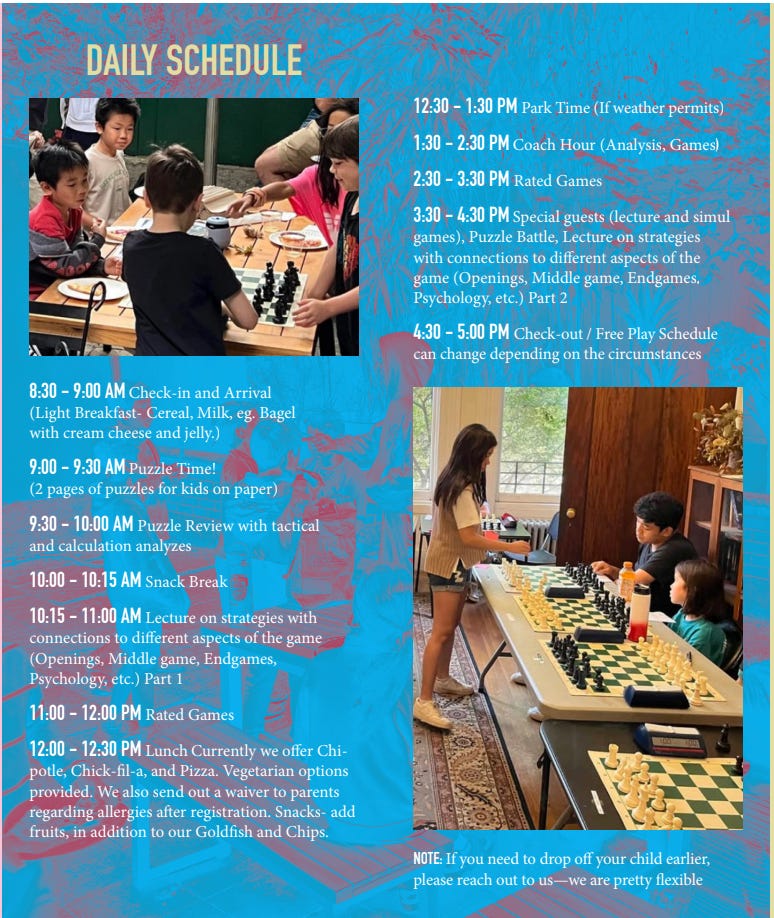
For all questions related to camp, please reach out directly to Kevin at kevinf@marshallchessclub.org
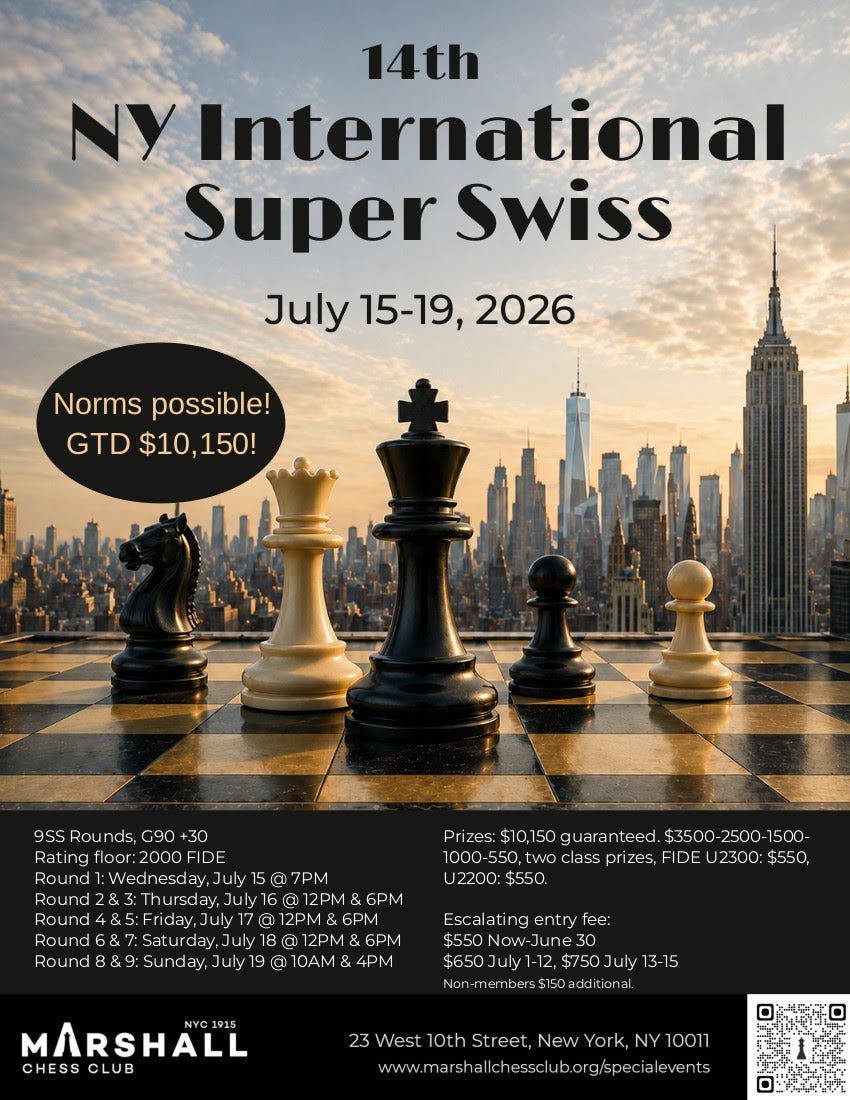
Looking ahead to this summer, we’re thrilled to announce our annual Super Swiss will once again be held at 23 West 10th Street.
The tournament will be held from July 15-19, 2026.
Prize Fund: $10,150, Norms possible!, Rating floor: 2000+ FIDE
Escalating entry fee: $550 Now through June 30th, $650 July 1st-12th, $750 July 13th-15th.
Registration is now live on our event webpage. You can register HERE.
Looking back over the last two weeks, we have had a plethora of events for our members to participate in.
The Marshall Premier Under 2000 that concluded on July 5 had 39 players registered and was won by WCM Abigail Zhou who scored 4.5 out of 5 to win the $650 first-place prize. Samuel Zheng scored 4 out of 5 to win the second-place prize of $260, while Arav Sandeep Kumar and Ding Bang Yu scored 3.5 out of 5 to win $195 each, while Daniel Jasper Zheng won the remaining class prize of $163 for his 2 out of 5 performance.
The Rated Beginner Open on July 5 had 20 players registered and was won by Isaiah Julius Santana, Alex Wiegand, and Michael Aldridge who scored a perfect 3 out of 3 to win $83.33 each.
The Marshall Premier FIDE Open that concluded on July 5 had 35 players registered and was won by IM Josiah Stearman, FM Justin Chen, and Srihas Sai Sarvesh Maddipati who scored a perfect 4 out of 4 to win $583.33 each, while former club champion IM Jay Richard Bonin scored 3.5 out of 4 to win $250.
The Morning Under 1600 on July 5 had 27 players registered and was won by Khalil Elgabry Wilson and Ben Lomot who scored a perfect 3 out of 3 to win $227.50 each.
The Morning Masters on July 4 had 8 players and 5 prize winners. FM Arun Dixit won the event with a 2 out of 3 score, winning $70, while the following players won $13.25 each for their 1.5 out of 3 score: Miguel Garcia, Isaac Hart Statz, Sasha Arthur Kagle, and Jaime Agustin Jariton.
The Under 2000 Morning Action on July 4 had 12 players, and 10 prize winners. The event was won by Nikhil Shah who scored a perfect 3 out of 3 to win $105, while the following players won $8.40 for their 2 out of 3 score: Patrick Tomporowski, Nathan Lewinger, Nico Alvarado-Yoshida, Daisy Yuen, and Abeer Sethi. The following players scored 1 point to win $15.75 each: Noah B Blatt, Rayyan Sayeed, Imanuel Udolfia, and Vasu P Varun.
The Friday Action on July 3 had 14 players registered and was won by Denys Bashmakov who scored a perfect 4 out of 4 to win $100, while Jeremy Graham and Gabriel D Malpica scored 3 out of 4 to win $37.50 each. Joel Martin won a $25 prize for his 2.5 out of 4 score, while Andy Lin also won a $25 class prize for his 2 out of 4 performance
The Thursday Action on July 2 had 34 players registered and was won by IM Kevin Wang, FM Arun Dixit, and NM Nathaniel Mullodzhanov who scored 3.5 out of 4 to win $129.33 each. Nathan Lewinger won a $90 class-prize for his 2.5 out of 4 score, while Armaan Chandragupta Jain and FM Olson Ortiz won $45 each for their 3 out of 4 performance. Jeffrey Ho won the upset prize.
The Weekly Under 2200 that concluded on July 1 had 46 players registered and was won by NM Anthony Levin who scored 5 out 6 to win the $460 first-place prize. Gavin Liu and Yasser Almoteri scored 4.5 out of 6 to win $230.50 each, while Alexander Hrithik Soll won a $154 class prize for his 4 out of 6 performance. Neha Pattanaik won the remaining class prize of $77 for his 3.5 out of 6 score.
The Weekly Under 1600 that concluded on July 1 had 23 players registered and was won by Nathaniel Neveu who scored 5.5 out of 6 to win $192, while Trevor C Lanford and Dheeraj Prasanth Devaguptapu scored 4.5 out of 6 to win $96 each. Daniel Joseph Ogorchock and Anthony John Russo scored 2.5 out of 6 to share in a class prize, winning $38.50 each.
The Morning Under 1600 on June 28 had 28 players and was won by Radhames Mejia, Harry Steven Chalfin, and Dario Golden who scored a perfect 3 out of 3 to win $157.67 each.
The Marshall Academy Blitz Championship Under 1500 on June 28 had 24 players registered and was won by David J Yoo who scored an impressive 7 out of 9 to win the $200 first-place prize, while the following players won $83.33 each for their 6.5 out of 9 performance: Bryant Anson Chen, Sean Huang, and Ari Hoffman. Aadit Krishna Joshi scored 5.5 out of 9 to win a $75 class prize.
The Rated Beginner Open on June 28 had 25 players registered and was won by William X Avila, Nikki Y Zeng, and Lawrence Wang who scored 3 out of 3 to win $100 each.
The Saturday Game 50 Open on June 27 had 46 players registered and was won by IM Jay Bonin and Alisher Podavonov who scored 4 out of 4 $295.00 each, while the following players won $45.50 each for their 3 out of 4 score: Rishan Malhotra, Nikhil Shah, Nicolas Marchese, and Connor Liao.
The Morning Masters on June 27 had 6 players registered and was won by Armaan Chandragupta Jain who scored 3 out of 3 to win $60, while FM Arun Dixit and Winsley Wu won $22.50 each for their 2 out of 3 score.
The Under 2000 Morning Action on June 27 had 16 players registered and was won by Aaron Kudryavsky and Aidan Erik Amin who scored a perfect 3 out of 3 to win the $98 first-place prize. Vasu P Varun and Sarvesh Sakthivel scored 1 out of 3 to win $42 each.
The Saturday Game 50 Under 1800 on June 27 had 44 players registered and was won by David J Yoo, Nathan Lewinger, and Avery Goodrich who scored 3.5 out of 4 to win $196.67 each, while Brandon Li, Devin V Wang, and Hudson Kemnitzer won $60.67 each for their 3 out of 4 performance.
The Afternoon Action on June 26 had 11 players registered and was won by FM Arun Dixit who scored a perfect 3 out of 3 to win $83, while Kristian Jacome scored 2.5 out of 3 to win the $55 second-place prize.
The Women & Girls’ Open on June 26 had 7 players registered and was won by Dhanyasri Saravanakumar Vidhya and Emmi Gaskins who scored 2.5 out of 3 to win $31.50 each.
The FIDE Blitz on June 26 had 61 players registered and was won by IM Tanitoluwa Adewumi and Mihir Shah who scored 7.5 out of 9 to win $320.50 each. FM Weiji Ma and FM Marcus Ming Miyasaka scored 7 out of 9 to win $53.50 each, while Jason Jiang and CM Emils Steiner also won $53.50 for their 6 out of 9 score. Nikhil Shah won a $107 class prize for his 6 out of 9 performance, while the following players won $26.75 each for the same score: Leandro Nicholas Ulloa, FM Daniel E Shapiro, Tim Shvarts, Alex Eydelman, Jason Jiang, and CM Emils Steiner.
The Thursday Action on June 25 had 46 players and was won by IM Tanitoluwa Adewumi and IM Jay Bonin who scored a perfect 4 out of 4 to win the $197.50 first-place prize. FM Marcus Ming Miyasaka and FM Arun Dixit scored 3.5 out of 4 to win $59.50 each, while the following players won $39.67 each for their 3 out of 4 performance: WFM Julia Elizabeth Sloan, William Del Castillo, and Sasha Arthur Kagle. The following players won $19.83 for their 2 out of 4 score: Benito Kestelman, Thomas Asher Coulon, Bo Pang, Chris DeDona, Cameron Hull, and Asher Collings, while Laurel Turner won the upset prize.
As for the move that was played by Justin Chen in this weekend’s event, it was 24…Qxc1! Play through the game with an engine here.
We look forward to seeing you at the club soon!
Endgame Corner, by IM Silas Esben Lund
The position in this article is from a complex endgame with a material imbalance. How to properly evaluate this position with Black, and then find the best move? An important idea that we will explore is the idea that while it is important to anticipate what White wants to do, and then try to react accordingly (=prophylaxis), it is equally important to have an active idea on your own that you can follow. The position exemplifies the importance of this. Try to solve the exercise first, the answer will be given later.
Black to move - find the strongest continuation.
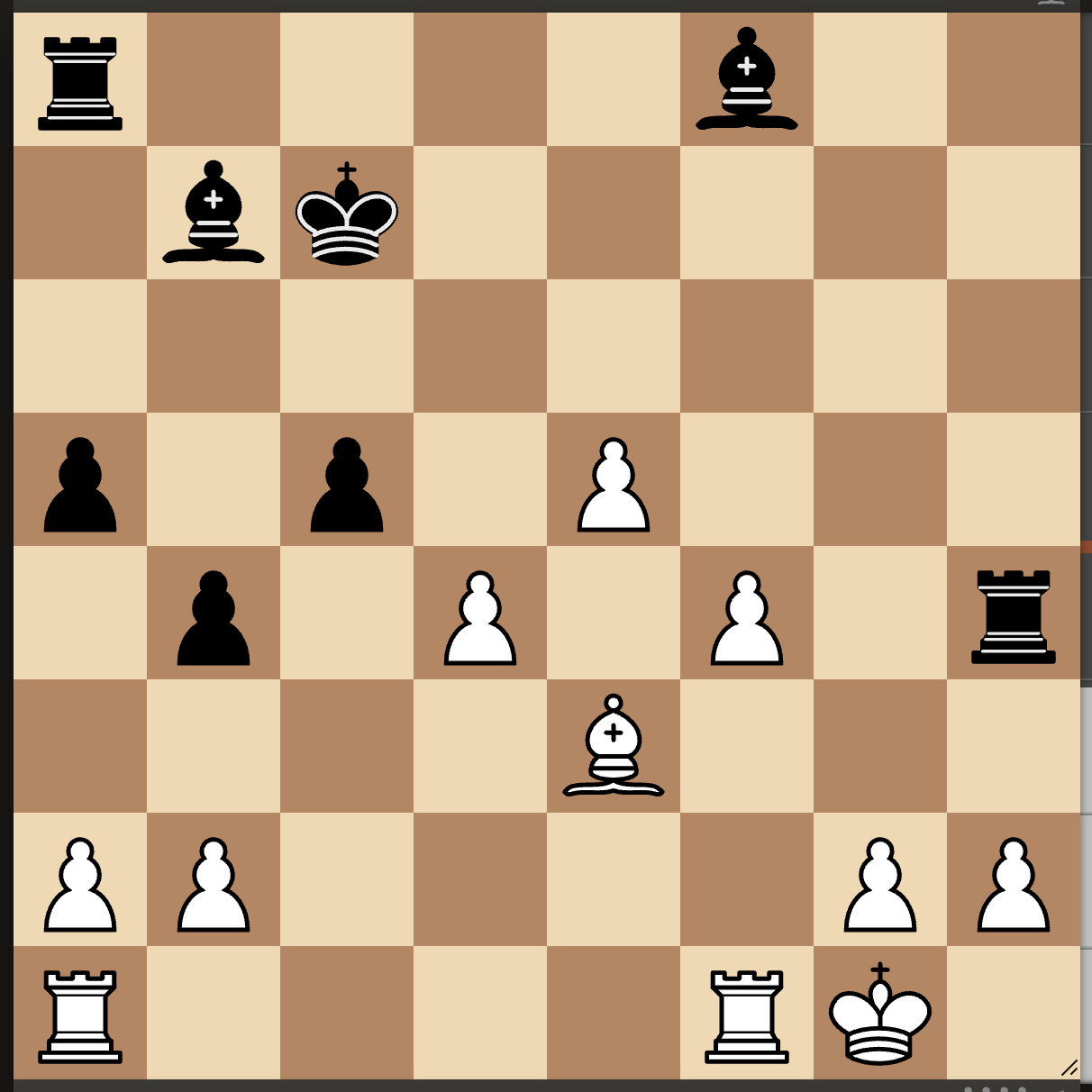
You can play through the position here.
26... c4 A deep, strategical move. Black realizes that while he can succesfully hold back White’s pawns in the center on the kingside for a while, he must have an own active plan - and that plan is a potential passed pawn on the queenside. On the downside, White now has an extra passed pawn on d4 (for a total of 5!), but Black has correctly judged that he can block it on d5. How do you come to the realization that c5-c4 is needed to maintain the advantage? A clue is that while Black can hold back the white pawns for now, it will be hard in the long run, and by having an active plan on his own (3 v 2 on the queenside), he forces White to react and find an active plan to get his own pawns moving. White cannot just sit back and enjoy the fact that his pawns suppress the bishop on f8, or that he can deal with the combined force of RRBB against his king, should Black try a direct kingside attack. White’s g- and h-pawn are not going anywhere soon due to the threat to his exposed king. The e- and f-pawn are more of a threat to Black. But Black needs a threat of his own (potential passed c-pawn) to keep White on his toes. As it turns out, Black’s assets (blockading the d4-pawn, restraining the g- and h-pawns from advancing, and the c-pawn) are more powerful than White’s many pawns, and the position is strategically winning after the game move ...c5-c4! (If 26... cxd4 27. Bxd4 Black loses much of his advantage.)
27. g3 (27. Rac1 Bd5 28. Rxc4+ Bxc4 29. Rc1
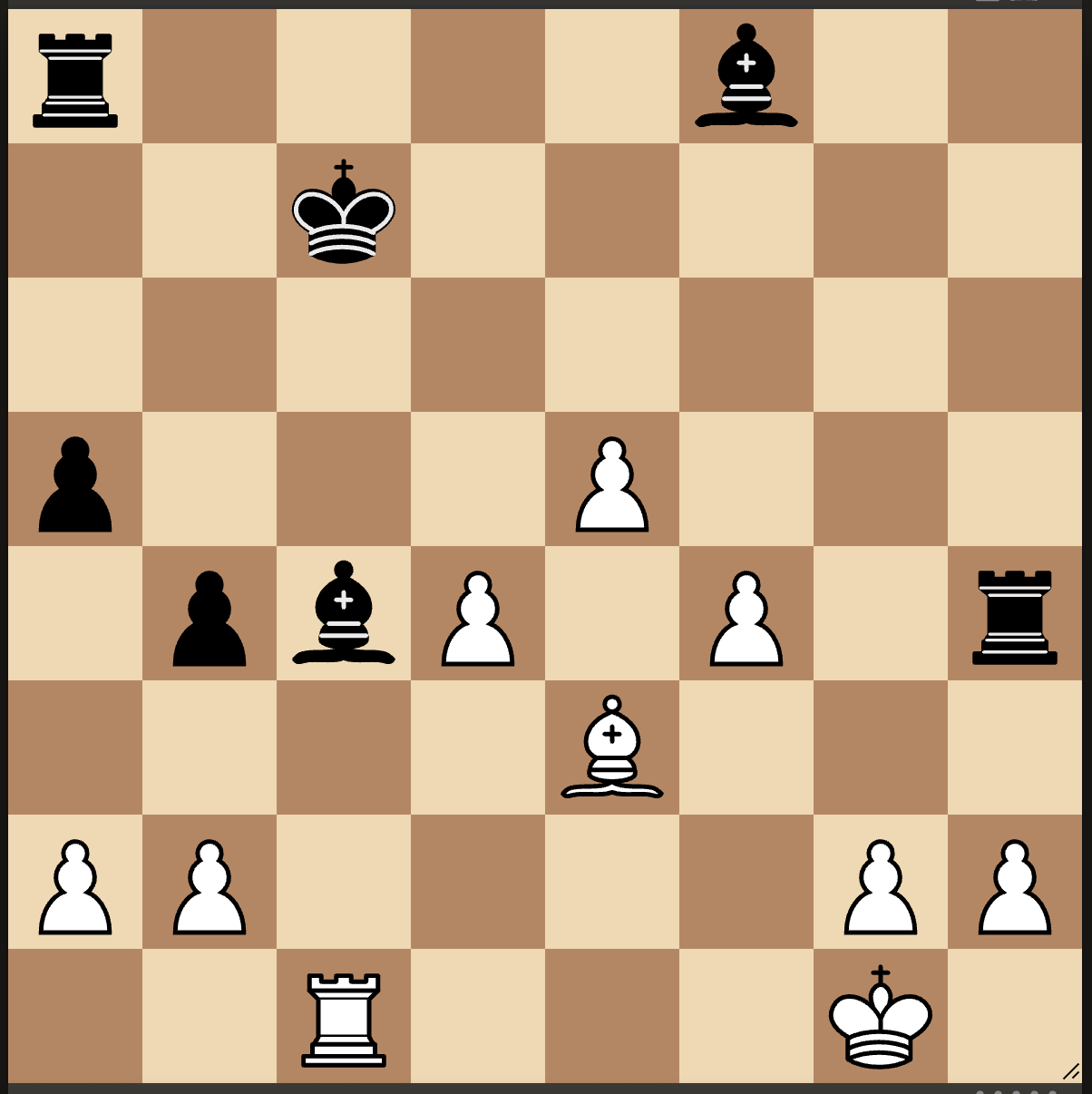
Not a bad idea to sacrifice further material to get rid of Black’s powerful bishop and try to gain control of the light squares. However, it fails to the active …Kc6 (29... Kd7 30. Rxc4 Rc8 (30... Ke6) 31. Rxc8 Kxc8 32. d5) 30. Rxc4+ Kd5 31. Rc7 Ke4 32. g3 Rh6 Black’s king is a real nuisance for White, and it controls important center squares.)
27... Rh3 28. f5 Bd5 29. Bf4
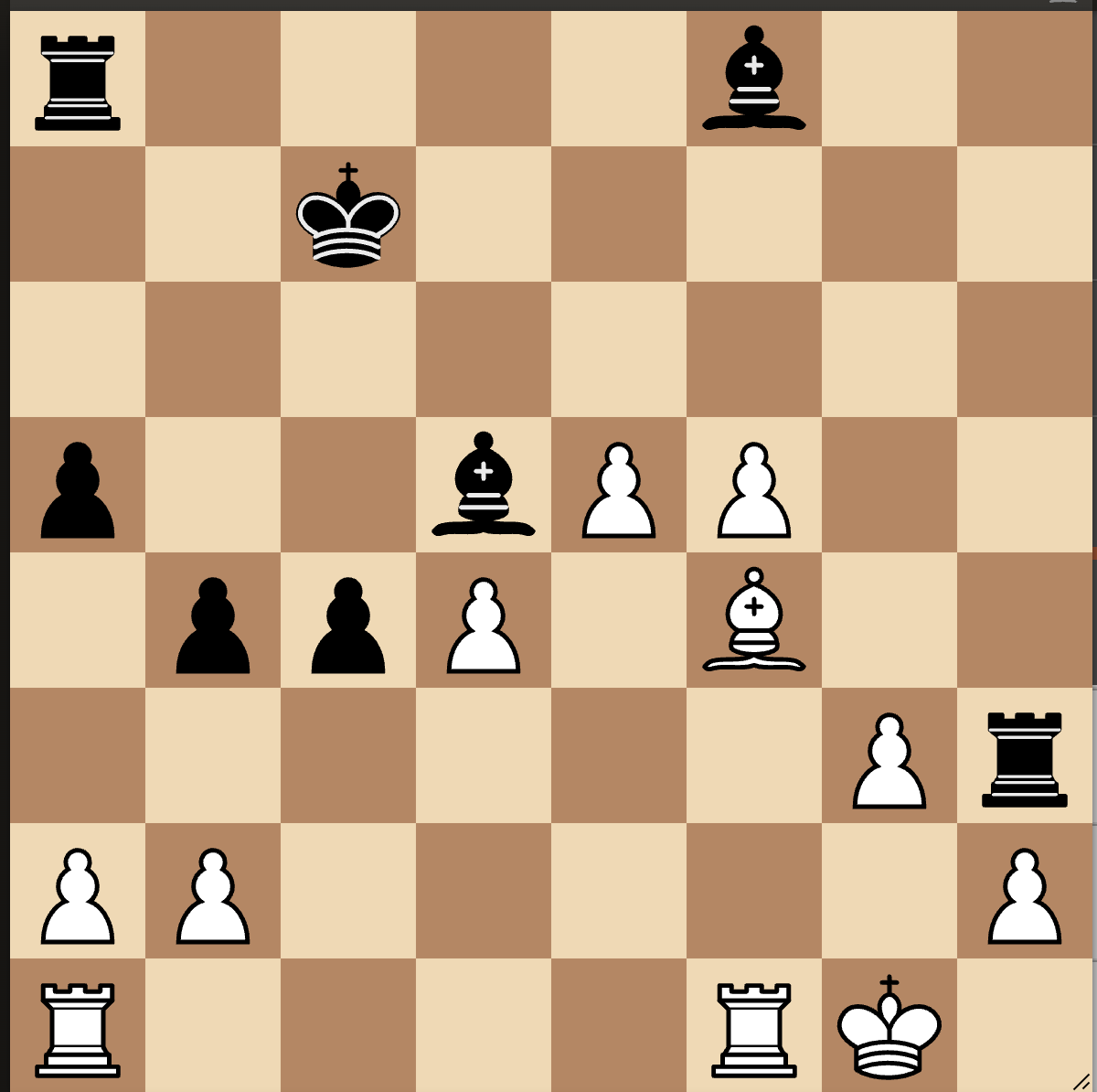
29…a4 Black simply continues play on the queenside. It is too time-consuming for Black to try to get the a8-rook to the kingside (move Bf8 - but where to? Or Ra6-h6?), so Black instead keeps his long-range pieces on their starting squares, and continues with moves he wants to play in any case.
30. e6+ (The non-forcing 30. Rae1 is more tricky for Black to deal with. He can continue with Kc6 that gives lines similar the ones given below.)
30... Bd6 In an ideal world, Black would like to keep as many pieces on the board as possible to better fight White’s pawns, support his own queenside pawns, and also pose a threat to the white king. But this exchange does clarify matters for Black, who will be left with an unopposed light-squared bishop. And, as we shall see later, RRB is still a potent mating force. (30... Kc6 is also good (and the engine’s preferred choice), but arguably more complex for a human player.)
31. Rae1 Rah8 32. Re2
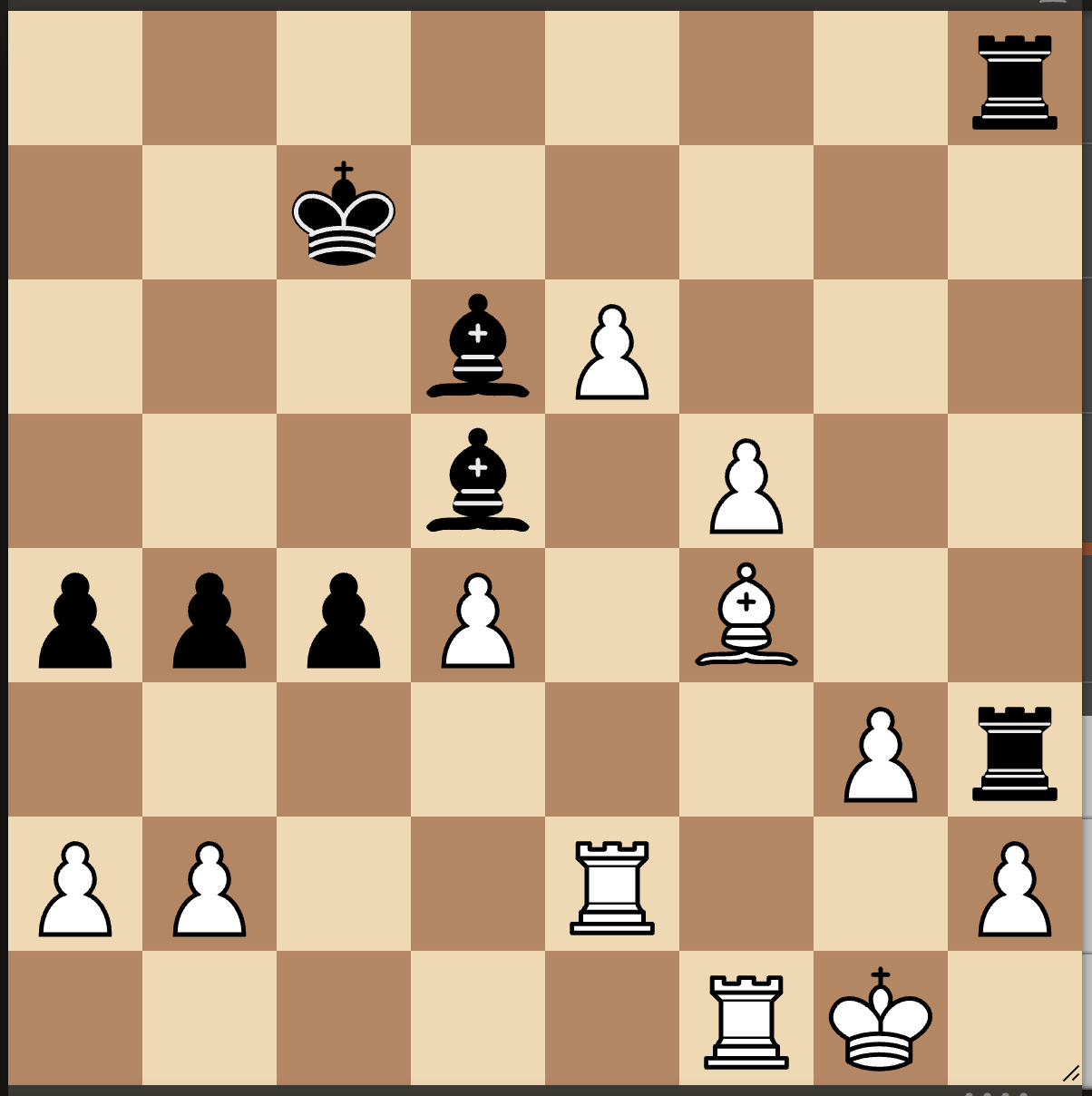
(32. Bxd6+ Kxd6 33. Rf2 fails to Rxg3+ $1 34. hxg3 Rh1#)
32... c3 33. Bxd6+ Kxd6 34. e7 White is fighting for the initiative. However, his pawns will be split in the coming moves. But he feels he has to play like this, and the reason is Black’s c-pawn that is running down the board. In a nutshell, Black is using the principle of two weaknesses to win this position (c-pawn and exposed white king) albeit in a more complex setting where he needs to keep an eye on White’s pawns as well. (34. bxc3 Bc4 wins an exchange.)
34... cxb2 35. Rxb2 Kxe7 36. Re1+ (White would love to play 36. Rxb4 But after Rxh2 Black has a decisive attack with RRB.)
36... Kf6 37. Ree2 b3 38. axb3 axb3
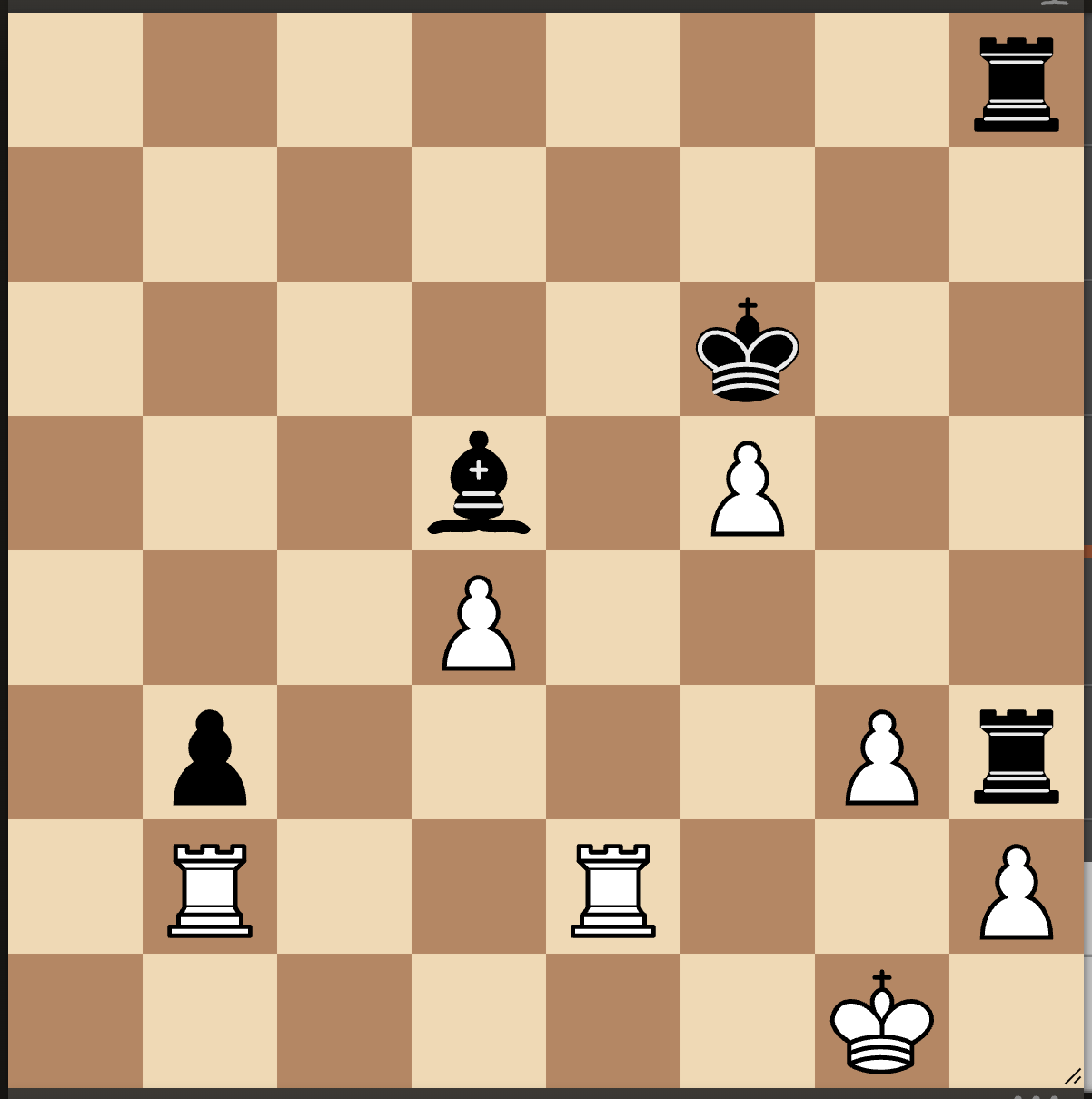
This is probably the moment where a human player would feel certain that his position is winning: The pawn has made it to b3 where it is defended by the strong light-squared bishop. At the same time, White’s pawns are split and weak.
39. Re5 Bf7 40. Rc5 Kg5 (40... Ra8 41. Kg2 Rhh8 with the idea of 42. Ra2 is also winning.) 41. Rb5 Rd8 42. Kg2 Kg4 43. Re2 Rxd4 44. Rbe5 Rh8 45. h3+ Kg5 46. h4+ Kf6 Still, White’s g- and h-pawn are no real threat to Black. 47. Ra5 Bc4 48. Rf2 Rb8 0-1
IM Silas Esben Lund, Marshall Spectator Contributor
My Chess Journey, by Maximus Phillips
Hi! My name is Maximus Phillips. I am 8 years old, and I started learning chess when I was 2½ years old. I loved it right away. Every move feels like solving a puzzle. It’s a challenge that is always changing, and I love trying to figure out what my opponent is planning. I love challenges. Easy is boring!
Chess gave me more than a game to play. It gave me a community. It gave me friends, mentors, coaches, teammates, and opportunities I never imagined. The Marshall Chess Club has been a huge part of that. It has taught me that chess is about so much more than the moves on the board. It’s always felt like my home away from home.
I basically grew up at the Marshall. I have spent so much time there taking junior classes, going to camps, playing tournaments, going to special events, and making great friends. One of the things I love most is that there are so many strong players there. I love challenging myself, and I wish I could play a tournament there every day! I have met so many amazing chess mentors there, and I am thankful to everyone at the Marshall who makes it such a special place.
One of the reasons I love the Marshall so much is that they are always there, no matter what. One time there was a giant snowstorm and almost every tournament got canceled, but the Marshall still stayed open. The TDs even went outside and shoveled the snow so everyone could get in and play. I thought that was so cool. It showed me how much they care about all of us.
Some of my proudest chess moments are reaching a 1000 USCF rating, winning my quad at the Las Vegas International Chess Festival, and breaking 1300. But my biggest achievement was being invited to represent Team USA at the FIDE World Youth Championship in Italy!
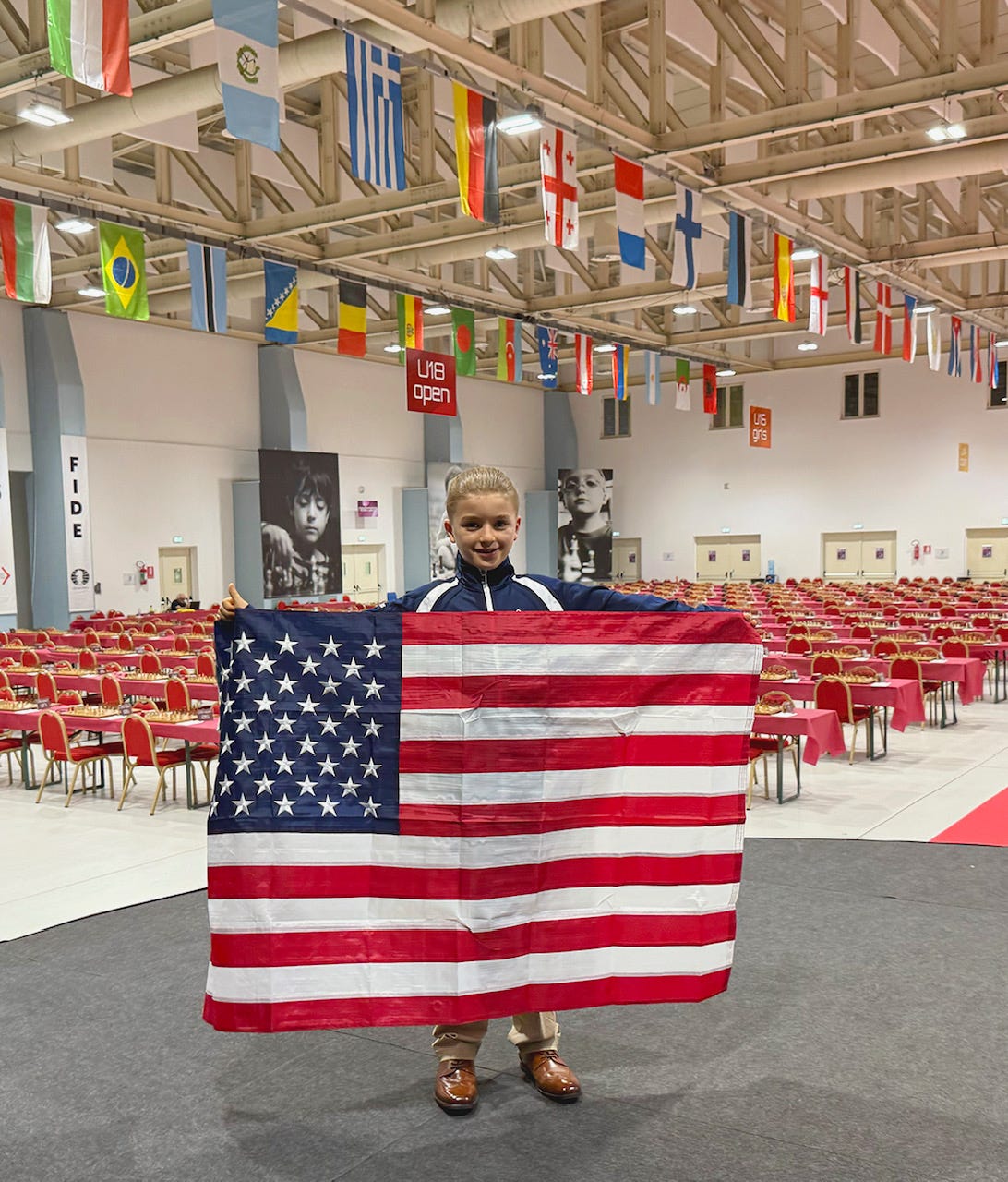
Playing in Italy has been amazing. I have met players from all over the world, learned so much from tough games, and made new friends. Whenever people asked about me and where I was from, the Marshall would always come up because it has always been such a big part of my life. It was really cool that people from all over the world knew about the Marshall, and a few people even said they wanted to visit it someday. That made me really proud.
Being on Team USA has been awesome. Our head of delegation, teammates, and parents have all been so supportive and have taught me so much. After one of my tough losses, everyone helped me go over my game, learn from it, and get my confidence back. It reminded me that chess is not just about the moves. It is about the people! I know I am coming home a stronger player.
I would describe my playing style as really aggressive because I love attacking. My favorite player is Magnus Carlsen because he is so creative and always surprises his opponents. That’s the kind of player I want to be.
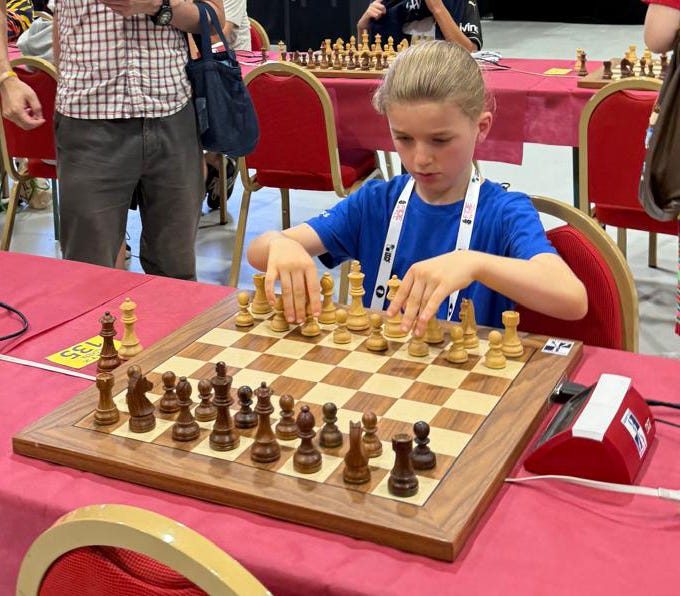
I work on chess every day. I do puzzles, read chess books on the bus, study tactics and my games after school, and play tournaments almost every weekend. I love learning new things about chess.
If I could give advice to younger players, I would say do not worry too much about your results. Just keep learning, study your openings and tactics, and always go over your games afterward. So many people have helped me become a better player, and I hope I can help other kids someday too. I love seeing people discover how much fun chess can be.
My goals are to become a chess master first, and then one day become a Grandmaster.
Maximus Phillips, Marshall Chess Club Member
Chess Toons
En Passant
The Naroditsky Memorial featured rapid and blitz tournaments in tribute to Daniel Naroditsky, whose association with fast chess made the format a fitting choice. Javokhir Sindarov won the rapid after a playoff against Aravindh Chithambaram, then took first place outright in the Blitz Final.
After months of anticipation, FIDE has published its decision in the disciplinary case stemming from Kramnik’s public comments against the late GM Daniel Naroditsky.
The first major controversy of the race to become FIDE president has erupted with Peru unexpectedly finding itself at the centre of the campaign.
Let’s hope the World Cup finale comes close to matching the drama of the finale of the World Open… an international cast of more than 1,200 chess players took over Washington’s Omni Shoreham Hotel for the 54th World Open, annually one of the biggest Swiss events on the American chess calendar.
Problems, Problems, curated by Alexander George
L. van Vliet, 1888
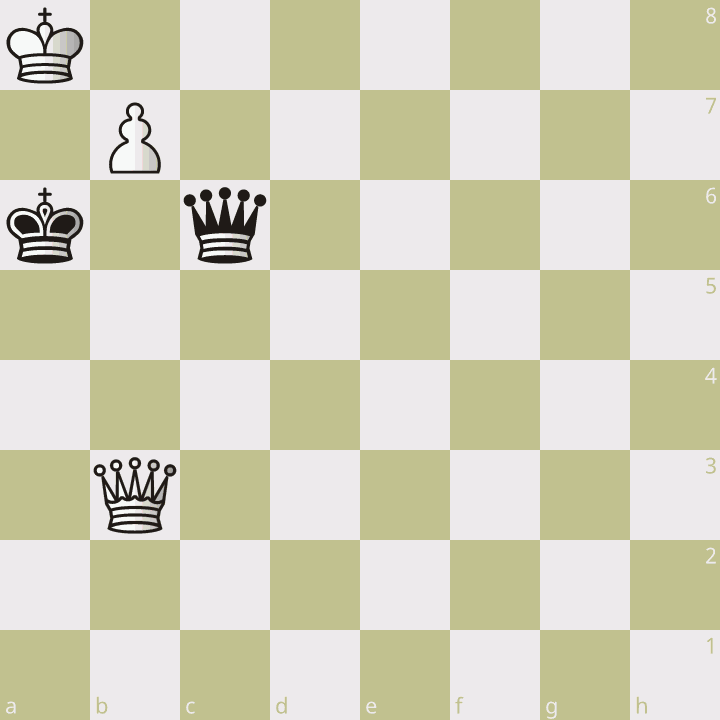
White to move and win.
Here, the Black queen must keep that White pawn pinned. But it will have a devil of a time doing it when faced with a White queen that insists on sacrificing itself!
---
Solution to last issue’s problem (Gleb Zakhodyakin, 1979):
White to move and draw.
---
Alexander George
Editor’s Note
As always, if you have any feedback, comments, or would like to submit an article please contact us directly at td@marshallchessclub.org.
Enjoy, and thanks for reading!
The Marshall Chess Club
23 West Tenth Street New York, NY 10011
212.477.3716

Thanks for reading The Marshall Spectator! Subscribe for free to receive new posts and support the club.