

The Marshall Spectator
February 4, 2026


In This Issue:
From The Skittles Room
Junior Championship Games, by GM Aleksandr Lenderman
Snow Can’t Stop Us, by Greg Keener
Chess Toons
En Passant
Problems, Problems, curated by Alexander George
Editor’s Note

Welcome back, fellow chess players, to this edition of the Marshall Chess Club’s fortnightly bulletin, The Marshall Spectator.
This past weekend, we hosted the first ever Marshall Chess Club Junior Championship. The event was held in two sections, Under 20 and Under 12, and we are thrilled to announce the champions. IM Tanitoluwa Adewumi scored a near perfect 4.5 out of 5 to win the title of 2026 Marshall Chess Club Junior Champion in the under 20 section. The event came down to the wire as the last round was close to finishing in a big tie, which would have resulted in a 6-way, blitz tie-break playoff. However, the need for a playoff was narrowly avoided by the results on the top two boards.
In the under 12 section, there was a thrilling blitz tiebreak between top-scorers Max Mulholland and Aarav Singh, in which Aarav emerged victorious after a close match ending with an armageddon game. Accordingly, Aarav Singh is the 2026 Marshall Chess Club Under 12 Junior Champion. Congratulations to this years winners and to all of the participants who made history by playing the in club’s first ever Junior Championship.
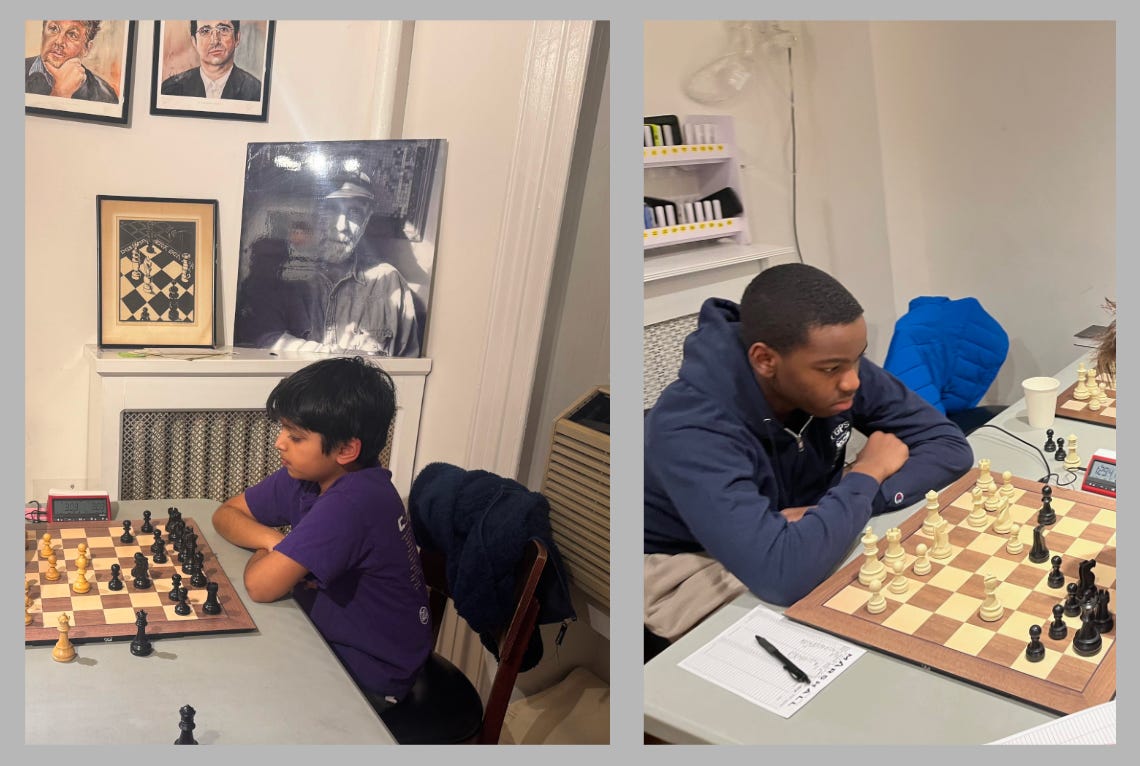
Looking ahead, we’re excited to share that the documentary Queen of Chess, featuring the legendary Judit Polgár, will be available to stream on Netflix beginning February 6, 2026. We’re also thrilled to announce that her sister, Sofia Polgár, will be joining us on May 19th, along with renowned chess photographer David Llada for our inaugural Chess and Arts Fair. It promises to be a memorable event, and we look forward to celebrating this special occasion with all of you.

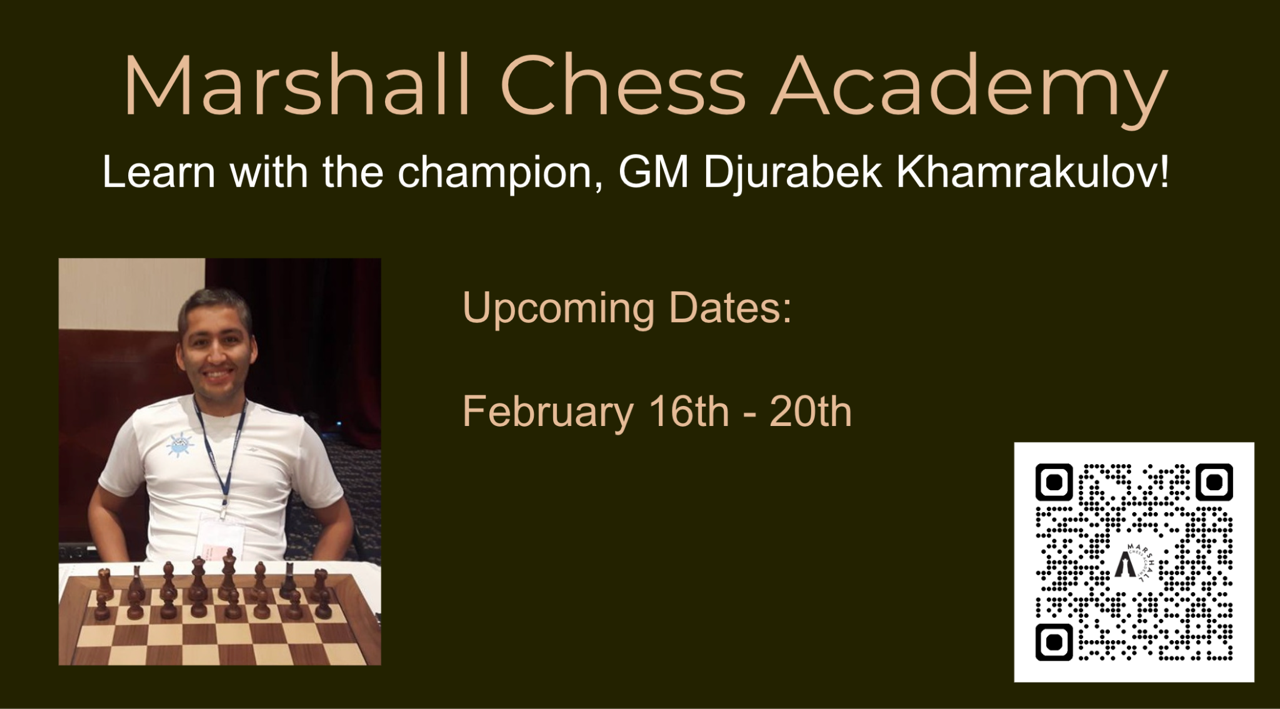
As we approach the national scholastic championship season in the spring, join us at our Marshall Chess Academy camps during midwinter break! For the list of dates and registration information, please check out this link. We are still in the process of determining additional dates for the end of February, so stay tuned!
Finally, there is a new tournament policy regarding refunds for tournament registrations. Withdrawing within 24 hours of a tournament’s start is strongly discouraged to allow time to contact waitlisted players.
New refund policy for weekend events ONLY, effective immediately:
- Withdrawal more than 24 hours before start: 100% refund
- 13-24 hours before start: 50% refund
- Less than 12 hours before start: No refund
After a player makes two withdrawals within 24 hours of tournament start in a calendar year, all subsequent withdrawals within 24 hours will receive no refund (including the 13-24 hour window).
Looking back over the last two weeks, we have had a plethora of events for our members to participate in.
The Sunday Quads on January 25 featured a packed house, despite occurring during one of the biggest winter storms in years, our club was full with chess players engaged in tournament play. The following players won their quad, netting $50 each: WCM Alice Chovanec, Lucas Yang, Isaac N Lui, Jaime Jariton, Marissa Lu, Liam McPeake, and Aileen Lou. The following players shared in the prize funds for their quad, winning $25 each for their effort: Sadia Qureshi, Maxwell Gachiri, Robert Thorstad, Kai Waters, Hudson Belelieu, and Victor Kenny-Maheux.
The Morning Under 1600 on January 25 had 9 players registered and was won by Ben Zobrist who scored 2.5 out of 3 to win $45, while David Shenk and Maximus Phillips scored 2 out of 3 to win $15 each.
The Rated Beginner Open on January 25 had 21 players registered and was won by Tycen Kocaoglu and Darren Wang, who scored 3 out of 3 to win $131.50 each.
The MCC Junior Championship Under 12 Qualifiers on January 24 had 36 players registered and concluded with awards for the top 8 players by tiebreak order respectively they were Aadi Doshi, Adrian Nardelli, Advitiya Apoorva Gunanka, Ethan Guo, Darren Zhang, Gabriel Lin, Alexander Wu, and Vasu P Varun.
The Under 2000 Morning Action on January 24 had 59 players and was won by Nikhil Shah, Chris Weldon, Emiliano Lo Manto, and Robert S Thorstad who scored a perfect 3 out of 3 to win $129.25. Adam Wheeler also tied for first with a perfect 3 out of 3, winning the class prize of $222.
The Morning Masters on January 24 had 7 players registered and was won by FM Arun Dixit, who scored 2.5 out of 3 to win $45 while Winsley Wu and Naveen Paruchuri scored 2 out of 3 to win $15 each.
The Afternoon Action on January 23 had 6 players registered and was won by Aaron Kudryavsky who scored a perfect 3 out of 3 to win $45 while Amir Monir and Alex Jacobs scored 2 out of 3 to win $15 each.
The FIDE Blitz on January 23 had 71 players registered and was won by FM Bryan Enming Lin, IM Tanitoluwa Adewumi and Santhosh Ayyappan who scored 8 out of 9 to win $207.33 each. NM Kiren Nasta and Daniel Yedidia scored 6.5 out of 9 to win $89 each, while the following players scored 5.5 to share in the remaining prize funds winning $29.67 each: Aaron Kudryavksy, Mike Wai Chong Ching, and Arlo Joshua Scherr.
The Thursday Action on January 22 had 35 players registered and was won by IM Jay Bonin and FM Aditeya Das who scored a perfect 4 out of 4 to win $106.50 each, while the following three players shared in the remaining prize funds winning $64 each for their efforts: GM Mark Paragua, Aaron Kudryavsky, and Alec Choi.
The Marshall Masters on January 20 had 18 players registered and was won by GM Mark Paragua and FM Aditeya Das, who scored 3.5 out of 4 to win $180.50 each. CM Aiden Linyuan Li and FM Arun Dixit scored 3 out of 4 to share in the remaining prize funds winning $60.50 each.
The MLK Action tournament on January 19 had 40 players registered and was won by CM Derek Zhang who scored a near-perfect 5.5 out of 6 to win the $320 first-place prize. Hudson Wong scored 5 out of 6 to win $160, while Alec Choi scored 4.5 out of 6 to win $120. The following players won $20 each for their performance: Noah Hsu, Matthew Shirvell, Eli Stern, Farirai Gumbe, Jaime Jariton, Kyle Cheng, Leandro Almanzar, Marko Scekic, Abeer Sethi, Nikola Scekic, Assau Temir Mailybayev, and Brendan Seto.
The Rated Beginner Open on January 18 had 39 players registered and was won by the following players who scored a perfect 3 out of 3 to win $109.50 each: Daniel Nosa, James Maslen, Trisha Obeng Addo, and Kenneth Ding.
The Morning Under 1600 on January 18 had 16 players registered and was won by Danylo Kotsiuba who scored a perfect 3 out of 3 to win the $120 first-place prize, while Kirill McNaughton won clear second and $80 after scoring a near-perfect 2.5 out of 3.
The Sunday Game 50 Open on January 18 had 19 players registered and was won by Lucas Moina, who scored 3.5 out of 4 to win $132. Sean Huang and Rhyan Grennan scored 3 out of 4 to share in the remaining prize funds winning $44 each.
The Sunday Game 50 Under 1600 on January 18 had 22 players registered and was won by Abror Abdijalilov and David Shenk, who scored 3.5 out of 4 to win $110 while Kalonjee Gallimore and Angelina Cheng scored 2 out of 4 to win $33 each.
We look forward to seeing you at the club soon!
Junior Championship Games Analyzed
The first Marshall Junior Championship was won by Tanitoluwa (Tani) Adewumi. He played very well on the last day, winning both games, including against GM-elect Nico Chasin, who at the moment had 3/3. The game against Nico was particularly impressive since Tani won on demand with the black pieces (Tani had 2.5/3).
You can play through the games with annotations here.
Round 4: Chasin, Nico - Adewumi, Tanitoluwa
1. d4 d5 2. c4 dxc4 3. Nf3 Nf6 4. e3 e6 5. Bxc4 c5 6. O-O cxd4 7. Nxd4 a6 8. b3 Bd7 9. Bb2 Nc6 10. Nf3 Be7 11. Re1?! A novelty in this position. The move in itself is still playable, but it was connected with a plan which turned out to be too ambitious relative to the needs of the position. In my experience, it is always tricky to play in this tournament situation when you’re leading the tournament, but with 2 rounds to go, rather than one round since it’s not always clear whether the best strategy is to go all out for the win, or to play a more solid risk-free game. In retrospect, perhaps, just playing solidly, with a move like Nbd2 would make sense in this position, especially, given the tournament situation. (11. Nbd2 O-O 12. Rc1 Is most commonly played, and would give White a small but risk-free edge.)
11... O-O 12. e4?! (12. Nbd2 It was still not too late to choose a more solid plan. 12... b5 13. Bf1 Qb6 14. Rc1)
12... Bc5 Suddenly, White is overextended, and Black takes full advantage of his chances and plays a great game the rest of the way. 13. e5?! (13. h3 Would be more accurate) 13... Ng4 14. Re2 (14. Rf1)
14... b5! (14... Qb6!? 15. Qd2 (15. Qxd7?? Rad8) 15... Rad8 16. h3 Nxf2! 17. Rxf2 Nb4!! 18. Qe2 Bxf2+ 19. Qxf2 Qxf2+ 20. Kxf2 b5 21. Be2 Nc2 Would lead to a bigger advantage for black, but some moves in this sequences are quite difficult to find, such as Nb4.) 15. Bd3 Nb4 16. Be4 Bc6 17. Nc3 Qb6 18. Qf1 Rfd8 19. Ba3?
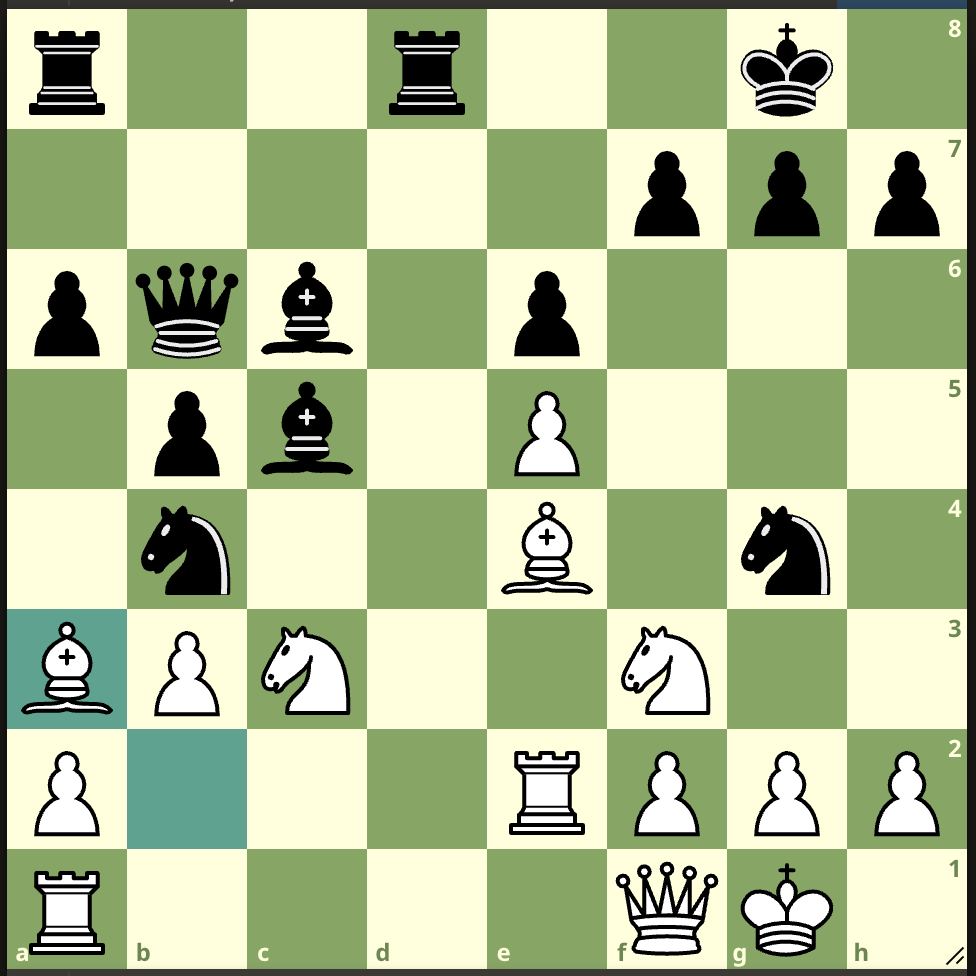
Mistake. Bxc6 was best. (19. Bxc6 Qxc6 20. Ne4 Would be more tenacious, but the position is already difficult for white to play.)
19... Nxf2! 20. Rxf2 Bxe4 21. Nxe4 Bxf2+ 22. Nxf2 Nc2 23. Be7 Nxa1 24. Bxd8 Rxd8 25. Qxa1 Qe3! The smoke has cleared and it turned out Black is much better in this endgame. Material is roughly equal but Black has lots of activity, White’s king is weak, and Black’s rook is very active on the open files. Also, an endgame doesn’t give White relief.
26. h4?! Inaccuracy. Qe1 was best. 26…Rc8 27. Qd4 Qxd4 28. Nxd4 Rc1+ 29. Kh2 Ra1?! Inaccuracy. Rc5 was best. (29... Rc5 Was even more accurate 30. Nd3 (30. Ng4 h5) 30... Rd5) 30. Kg3 Rxa2 31. Ne4 b4 32. Kf3? Mistake. Nf3 was best. (32. Nf3 a5 33. Nfd2 a4 34. bxa4 Rxa4 35. Kf4 Was likely still lost, but perhaps, offered better resistance.)
32... a5 33. Nc5?! Inaccuracy. g3 was best. 33…Rd2! A strong move, perhaps, missed by White.
34. Ke3 Rxg2 35. Nc6?! Rg3+ 36. Kd4 Rg4+ 37. Ne4 Rxh4 38. Nxa5 h5 39. Ke3 Rh3+ 40. Ke2 h4 41. Kf2 Rh2+ 42. Kf3 Ra2 43. Nc4 h3 44. Ncd2 Kf8 45. Kg3 h2 Black wins a piece by force here.
46. Kxh2 f5 47. exf6 gxf6 48. Kg3 f5 49. Kf4 fxe4 50. Nxe4?! Ke7 51. Ke3 Rb2 52. Nd2?! Rxd2 Simplifying into an easily winning king and pawn endgame.
53. Kxd2 Kd6 54. Kd3 Kd5 A very impressive game by Tani, who fully capitalized on his chances that Nico gave him out of the opening. 0-1
Round 5: Adewumi, Tanitoluwa - Kiren Nasta
In the last round, following his impressive game against Nico, he played NM Kiren Nasta for first place. In this game, Tani didn’t get an advantage out of the opening, but then, was able to create chances very well in the endgame. After an up and down endgame, which fluctuated between White winning and Black holding, finally, it was Kiren who made a decisive mistake, and Tani won the game and with it, the tournament.
1. d4 Nf6 2. c4 g6 3. Nc3 d5 4. Nf3 Bg7 5. Qb3 dxc4 6. Qxc4 Be6 7. Qa4+ Bd7 8. Qb3 c5 9. dxc5 Na6 10. g3?! Inaccuracy. Qa3 was best. 10… Nxc5 11. Qa3 Nce4 12. Nxe4 Nxe4 13. Bg2 O-O 14. O-O Bc6 15. Bf4 Nd6 16. Rac1 Nb5 17. Qb3 Nd4 18. Nxd4 Bxg2 19. Kxg2 Qxd4 20. Qxb7?! Inaccuracy. Rc7 was best. 20…Qxb2 21. Qxb2 Bxb2 22. Rc7 Ba3 23. Rd1 Rfc8 24. Rxc8+ Rxc8 25. Rd3 Bc1 26. e3 Kf8 27. Rd7 a5 28. Ra7 Bd2 29. Bc7 a4 30. Kf3 a3 31. Ke2 Bb4 32. Kd3 Ke8?! Inaccuracy. Bc5 was best. 33. Rb7 Bc5? Mistake. g5 was best. 34. Rb8 Rxb8 35. Bxb8 Kd7 36. Kc4 Kc6 37. Be5 f5?! Inaccuracy. Bb6 was best. 38. Bc3 e6 39. h4?? Blunder. Bb4 was best. 39... h6?? Blunder. f4 was best. 40. Bb4 Bb6 41. Bf8? Mistake. Bxa3 was best. 41… h5 42. Be7 e5 43. Bxa3 43... f4?? Blunder. Bd8 was best. 44. gxf4?? Blunder. Kd3 was best.
44…exf4 45. exf4 Bxf2 46. Be7 Be3 47. Bg5 Bf2 48. a4 Bb6 49. Kb4 Bf2?? Blunder. Bc5+ was best. 50. Kc3?? Blunder. a5 was best. 50…Bb6 51. Kc4
After an up and down endgame, Black made the last mistake.
Bf2?? Blunder. Ba5 was best. The final decisive mistake. Understandable, Black wants to prevent the White king from crossing d4, but it turns out that allowing a5 is the worse of the evil. (51... Ba5 Should hold a draw 52. Kd4 Kd6 53. Ke4 Ke6) (51... Bc7 Should also be enough for a draw, though maybe less clean.)
52. a5 Bg1 53. a6 Bb6 54. Bh6 Bf2 55. Bg5 Bb6 56. Kd3 Kd5 57. Bd8 Ba7 58. Bg5 Bb6?! Inaccuracy. Ke6 was best. Perhaps, Black was still thinking this position can be holdable, but here, white finds the decisive breakthrough. 59. f5! gxf5 60. Be3 Kc6? Mistake. Bxe3 was best.
61. a7 Possibly, this resource might’ve been missed by Black from far away. This is the only way for White to win but is sufficient. Black resigned and with it, Tani guaranteed at least a shared first. 1-0
Round 5: Hoffman, Luc - Das, Aditeya
Tani won clear first but one of the players who tied for second was Luc Hoffman, who won an interesting fighting game against Aditeya (Adi) Das.
1. e4 c5 2. Nf3 d6 3. d4 cxd4 4. Nxd4 Nf6 5. Nc3 a6 6. Bg5 e6 7. f4 Qb6 8. Qd2 Qxb2 9. Rb1 Qa3 10. f5 Be7 11. fxe6 Bxe6 12. Nxe6 fxe6 13. Bc4 Nbd7 14. Bxe6 Nc5 15. Bf5 g6 16. O-O gxf5 17. Rxf5 Rf8 18. Bxf6 Bxf6 19. Nd5 Nxe4?? Blunder. O-O-O was best.
20. Re1?? Blunder. Qe2 was best.
20…Kd8?! Inaccuracy. O-O-O was best. 21. Rxe4 Bd4+ 22. Rxd4 Rxf5 23. Nb4? Mistake. Qh6 was best.
23… Qa5 24. Rxd6+ Ke8 25. Qe3+ Kf8 26. Nd5 Re8 27. Qh6+ Kg8 28. Rg6+ hxg6 29. Qxg6+ Kh8 30. Qxe8+ Kg7 31. Qe7+
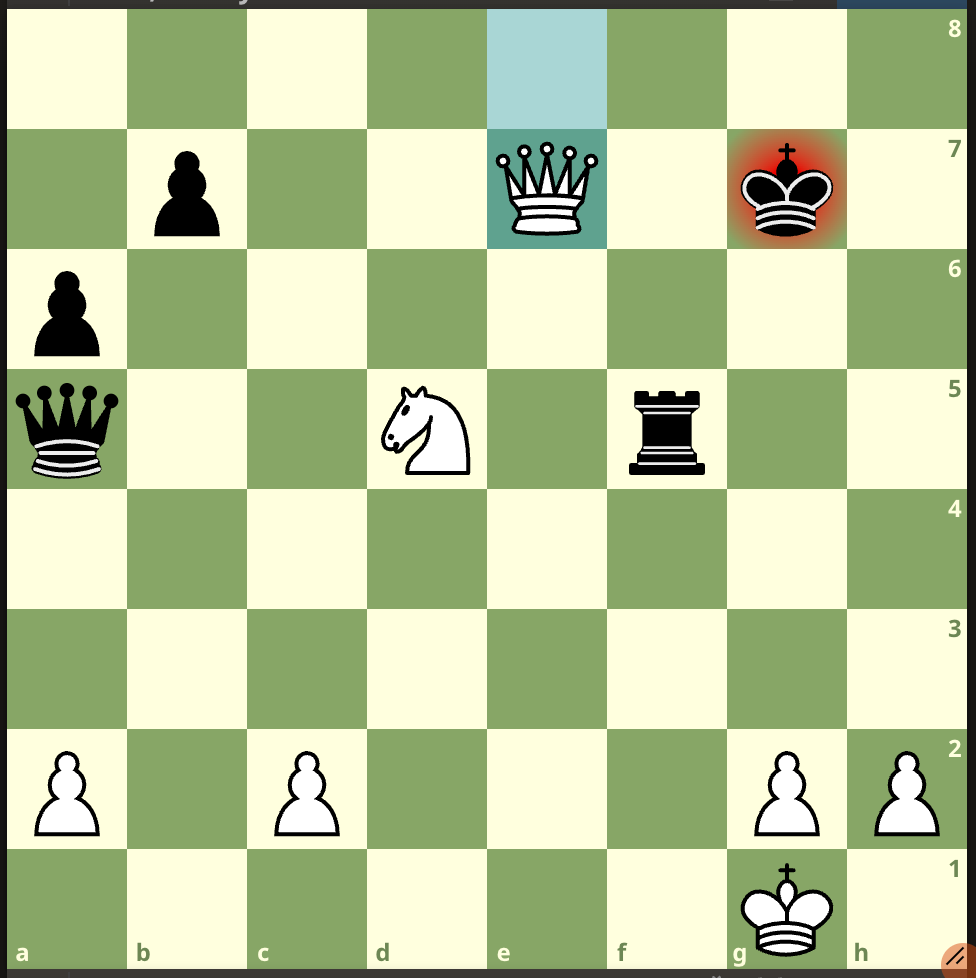
After a complex up and down fight, objectively, we reached a dynamic equal position, and a draw should be the most likely, However, in this position, Adi blitzed out his next move and it turned out to be fatal due to an unexpected tactic, which Luc spotted.
31... Kh8?? Blunder. Rf7 was best. (31... Rf7 Would be a draw most likely. 32. Qe5+ Kh6)
32. Qh4+ And Black resigned due to Qg4+ winning the rook coming next move. Also, notable that Qxf5 will defend against Qe1+ by being able to block the check with Qf1. 1-0
Round 5: Wu, Winsley - Kao, Jamison
If one of these players, Winsley Wu or Jamison Kao would win, they would tie for first with Tani. Alas, after a long fight, the game ended a draw, paving a way for Tani to win clear first. However, in this game, White missed some narrow chances to win the game, which would allow Winsley not only to tie for first, but also, likely break 2200 barrier for NM.
1. e4 c5 2. c3 Nf6 3. e5 Nd5 4. Nf3 Nc6 5. d4 cxd4 6. cxd4 d6 7. Bc4 dxe5 8. dxe5 Ndb4 9. Qxd8+ Nxd8 10. Na3 a6 11. Bd2 Ndc6 12. Nd4 e6 13. Nxc6 Nxc6 14. f4 Bd7 15. Nc2 Rc8 16. Bd3 Bc5 17. Be4 Ke7 18. O-O-O b5 19. Kb1 Rhd8 20. Rhe1 Kf8 21. Be3 Bxe3 22. Rxe3 Be8 23. Red3 Rxd3 24. Rxd3 Ne7 25. b3 a5 26. a3 a4 27. Kb2 h6 28. g3 g5 29. Nd4 Kg7 30. Rc3 Rd8 31. Rd3 Rc8 32. Rc3 Rd8 33. Rd3 Rb8 34. b4 Ng6 35. Ne2 f6 36. Bxg6 Kxg6 37. Rd6 Bf7 38. Nd4 gxf4 39. gxf4 fxe5 40. fxe5 Bg8
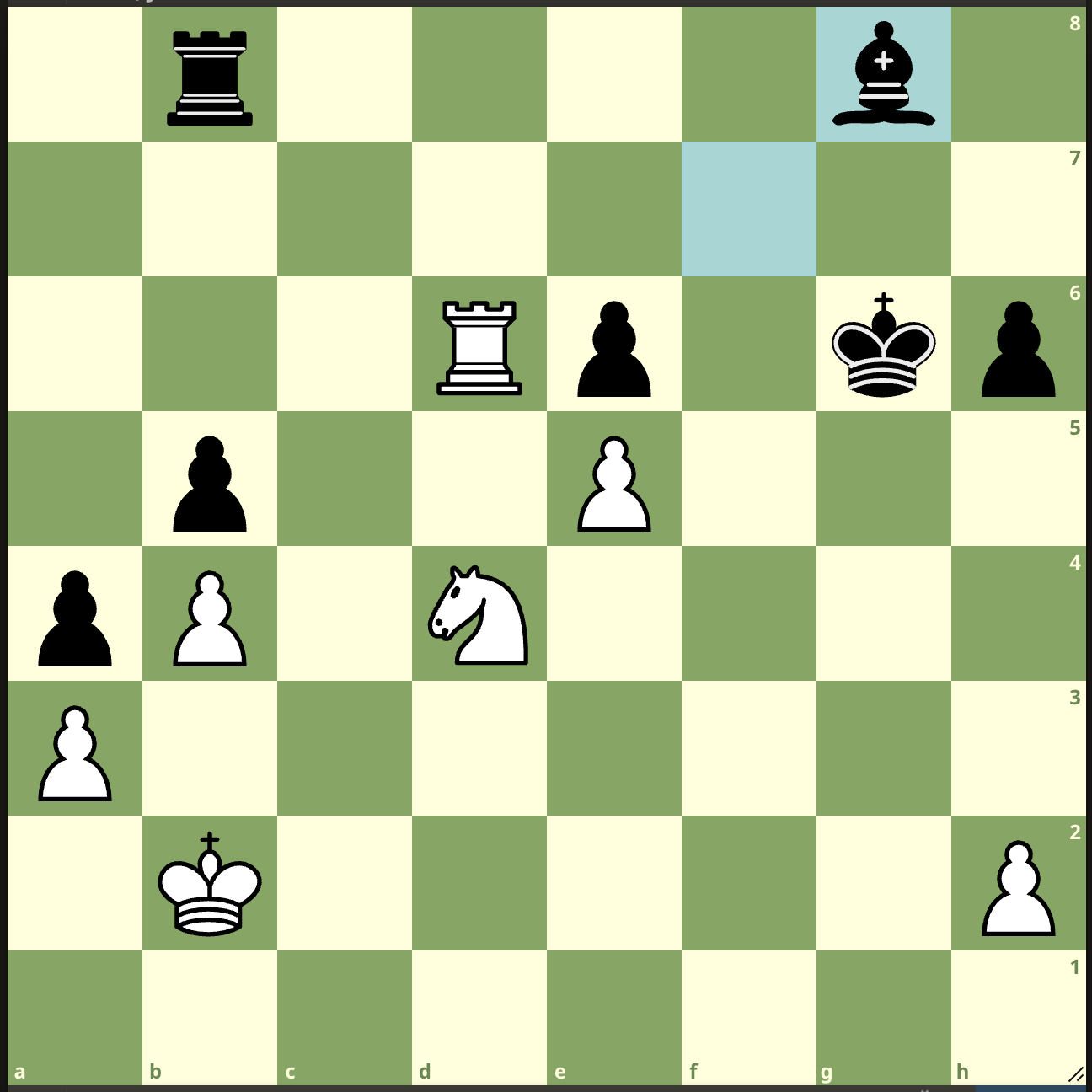
Up to this point, White was outplaying Black very nicely, but here, White missed their first big chance for a decisive advantage.
41. Nxe6?! (41. Rc6 Kg5 42. Rc5 Should be decisive.)
41... Kf5 (41... Bxe6 42. Rxe6+ Kf5 might’ve been easier for Black. 43. Rxh6 Kxe5)
42. Nc5 Kxe5 43. Rxh6 Rd8 44. Kc3 Bc4 45. Rh5+ Kf6 46. Rh4 Rd1 47. Ne4+ Ke5 48. Nd2 Bd5 49. Rh5+ Kd6 50. Rh3 Ke5 51. Re3+ Kd6 52. Rd3 Kc6 53. Kd4 Rh1 54. Rh3 Bg2 55. Rh6+ Kb7 56. Kc5 Ra1 (56... Rd1! Would still hold for Black.)
57. Rg6! Perhaps, missed by Black. 57... Bh1 58. Rg3 (58. Rg7+) 58… Ka6 59. Rg6+ Kb7
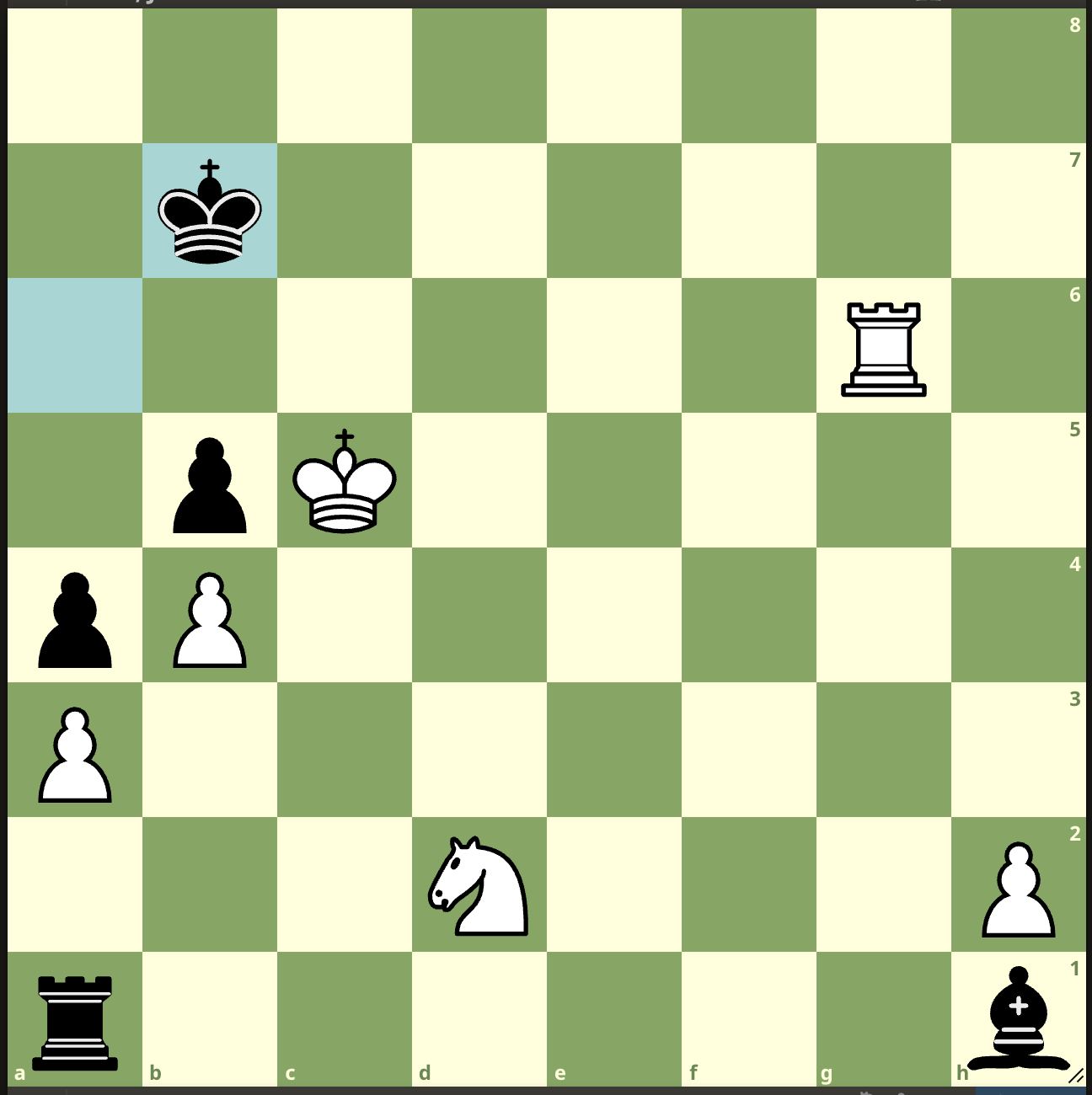
60. Kxb5? Missing the last chance. (60. Rg7+! Would win for White due to a beautiful resource 60... Ka6 (60... Kc8 61. Rg3 Now, black couldn’t defend b5.) 61. Nc4! This would guard the a3 pawn and threaten Rg6+ and winning the b5 pawn. 61... Be4 (61... bxc4 62. b5+ Ka5 63. Ra7#) 62. Rf7! Bd3 63. Ne5 Rxa3 (63... Bf1 64. h4 Rxa3 65. Rxf1) 64. Rf3!)
60... Rxa3 61. Rg7+ Kc8 62. Nc4 Rh3 63. Nb6+ Kd8 64. Rd7+ Ke8 65. Rd1 Rxh2 66. Nxa4 Bf3 67. Rd4 Be2+ 68. Ka5 Rh5+ 69. Kb6 Re5 70. Nc5 Ke7 71. b5 Bxb5 72. Kxb5 And from here, Black holds the theoretically drawn R+N versus R.
72... Re2 73. Kc6 Re1 74. Rf4 Rd1 75. Re4+ Kf6 76. Nb3 Kf5 77. Re8 Kf6 78. Kc5 Kf7 79. Re3 Kf6 80. Nd4 Ra1 81. Re8 Ra5+ 82. Kd6 Ra6+ 83. Kd5 Ra5+ 84. Ke4 Ra4 85. Re6+ Kf7 86. Rb6 Ra1 87. Kd5 Rd1 88. Ra6 Ke7 89. Re6+ Kf7 90. Re3 Kf6 91. Rf3+ Ke7 92. Rf5 Rd3 93. Rf1 Rd2 94. Ke5 Rh2 95. Rf6 Rh1 96. Rf5 Ra1 97. Nc6+ Kd7 98. Kd5 Rd1+ 99. Nd4 Ke7 100. Re5+ Kf6 101. Re3 Rd2 102. Rf3+ Ke7 103. Ke5 Rd1 104. Re3 Rd2 105. Nf5+ Kd7 106. Rc3 Rd1 107. Ra3 Re1+ 108. Kd5 Rd1+ 109. Nd4 Ke7 110. Ra6 Kf7 111. Ke5 Re1+ 112. Kf4 Rf1+ 113. Nf3 Ke7 114. Ke4 Kd7 115. Rf6 Kc7 116. Kd5 Kb7 117. Rf7+ Kb6 118. Kc4 Rc1+ 119. Kb4 Rb1+ 120. Kc3 Rc1+ 121. Kd4 Rd1+ 122. Ke5 Rd8 A narrow escape for Black. As a result, we had a 4-way tie for 2nd between these two players (Winsley Wu and Jamison Kao), and also, GM-elect Nico Chasin, who won his last game, and Luc Hoffman, who was mentioned in his win against Adi. 1/2-1/2
Round 3: Xiang, Grayson - Mulan Jiemin
One interesting highlight was an interesting endgame between Grayson and Mulan played in round 3. White got an advantage out of the opening, but Black defended resourcefully and eventually took over. However, at some point deep in the endgame, black erred and gave white an unexpected chance, which was missed by White.
1. e4 c6 2. d4 d5 3. Nc3 dxe4 4. Nxe4 Nf6 5. Nxf6+ exf6 6. Be3 Bd6 7. Bd3 h6 8. Ne2 O-O 9. O-O Qc7?! Inaccuracy. Na6 was best. 10. h3 (10. Ng3)
10... Be6 11. c4 c5?! Inaccuracy. Na6 was best.
12. d5 Bc8 13. Nc3 a6 14. Ne4 Nd7 15. Nxd6 Qxd6 16. Bxh6 f5 17. Bd2 Ne5 18. Bf4 Qf6 19. Bxe5?! Inaccuracy. Re1 was best. (19. Re1 Nxd3 (19... Ng6 20. Bc7 Qxb2 21. Bd6) (19... Re8 20. Qe2) 20. Qxd3 Qxb2 21. Bd6)
19... Qxe5 20. Qc2 g6 21. Rfe1 Qd6 22. Qe2 Kg7?! Inaccuracy. Bd7 was best.
23. Rab1?! Inaccuracy. Qe7 was best. (23. Qe7 Qb6 24. Bf1) 23… a5 24. a3 Bd7 25. Qd2 Qf6 26. Qf4 b6 27. Re5 Rh8 28. Rbe1 Rh4 29. Qf3 Rah8 30. Re7 Bc8?! Inaccuracy. Qg5 was best.
31. Kf1?? Blunder. Rc7 was best. (31. Rc7)
31… g5 32. R1e5 g4?! Inaccuracy. a4 was best.
33. hxg4 Rh1+?? Blunder. Be6 was best.
34. Ke2 Be6 35. R7xe6?! Inaccuracy. Qe3 was best. (35. Qe3 Qxe7 (35... f4 36. R7xe6 fxe6 37. Qe4) 36. gxf5)
35… fxe6 36. Qf4 exd5? Mistake. Qh4 was best.
37. g5?? Blunder. cxd5 was best. (37. cxd5 fxg4 38. Rg5+ Kf7 39. Bg6+)
37… Qd6 38. Qe3 d4 39. Qg3 f4 40. Qxf4 Re8 41. Qf6+ Qxf6 42. gxf6+ Kf8 43. Rxe8+ Kxe8 44. Bg6+?? Blunder. g4 was best. (44. g4 Kf7 (44... Rg1 45. Bg6+ (45. Kf3 Kf7) 45... Kf8 46. Kf3) 45. g5)
44… Kf8 45. f4?! Inaccuracy. g3 was best.
45…Rh6 46. Be4 Rxf6 47. Kf3 Rh6 48. Kg4?! Inaccuracy. Ke2 was best.
48…Re6?! Inaccuracy. Rd6 was best. 49. Kf5 Rd6 50. Bd3 Ke7 51. g4 Rf6+ 52. Kg5 Re6 53. f5 Re3 54. f6+ Kf7 55. Bg6+ Kf8 56. Kf4 Rh3 57. g5 d3 58. Ke5 d2 59. Bc2
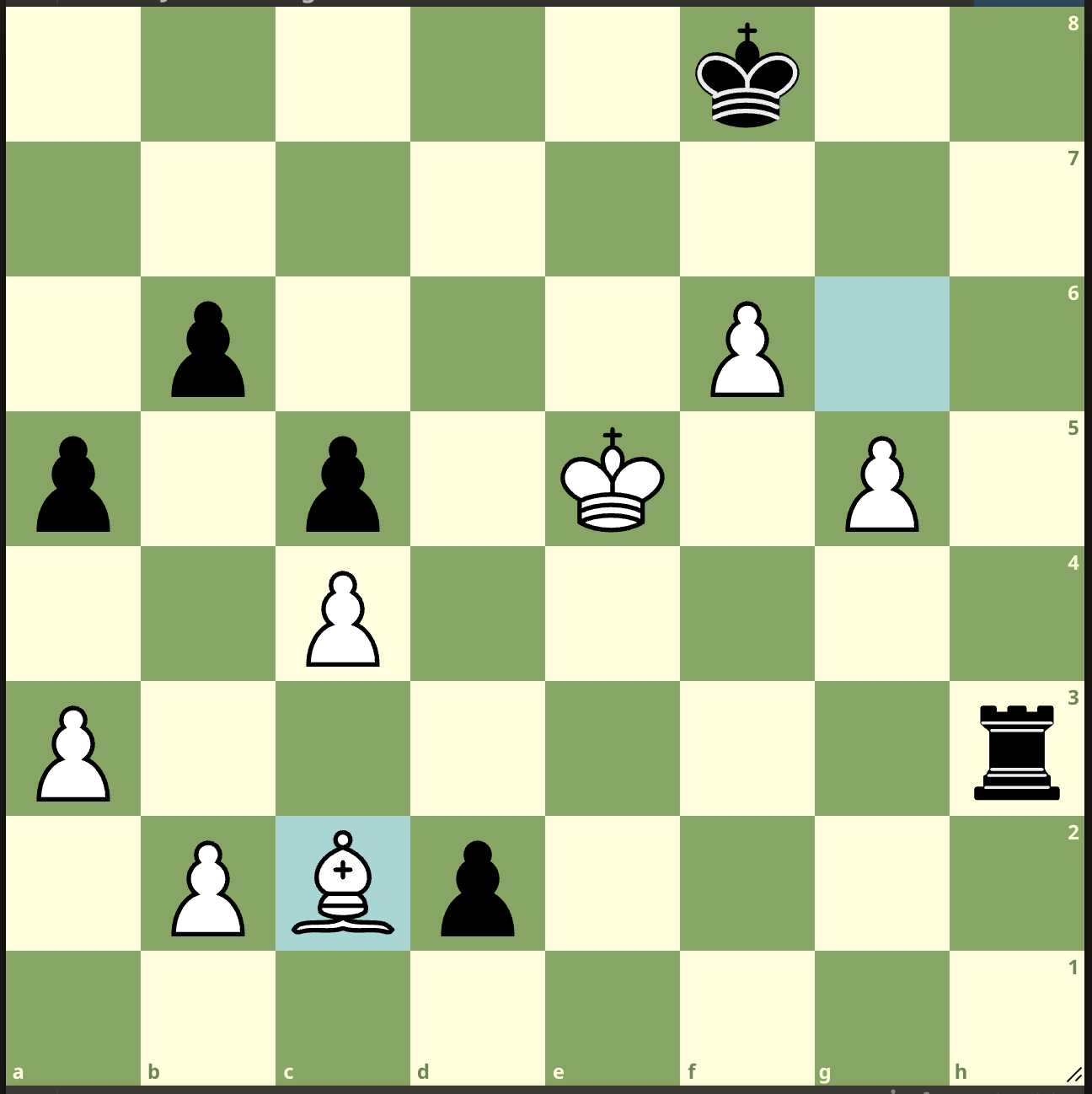
In this position, Black can win in many ways.
59... Rd3?! Winning but not the most practical. This makes Black’s life more difficult. (59... Rh1 60. g6 d1=Q)
60. Bxd3 d1=Q 61. Be4 Qd4+ 62. Kf5 Qxb2 63. g6 Qf2+ 64. Ke6 Qf4?? Blunder. Qe2 was best. Now, after this mistake, suddenly, White is briefly winning. (64... Qe3)
65. Bf5?? Blunder. g7+ was best. (65. g7+! Kg8 66. Bd5! Amazingly, now, White is winning. Probably White didn’t expect he can be winning, otherwise there is a good chance, this resource would be found. 66... Kh7 67. Kd7 Qf5+ 68. Be6) (65. Bd5 Of course, this doesn’t work right away because of 65... Qg4+)
65... Qxc4+ From here, Black easily converted.
66. Ke5 Qc3+ 67. Ke6 Qe3+ 68. Kd6 Qd4+ 69. Ke6 Qe3+ 70. Kd6 c4 71. g7+ Kf7 72. Bg6+ Kg8 73. Bf5 Qxa3+ 74. Kd7 Qa4+ 75. Ke7 Qb4+ 76. Kd7?! Checkmate is now unavoidable. Ke6 was best.
76…Qb5+ 77. Ke6 c3 78. Bg6 Qc4+ 79. Ke7 Qc7+ 80. Ke6 c2 81. Bxc2 Qxc2 82. Ke7 Qc5+ 83. Ke6 a4 84. f7+ Kxg7 85. Kd7 Kxf7 86. Kd8 Qe7+ 87. Kc8 Ke6 88. Kb8 Kd6 89. Ka8 Kc6 90. Kb8 Qb7# 0-1 Black wins. 0-1
Round 3: Max Mulholland - Charlotte Chang
In the U12 section of the Junior Championship, two players tied for first with 4.5/5, Max Mulholland and Aarav Singh.
1. d4 d5 2. Bf4 c5 3. c3 Nf6 4. e3 Nc6 5. Bd3 g6 6. Nf3 Bg7 7. Nbd2 Bg4 8. h3 Bxf3 9. Nxf3 Rc8 10. O-O O-O 11. a4 Re8 12. Qd2 Qd7?! Inaccuracy. Ne4 was best.
13. Rfe1?! Inaccuracy. Ne5 was best.
13… Nh5 14. Bh2 e5?! Inaccuracy. c4 was best.
15. Bb5? Mistake. dxe5 was best.
15… exd4 16. cxd4 a6 17. Be2 cxd4 18. Nxd4 Nxd4 19. exd4 Nf6 20. Bf3 Ne4 21. Qd3 Qc6 22. Rad1?! Inaccuracy. Bf4 was best.
22… Qc2?! Inaccuracy. Qxa4 was best.
23. Bxe4 dxe4?! Inaccuracy. Rxe4 was best.
24. Qxc2 Rxc2 25. d5 Bxb2 26. d6 f5 27. Bf4 Bf6 28. f3 g5 29. d7 Rd8 30. Be3 Rf8?? Blunder. exf3 was best. 31. fxe4 fxe4?! Inaccuracy. f4 was best.
32. Bb6 Bd8 33. Bxd8 Rxd8 34. Rxe4 Kf7 35. Rf1+ Kg6
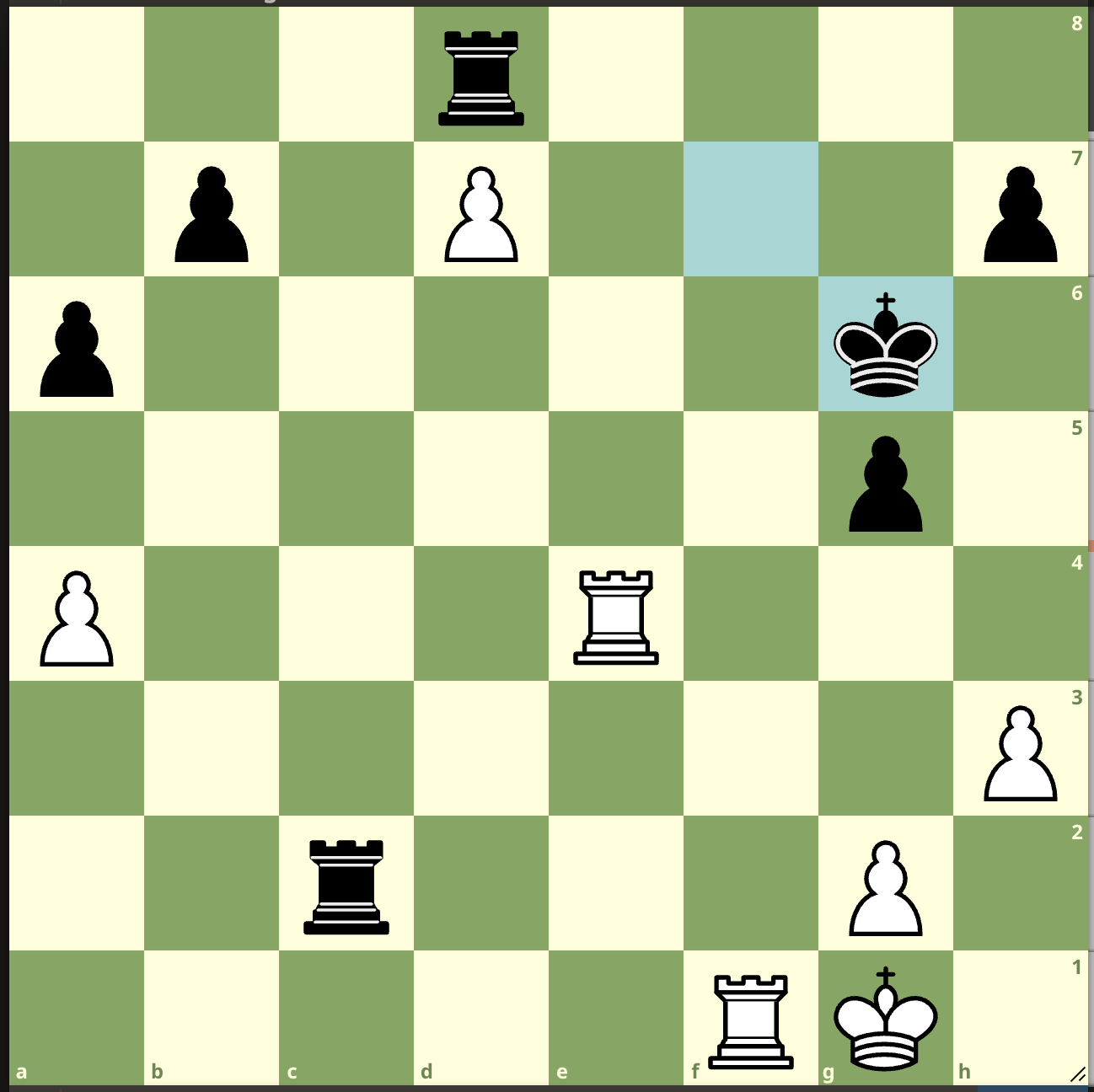
Up to this point, Max had good control of the position. Here, however, White misses a narrow winning chance.
36. Re7?? Blunder. Re6+ was best. (36. Re6+! This check first was key, disturbing black’s harmony. 36... Kg7 (36... Kh5 37. Rf7 Would also be close to mate for White.) 37. Re7+ Kg6 38. Rd1! This key tempo would prevent black from playing Rd2 like they did in the game.)
36... Rd2 Now, Black should objectively, hold, but it’s still tricky.
37. Rff7 b5 38. Rg7+ Kf6 39. axb5 axb5 40. Rxh7 b4 41. Rhf7+ Kg6 42. Rf3 R8xd7 43. Re6+ Kg7 44. Rb6 Rd1+ 45. Kh2 R1d5 (45... R1d3 Would likely force R and 2 versus R and 1 on the same side, which should’ve been the easiest draw. 46. Rff6 Rb7!)
46. Rxb4 Re5 (46... Rd3)
47. Rg3 Kh6 48. Rb6+
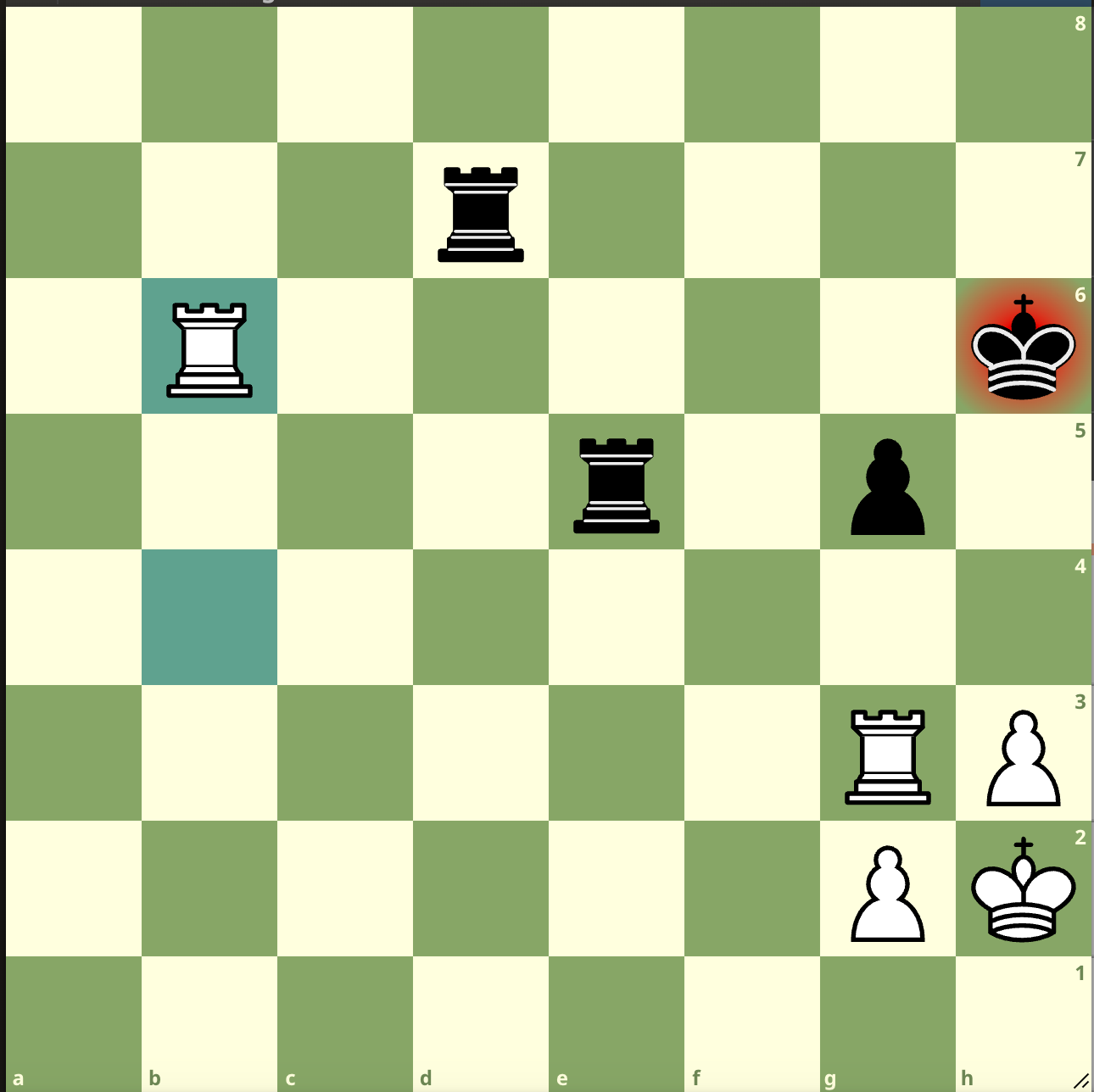
48…Kh5?? Checkmate is now unavoidable. Kh7 was best. Here black erred, and White seized his opportunity by being tactically alert.
49. Re3! A beautiful move! Now, White either mates or wins a rook.
49... Rd2 (49... Rxe3 50. g4+ Kh4 51. Rh6# Is the idea.)
50. Rxe5 Rc2 51. Re7 Rxg2+ 52. Kxg2 g4 53. Re5+ Kh4 54. Rh6# 1-0 White wins. 1-0
Round 4: Kabir Mutha - Aarav Singh
Aarav Singh also tied for first with Max, and my favorite game of his was this nice positional game against Kabir Mutha.
1. e4 e6 2. d4 d5 3. exd5 exd5 4. c4 Nf6 5. Nc3 Be7 6. Bd3 dxc4! Precise! Waiting for Bd3 before taking on c4 to win a tempo.
7. Bxc4 O-O 8. Nge2 Bf5 (8... Nbd7 Might’ve been slightly more accurate.)
9. O-O Nbd7 10. h3 (10. Ng3 Bg6 11. f4 Was a chance for White to play for an advantage.) 10... Nb6 11. Bd3 (11. Bb3)
11… Bxd3 12. Qxd3 Qd7 13. Bg5 Rad8 14. Qf3 c6 15. Rad1 h6 16. Bf4 Nfd5 17. Bh2 Nc4?! Inaccuracy. Rfe8 was best. 18. Nxd5 Qxd5 19. Qb3 Nb6! 20. Rd3 Rd7 21. Be5 Rfd8 22. Qxd5 Rxd5 (22... Nxd5)
23. Bf4 Bf6 24. Be3 R5d7 25. b3 Nd5 26. Rfd1 c5 27. a3 Nc7 28. Kf1 This blunders a pawn. (28. R3d2)
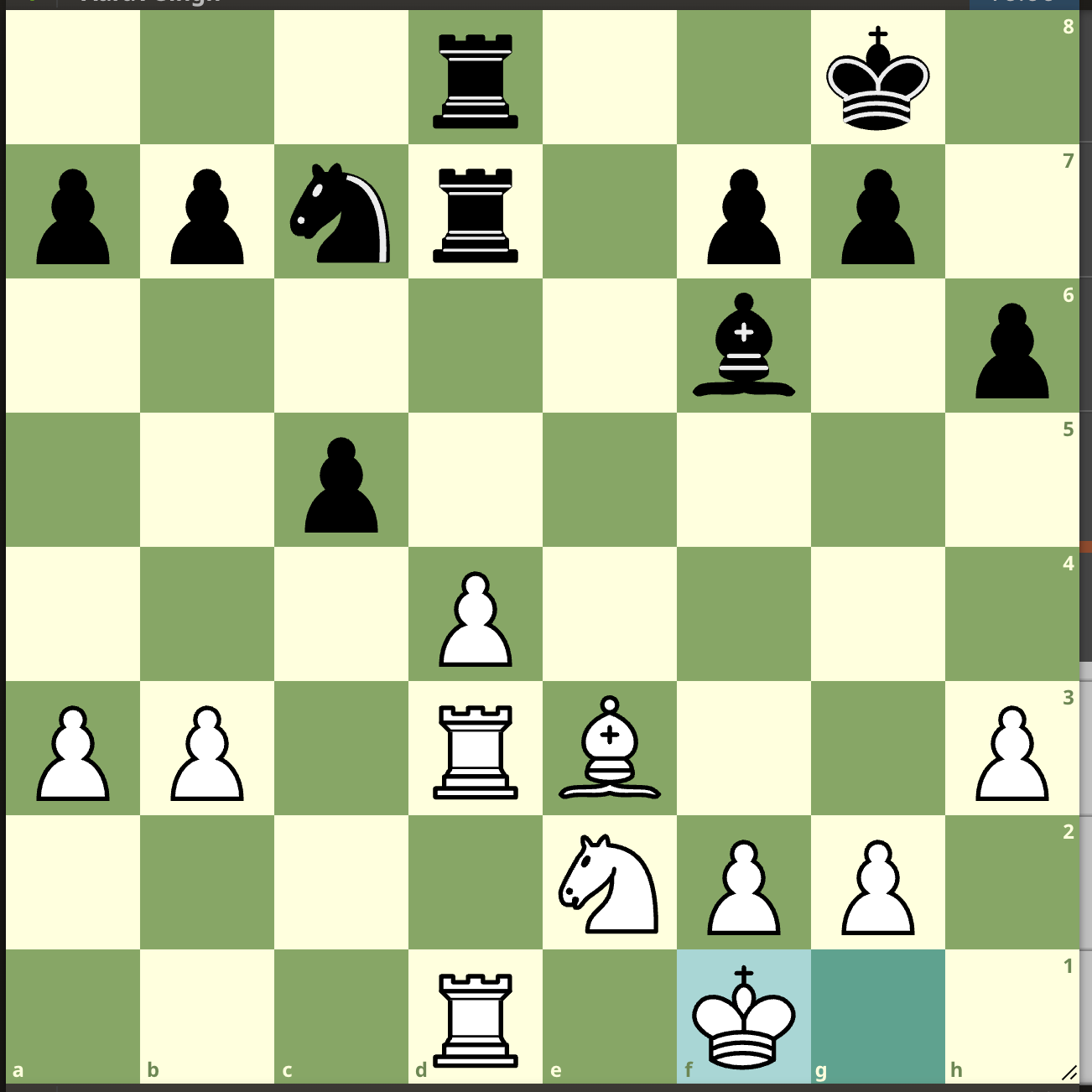
28... cxd4 29. Bc1 (29. Bxd4 Ne6)
29… Ne6 30. b4 b6 31. Bb2 a5 32. f4 axb4 33. axb4 Nc7 34. Kf2 Nb5 35. Ng1 Be7 36. Rb3 Rc7 37. Rd2 Rc4 38. Nf3 Rxb4 39. Rbd3 Bc5 40. Ne5 Rd6 41. Kf3 f6 42. Ng6 Ra4 43. Ke4 f5+ A nice smooth game by Aarav, giving him a shared first with Max. 0-1
GM Aleksandr Lenderman, Marshall Spectator Contributor
Snow Can’t Stop Us
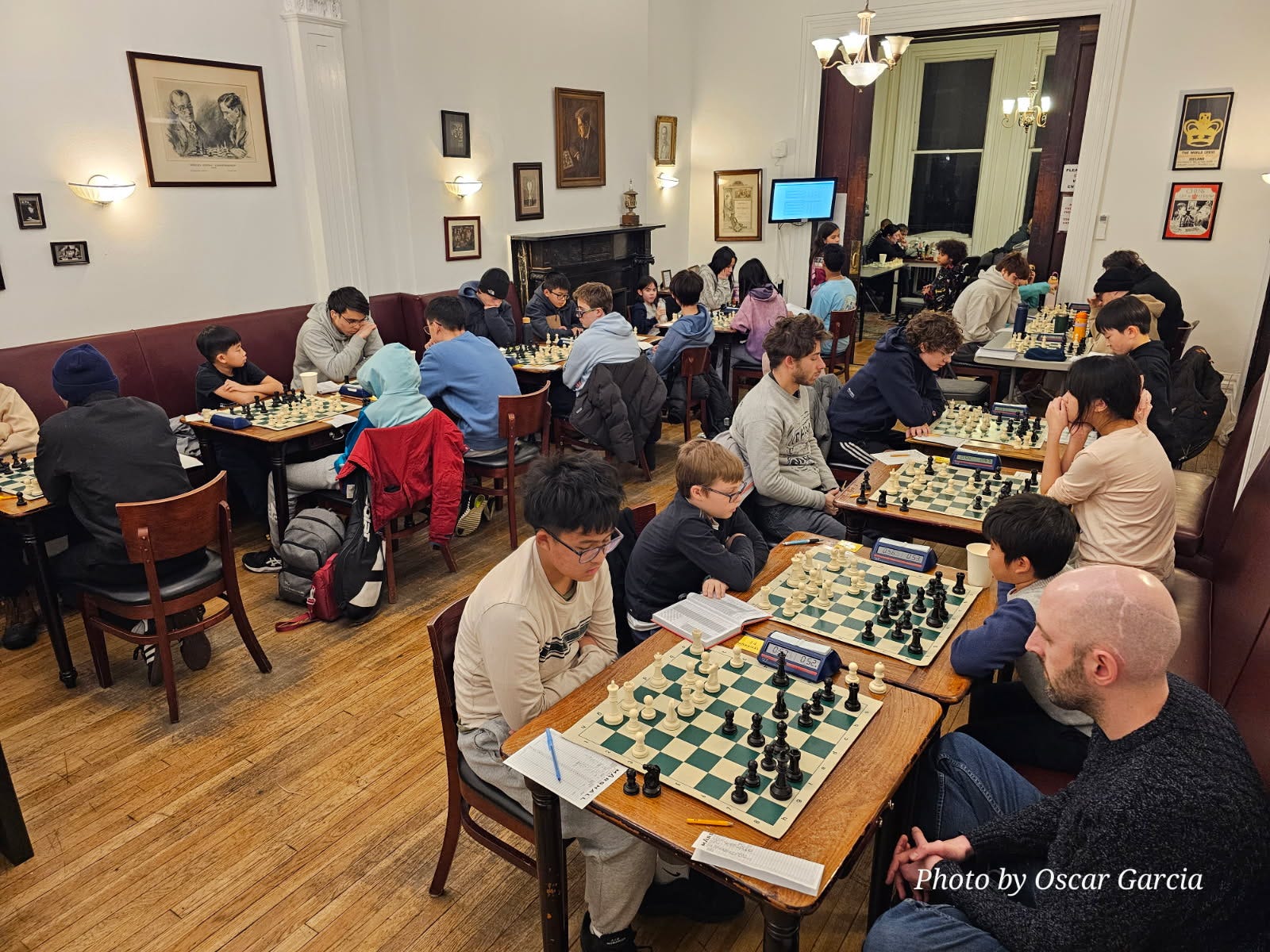
This past weekend the better part of the east coast was blanketed in snow as one of the largest winter storms in recent memory dropped nearly a foot of it onto New York City in a matter of hours. One by one, many chess events around the city were canceled due to the weather. However, the steadfast Marshall Chess Club remained open as a beacon for weary chess players in search of a haven to play the royal game. Despite the wintry mess, we had a nearly sold out house with chess players coming from far and wide to play rated games here at 23 West 10th Street.
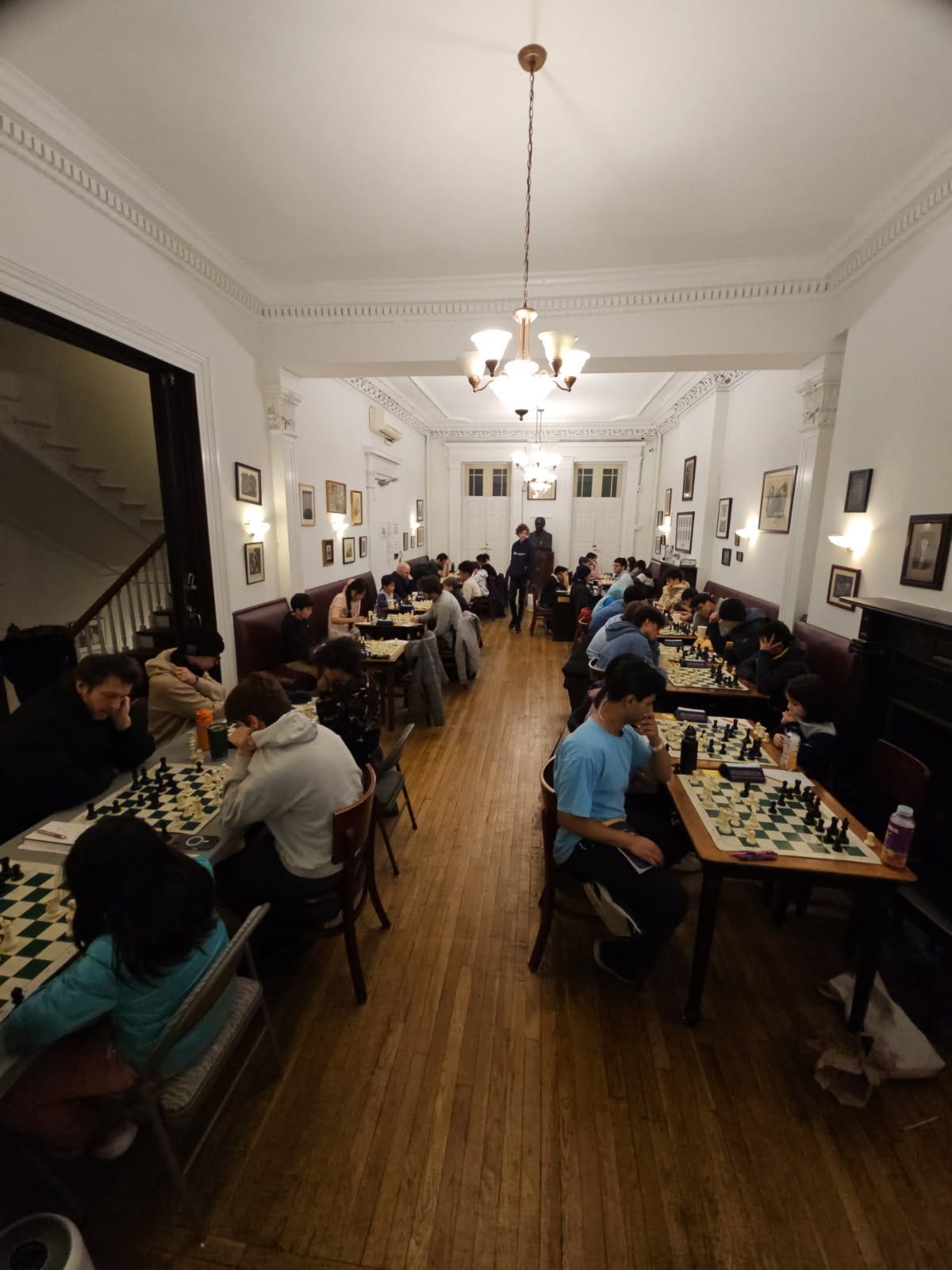
We were thrilled to get so much positive feedback from the players and parents. Mari Onaga, Kai Waters mother said “Thank you for truly being the only beacon of light and safe space for chess players during the storm.”
Another parent who I spoke to added some detail. “From a parent’s perspective, it’s a combination of (1) a perfect indoor activity, (2) an amazing location so people can get there easily and safely during the storm, and (3) a deep pool of talented players, so good players attract to each other.” Said Gary Lu, parent of Marissa Lu. Marissa’s mother, Zhen, added “Marissa signed up to Quads last minute when she saw pretty good participation despite the storm. The Subway was a bit delayed but still running. She always liked the warm and cozy ambiance of the Marshall - it’s a great place in the winter to enjoy a few chess games and hang out with friends.”
Ben Statz and his son Isaac also trekked through the snow to see if the club was really open for business as usual. When I asked him how the commute was, he responded “The trains were running, but pretty empty except for the chess players. The club, however, was running and full!”
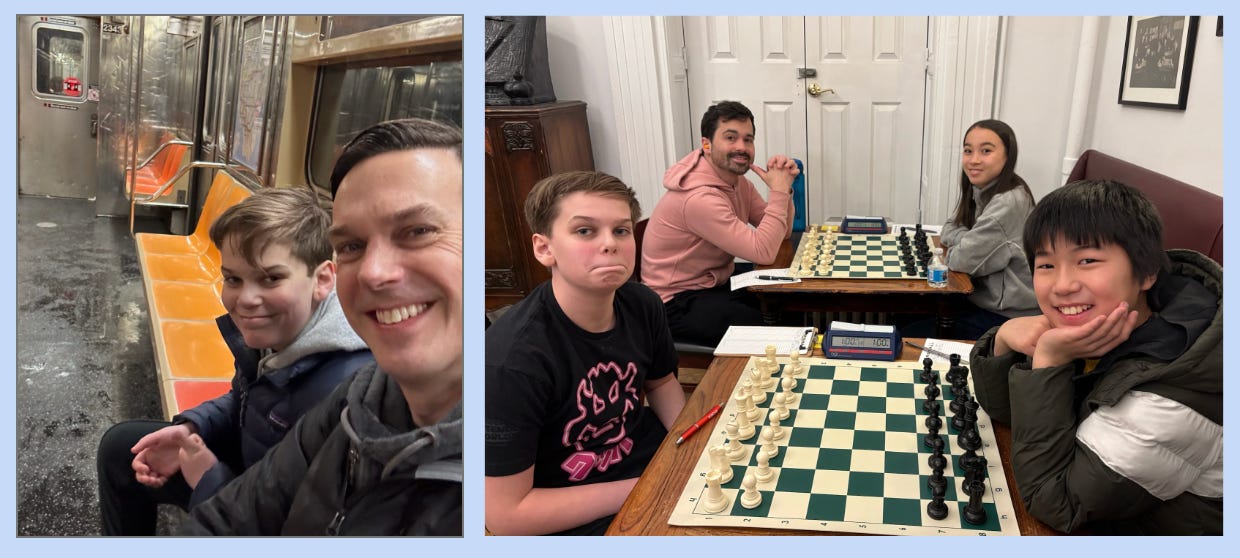
When I asked Samuel Curran, a professional chess teacher who played in the quads, what his impression of the event was, he said “I liked the email Carlos sent out where he said we are the only beacon of light offering you a place to play chess tomorrow. I concur, the Marshall was my beacon of light in the storm.”
Robert Thorstad, a Marshall member who shared in a top prize in one of the quads, added "A great way to spend a snow day — I really appreciated the club staying open, and the turnout was impressive given the weather."
In a follow up email to the event, Jenny Lane, mother of Maxwell Gachiri said “I wanted to thank and commend the club for providing a place for kids to play chess last Sunday! Maxi was happy to participate, delighted to win $25, (which I’m told will pay for a good number of pokemon cards) and thrilled to break 1800 just in time to celebrate over a snow day.”
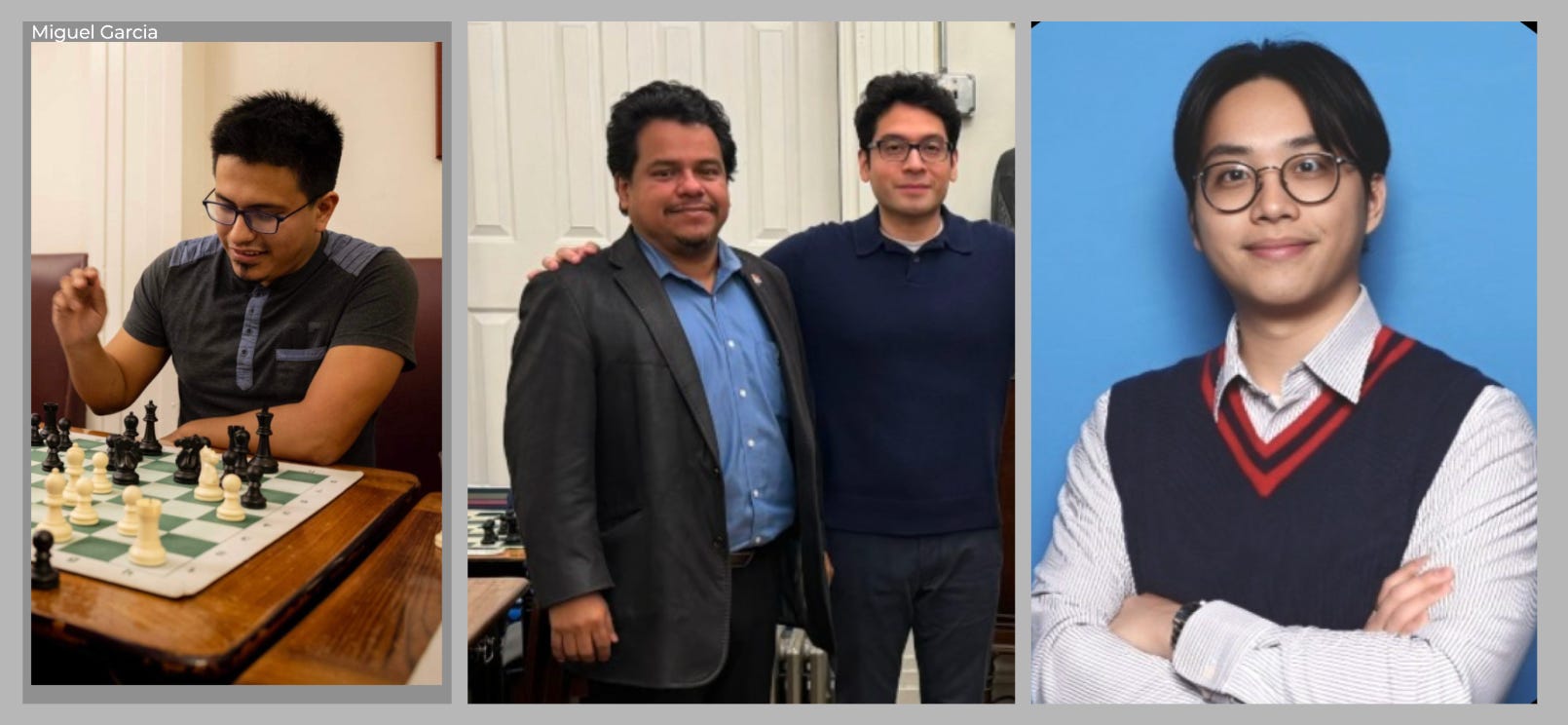
Finally, I wanted to share a quote from Executive Director Carlos Chavez, expressing his gratitude for the staff, who are pictured above: Thank you to the brave and bold staff that showed up at the club at 8am to prepare for our morning tournaments, the Rated Beginner Open and Morning Under 1600, for which we had 30 players in total. They followed this impressive feat with the afternoon Sunday Quads for which we had a total of 42 players. Their resilience and commitment despite the inclement weather showed what the club means to them and the kind of services they provide to our members and the overall chess community. A resounding huge shout out to IA Oscar Garcia, FA Miguel Garcia, and NA Yifeng Zheng! You gentlemen were the stars of the snow day 2026 and kept the Marshall Chess Club doors open to the delight of our talented chess players!
Greg Keener, Marshall Spectator Editor
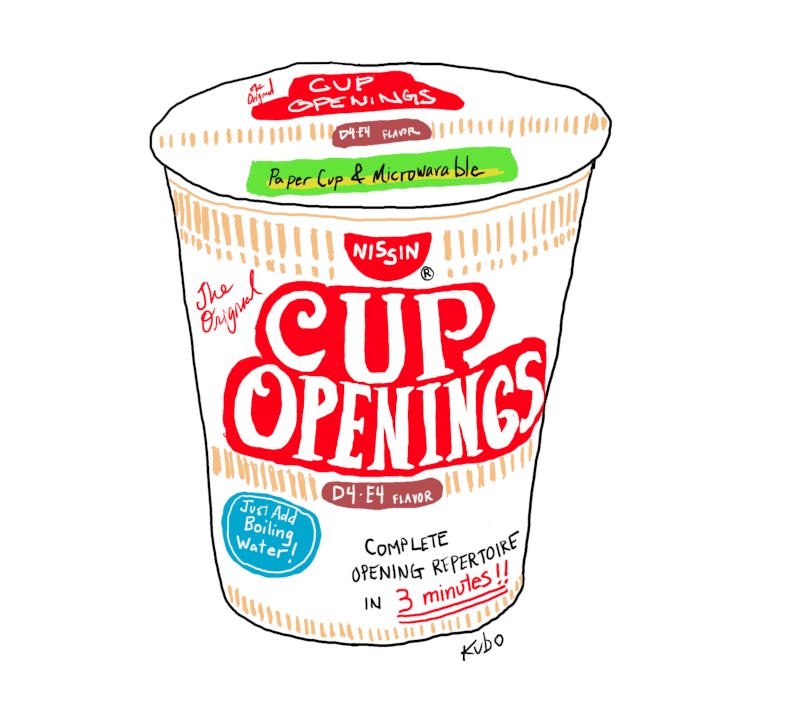
Chess Toons
En Passant
GM Yagiz Kaan Erdogmus was recently described by GM Magnus Carlsen as the strongest 14-year-old in the history of the game. He's demonstrated his ability in recent months, and gained more points than anyone else among the world's top-100 players in the February rating list.
The closing day of the 88th Tata Steel Chess Tournament settled both sections without the need for playoffs. In the Masters, Nodirbek Abdusattorov secured clear first place by defeating Arjun Erigaisi, finishing ahead of compatriot Javokhir Sindarov. Meanwhile, the Challengers title went to Andy Woodward, whose final-round win over Erwin l'Ami earned him a place in next year's Masters, while Vasyl Ivanchuk also won and finished in sole second place.
Each year, the U.S. Chess Federation honors clubs that go above and beyond in promoting the game and serving their communities through the Chess Club of the Year Awards…Clubs are encouraged to submit details about what makes their club special and why they should qualify for Club of the Year. If you think your club is deserving of this honor… click the link above and send an email to Paul Covington.
Problems, Problems, curated by Alexander George
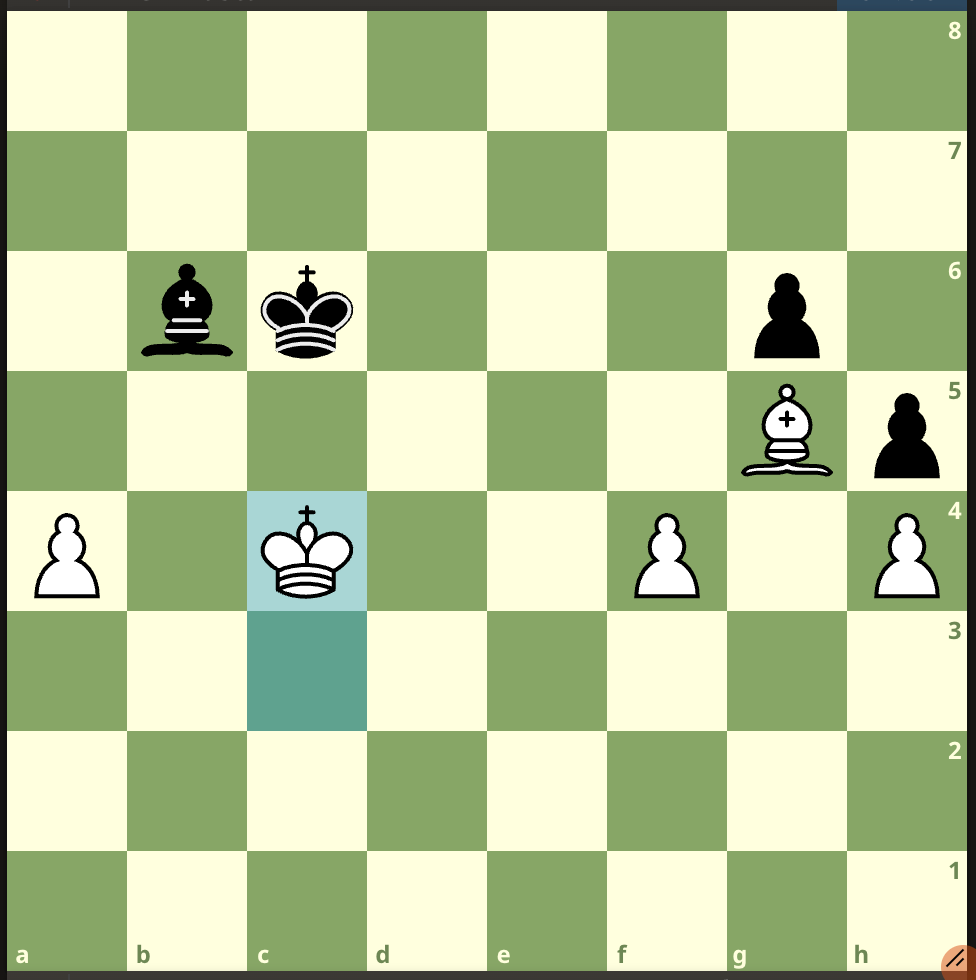
Vasily Smyslov, 2010
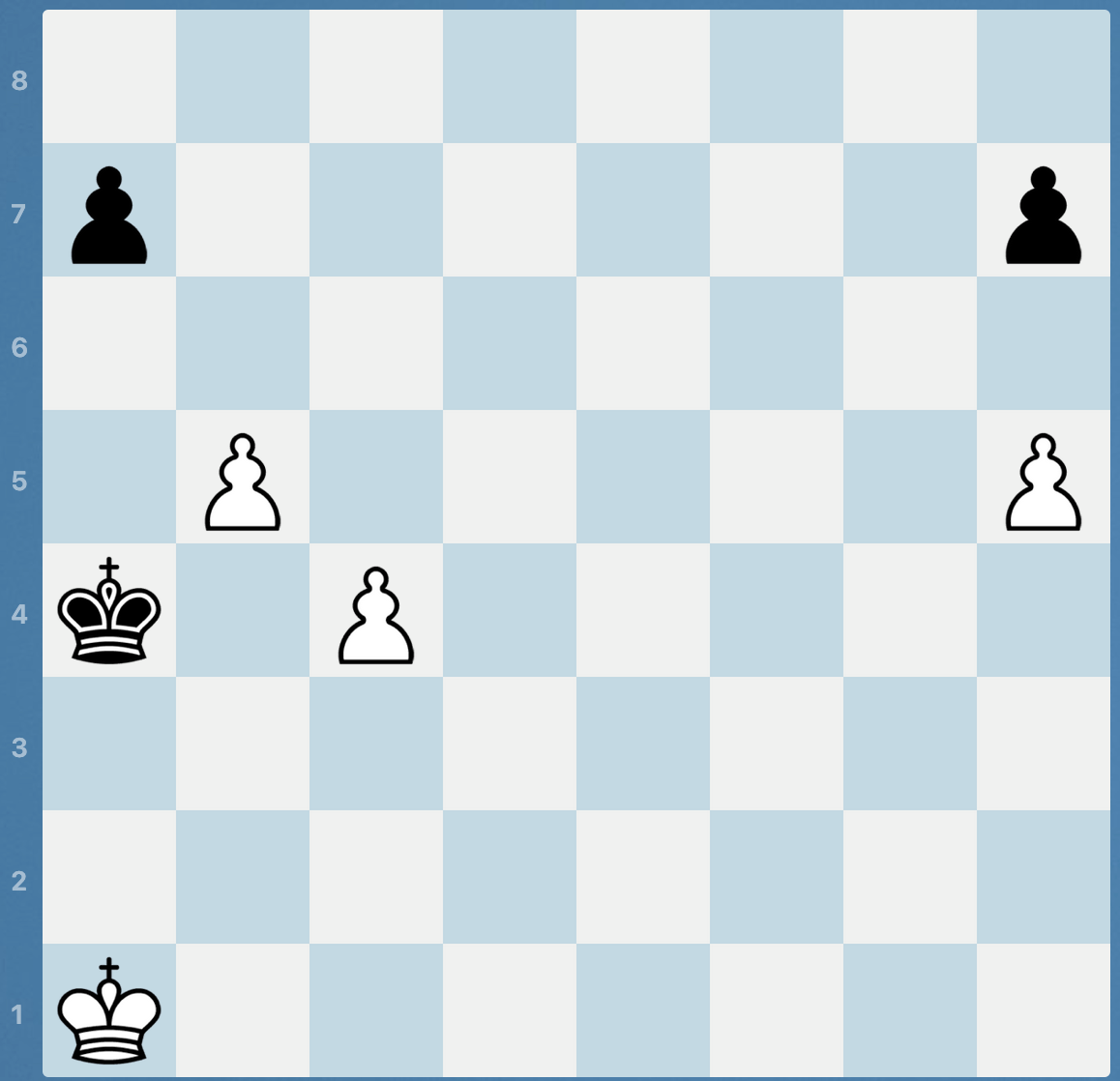
Continuing our series of grandmaster (in otb play) compositions, here's one from the seventh World Champion, composed the year of his death.
---
Solution to last issue’s problem (Yuri Averbakh, 1982):
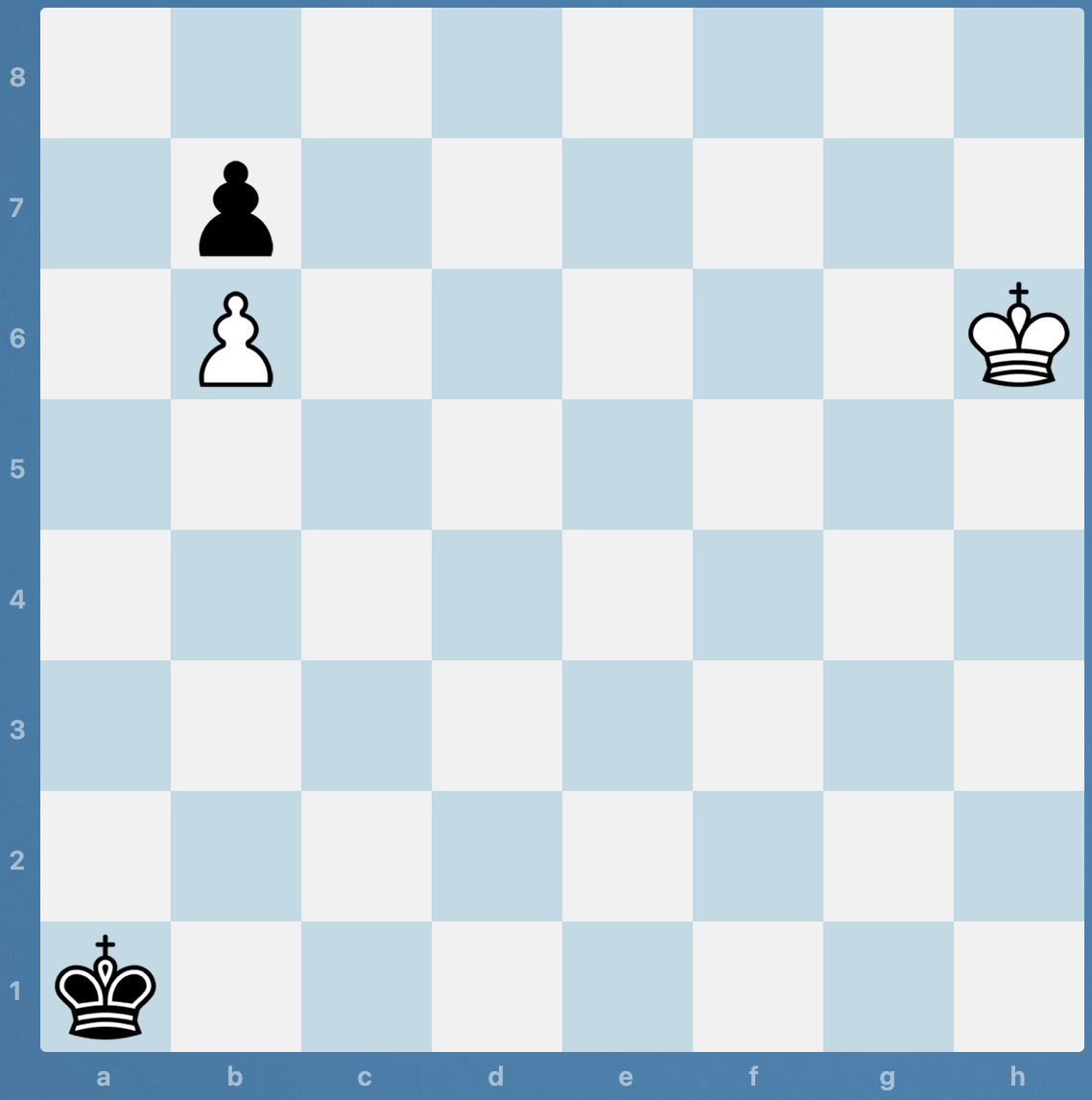
White to move and draw.
1.Kg5! (1.Kg6? Kb2 2.Kf5 Kc3 3.Ke4 Kc4!) Kb2 2.Kf4 Kc3 3.Ke3! Kc4 4.Kd2! Kc5 5.Kc3 Kb5 6.Kb3 Kb6 7.Kb4 and draws.
---
Alexander George
Editor’s Note
As always, if you have any feedback, comments, or would like to submit an article please contact us directly at td@marshallchessclub.org.
Enjoy, and thanks for reading!
The Marshall Chess Club
23 West Tenth Street New York, NY 10011
212.477.3716

Thanks for reading The Marshall Spectator! Subscribe for free to receive new posts and support the club.