

The Marshall Spectator
December 24, 2025


In This Issue:
From The Skittles Room
Club Championship Games Analyzed, by GM Aleksandr Lenderman
From Campers to Competitors, by The Egelhof Brothers
Interview with David Hater, by Greg Keener
Chess Toons
En Passant
Problems, Problems, curated by Alexander George
Editor’s Note

Welcome back, fellow chess players, to this edition of the Marshall Chess Club’s fortnightly bulletin, The Marshall Spectator.
Congratulations to this year’s winners of the 109th Annual Edward Lasker Memorial and Marshall Chess Club Championship, IM Mykola Bortnyk and GM Jianchao Zhou.
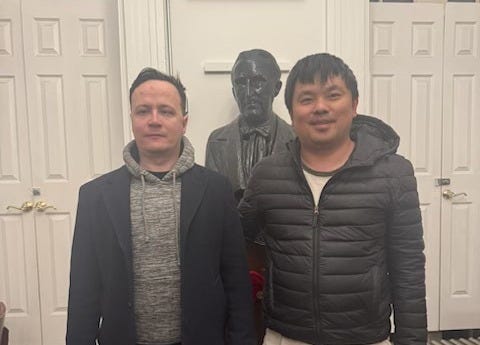
Both of them finished with an impressive 6 out of 7 in a very strong field, and once again, for the 3rd consecutive year, IM Mykola Bortnyk won the blitz tie-breaks match to defend his title as the Champion of the Marshall Chess Club. There were 96 players registered for the event, and the games were live broadcast online on chess.com and lichess.org.
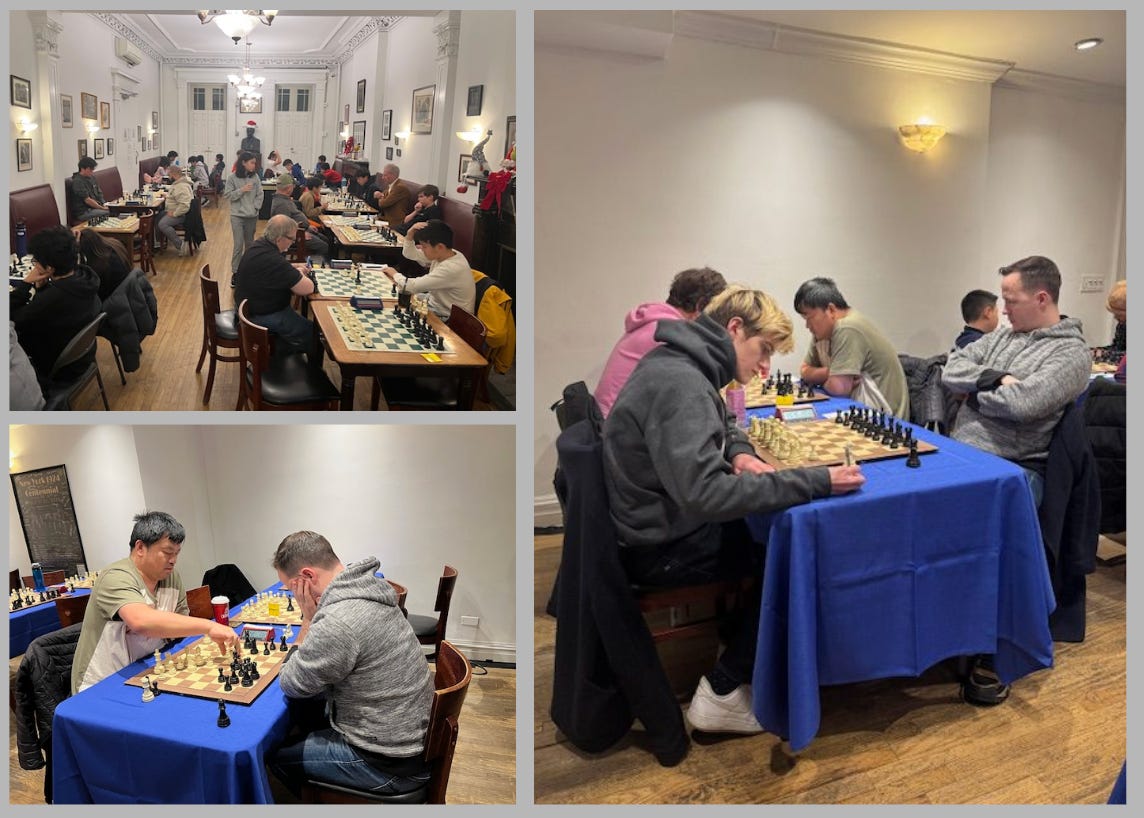
Another noteworthy result was achieved by Hardy Gu, who had a remarkable event, starting with a win in Round 1 against GM Aleksandr Lenderman. Gu went on to finish the event with an impressive 4.5 out of 7, crossing the 2200 threshold to earn the title of National Master.
A brief review of the historical record reveals that in our more than 100 years of history as a club, IM Bortnyk joins a small handful of Club Champions who managed to win the club championship three consecutive times: Reuben Fine, Herbert Seidman, Larry Evans, and Andy Soltis. The editorial board of The Marshall Spectator would like to thank all of the participants, arbiters, and board members of the Marshall Chess Club who made this historic event possible, and congratulate this year’s champion for once again rising to the top of an incredibly strong field.
In other championship news, many Marshall Chess Club members made the cross-country trek to Spokane, Washington this month for the 2025 Grade Nationals Chess Championship, and we are proud to report that many New York teams clinched first place and the title of National Champion in their Grade. Stuyvesant High School won 1st place in the 12th grade section, led by top scorer Jed Sloan who managed an impressive 6 points to tie with William Safranek, another New Yorker and Marshall regular, who finished in first-place on tie-breaks in that section. The 10th grade National Champions were the team from Success Academy High School of the Liberal Arts-Manhattan, who were led by top scorers and Marshall Members John Silva and Nathanael Bredwood who finished with 4.5 points each. The 9th grade Championship Team was from the Milburn High School in New Jersey -not exactly New York but close enough- led by top scorer Bobby Qian. The 8th Grade National Champions were from Success Academy Midtown West, led by top scorer Austin Zhao who finished with 5.5 points. Marshall Chess Club Member Connor Wang finished in first-place in the section, with a near perfect 6.5 out of 7 performance. The 7th Grade National Championship team was from Dalton, with a talented squad of Marshall Members: Elliot Goodrich, Anson Leong, and Owen J Pang, who scored an impressive 5.5, 5.5, and 5 respectively. The first-place team in 6th grade was also from New York, the JHS 167 Robert F Wagner school led by Marshall Member and top scorer Shiv Dubey who finished with 5.5 out of 7. The 5th grade National Championship team was also from New York: Success Academy Midtown West and featured a roster of Marshall Members including Wan Qin Li, Alexandra Liu, and Kyle Tse. The 4th Grade National Championship team was from Dalton, featuring top scorer Declan Campbell who finished with an impressive 5.5 out of 7. The 3rd grade National Championship team came from the New York School PS 198 Isador E Ida Strauss. The 2nd grade section featured a tie between the teams from Somerset and Dalton, with Dalton Gorczyca scoring an incredible 6 out of 7. For a full list of standings and results, please check the results page.
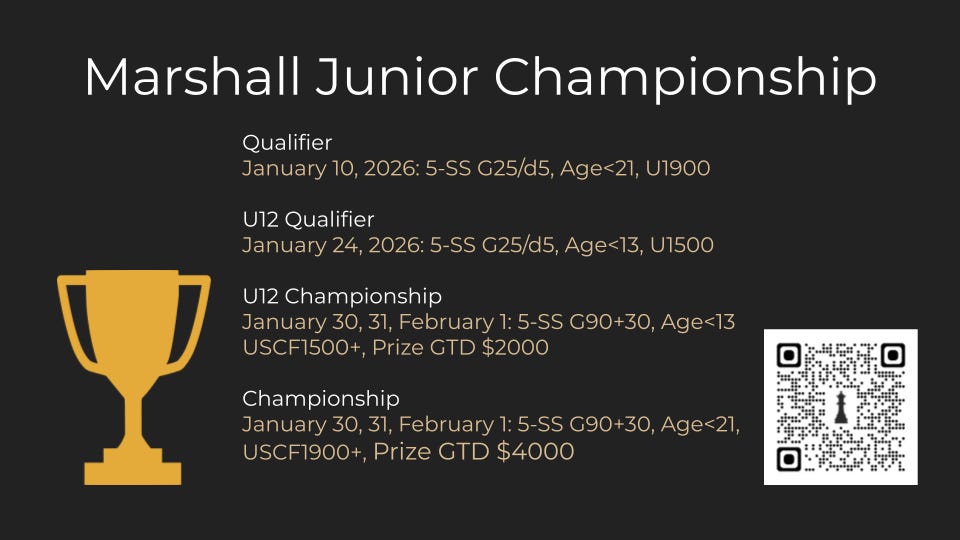
Looking ahead to 2026, we are thrilled to kick off the competitive new season with a Marshall Junior Championship. The dates and details can be found in the flier below, and you can register for this series of events here. Registration in advance is strongly encouraged, as these tournaments are likely to sell out.
We are also thrilled to welcome back IM John Donaldson for an author talk and book signing for his recent book Inside The Mind of Bobby Fischer: Revisiting his Writings and Annotations. The event will take place on January 20th, 2026, at our historic club located at 23 West 10th Street.

In other scholastic chess events news, The Marshall Chess Club is excited to announce our next offsite scholastic tournament in partnership with the Speyer Legacy School. This event will be held on Sunday January 11th, 2026. You can register your child in advance here. Here are some details of the event: Open to ALL scholastic players from any school. Adults 2000+ by invite only. Format: 4 player Quad sections - Time Control: G/45, d5 Entry Fee: $50 Members; $65 Nonmembers - Prize: $20 Amazon gift card to Quad winners Location: The Speyer Legacy School, 925 9th Ave, New York, NY 10019. (Please don’t come to the club!) Round Times: CHECK-IN: 8:45 - 9:15 AM Rd1 10:00AM Rd2 12:00PM Rd3 2PM- Please note these round times are approximate. Rounds will begin approximately 15 minutes after the conclusion of the previous round. All guests must be out of the building by 4:30 PM. The event is NOT a drop off event, but there will be parents and coaches present and team rooms are available by request. For any questions, please contact sohanlon@speyerlegacyschool.org.
Finally, if you’re looking for some GM Chess Prep, consider joining the Elite Membership Program featuring Grandmaster Rashad Babaev, who has a track record of success with working with some of the country’s brightest chess stars.

Looking back over the last two weeks, we have had a plethora of events for our members to participate in.
The 109th Annual Edward Lasker Memorial and Marshall Chess Club Championship that concluded on December 21 had 96 players registered and was won by IM Mykola Bortnyk and GM Jianchao Zhou who scored an impressive 6 out of 7 to win $3,750 each. IM Mykola Bortnyk went on to win the title of 2025 Marshall Chess Club Champion in a tense blitz playoff that ended with a thrilling armageddon time scramble, in which IM Mykola Bortnyk emerged victorious. IM Kevin George and IM Kassa Korley scored 5.5 out of 7 to win $750 each, while Viyaan Doddapaneni scored 4 points to win a class prize of $500. The following players won $166.67 each for their 4.5 score: Hardy Gu, CM Luc Hoffman, and CM Carter Ho.
The Premier Open on December 14 had 36 players registered and was won by IM Kassa Korley who scored 4.5 out of 5 to win the $1000 first-place prize, while FM Justin Chen scored 4 out of 5 to win $500. CM Luc Hoffman won a class prize of $250 for his 3.5 out of 5 score, while the following players won $62.50 each for their 3.5 out of 5 performance: GM Safal Bora, IM Nico Chasin, IM Liam Putnam, and IM Justin Sarkar.
The Premier Under 2000 on December 14 had 48 players registered and was won by Sawyer Sarwar and Zhuoyuan Ryan Xu who scored 4.5 out of 5 to win $560 each, while Kabir Mutha, Samuel Curran, and Grigory Razygraev won $80 each for their 3 out of 5 performance. Sebastian Van Dooijeweert and Allison Zhang shared in a class prize winning $120 each for their 2.5 out of 5 score.
The Rated Beginner Open on December 14 had 29 players registered and was won by Jude Mahmoud, Joshua Rada, and Hadley Black who scored 3 out of 3 to win $116.67 each.
The Morning Under 1600 on December 14 had 19 players registered and was won by Ryan Saavedra and Curtis Priester who scored a perfect 3 out of 3 to win $112.50 each.
The Morning Masters on December 13 had 6 players registered and was won by Riley Duda-Thomson and Kenneth Fernandez who scored a near-perfect 2.5 out of 3 to win $37.50 each.
The Under 2000 Morning Action on December 13 had 63 players registered and was won by the following players who scored a perfect 3 out of 3 to win $90.50 each: Will Nieder, Lucas Fugate, Nikhil Shah, Rohit Jagga, Kenny T Bollin, and Gavin Jiang, while the following players shared in a class prize winning $58.25 each for their 2 out of 3 score: Kenzo Phillips, Leandro Almanzar, Gabriel Negussie, and Nikita Shapiro.
The Thursday Thursday Action on December 11 had 30 players registered and was won by FM Leif Pressman, who scored a perfect 4 out of 4 to win the $109 first-place prize. FM Arun Dixit scored 3.5 out of 4 to win $73, while Kenneth Fernandez and Cameron Hull scored 3 out of 4 to share in a class prize and win $55 each, IM Jay Bonin and NM Bryan Weisz won $27.50 each for their 3 out of 4 performance.
The Sunday FIDE Blitz on December 7 had 18 players registered and was won by IM Liam Putnam, who scored a near perfect 8 out of 9 to win the $100 first-place prize. Luke Anatol scored 6.5 out of 9 to win $50, while IM Justin Sarkar, NM Bryan Weisz, and Ekam Anand won $25 each for their performance. The following 5 players shared in a class-prize, winning $5 each for their 4 out of 9 score: Albert Li, Mike Ching, Matthew, Biancuzzo, Bradley Kauffman, and Anthony J Ferrer.
The Morning Under 1600 on December 7 had 11 players registered and was won by Hudson Kemnitzer and Garbeil Negussie who scored 2.5 out of 3 to win $69 each.
The Rated Beginner Open on December 7 had 31 players registered and was won by Isaac Carbajal, Mila Schultes, and Vlad Astashevich who scored a perfect 3 out of 3 to win $129.33 each.
We look forward to seeing you at the club soon!
109th Annual Edward Lasker Memorial & Marshall Chess Club Championship Games Analyzed, by GM Aleksandr Lenderman
Mykola Bortnyk was able to do the incredible 3-peat this year by winning the super strong club championship, with several GMS and very strong IMs, a tournament where he was only 8th seed by rating at the start of the event. However, a combination of very sharp tactical eye, and very tenacious endgame play, both on the offensive and defensive side allowed him to prevail in this extremely strong field. His creativity was on full display in his round 4 game against a strong FM Joshua Colas, a player who in round 6 was able to really showcase his class by outplaying yours truly in a very strong game. In this game, Mykola had a sharp 3-result game which went his way after he found a very unexpected creative tactic, which most likely, Colas missed.
You can play through the games with annotations here.
Round 4: Bortnyk, Mykola - Colas, Joshua
1. e4 c6 2. d4 d5 3. e5 Bf5 4. g4 Bd7?! 5. c4 e6 6. Nc3 Ne7 7. Qb3? Qb6? 8. c5 Qc7 9. Na4 h5 10. f3?! 10…f6 11. Bd3?! Inaccuracy. exf6 was best. 11…fxe5 12. dxe5 hxg4 13. fxg4 Qxe5+ 14. Ne2 Qc7 15. Nf4 Na6 16. Bd2 e5 17. Ng6 Nxg6 18. Bxg6+ Kd8 19. O-O
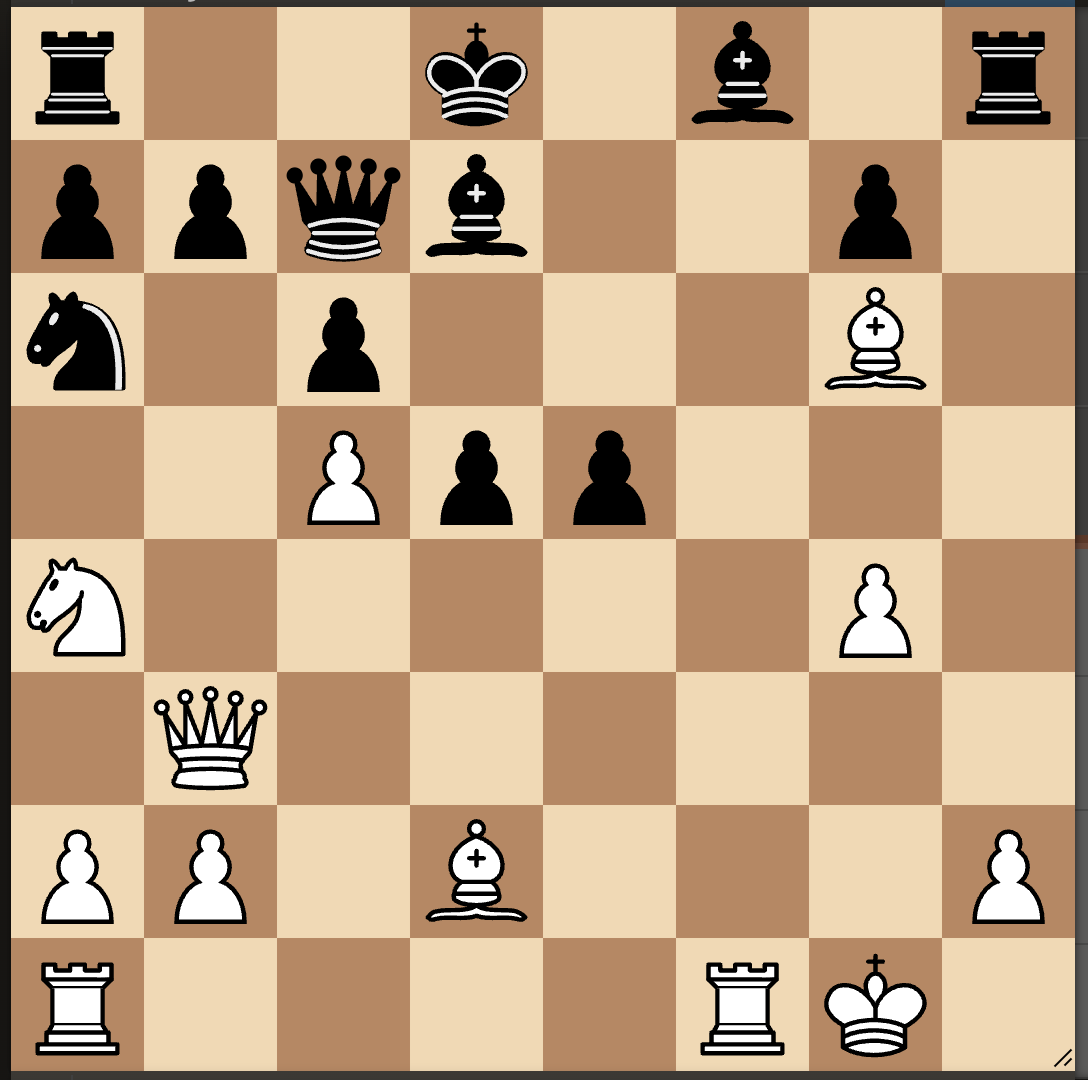
After a very sharp opening struggle, it was Colas who briefly got the upper hand. However, here, he took a pawn, which turned out to be poisoned due to a very nasty trap set by Bortnyk.
19... Bxc5+?? (19... Be7 Had Colas simply developed his bishop, he’s up a pawn with a better position. Position is sharp and game would continue but Colas would have all the chances to win the game, and likely, we would then have a different champion. However, as most of us know, to do something as special as 3-peating the club championship, you’ll need some breaks to go your way at some critical stages in the tournament.) (19... Nxc5?? Worth noting that this capture also fails to a simpler. 20. Rxf8+ Rxf8 21. Nxc5)
20. Nxc5 Nxc5 21. Qh3!! Likely, a nasty cold shower for Colas. Suddenly, tables have turned and white is winning.
21... Ke7? (21... Rxh3 The point of Qh3 is releaved in this line 22. Bg5+ Kc8 23. Rf8+ Be8 24. Bf5+! Very important to take away d7 from the black king (24. Rxe8+?? Kd7 Here, white will not be able to retrieve nearly enough material.) 24... Qd7! only game to keep the game going. 25. Rxe8+ Kc7 26. Bxd7 Rxe8 27. Bxe8 White emerges up a piece for two pawns and should be winning. Still, this would be a relatively speaking, best chance for black after 27... Ne6)
22. Qa3! Incredible geometry! The white queen showcases the power of being able to quickly swing from one part of the board to another with a devastating effect.
22…b6 23. Bg5+ Kd6 24. Rf7 Now, white is simply crashing through.
24…Qc8 25. Be7+ Kc7 26. Bxc5 bxc5 27. Bf5 Rd8 28. Qxc5 Qb7 29. Qe7 Qb6+ 30. Kh1 Qd4 31. Rf1 Rab8 32. Bxd7 Qe4+ 33. Kg1 Qe3+ 34. R1f2 1-0 White wins. 1-0
The round before the Colas game, Bortnyk showcased an impressive endgame grind against a top junior player, Elliott Goodrich, against whom I played in round 5 and was also very fortunate to win (and was even briefly losing).
Round 3: Goodrich, Elliott - Bortnyk, Mykola
1. e4 e5 2. Nf3 Nc6 3. Bc4 Nf6 4. d3 d5 5. exd5 Nxd5 6. O-O Bg4 7. Re1 Be7 8. h3 Bh5 9. g4 Bg6 10. Nxe5 Nxe5 11. Rxe5 Nb6 12. Bb3 O-O 13. Qf3 Kh8 14. Nd2 Bd6 15. Ra5?! c6 16. Ne4 Nd5 17. Rxd5 cxd5 18. Nxd6 Qxd6 19. Qxd5 Qc7 20. Bd2 f5 21. Bb4 Rfd8 22. Qc4 Qd7 23. Qe6 fxg4 24. hxg4 Bf7 25. Qxd7 Rxd7 26. Bc3 Bxb3 27. axb3 b6?! 28. Re1 Kg8 29. Kg2 Kf7?! 30. Re4?! Re8?! 31. Rf4+?! Kg6 32. Rc4 Re2 33. Rc6+ Kf7 34. Bb4 Re6 35. Rc4 b5 36. Rc5 Rd4 37. Rc7+?! Ke8 38. Bc3?! Rxg4+ 39. Kf3 Rg5? 40. Kf4?! Rg1?! 41. Rxa7 h5 42. Bxg7 h4 43. Kf5? Rc6? 44. Bf6 Rc5+ 45. Be5 Rxc2 46. Rh7 Rxf2+ 47. Ke6 Rg6+ 48. Kd5 Rd2 49. d4 Rxb2 50. Rxh4 Rxb3 51. Rh8+ Kd7 52. Rh7+ Kc8 53. Kc5 Rc3+ 54. Kxb5 Rg1 55. Rh8+ Kd7 56. Rh7+ Ke6 57. Rh6+ Kd5 58. Rd6+ Ke4 59. Rb6 Ra1 60. Bd6 Kxd4 61. Bb4 Rb3 62. Rh6 Ra8 63. Rh4+ Kd5 64. Rh5+ Ke6 65. Kc4 Rb1 66. Rh6+ Kf5 67. Rh5+ Ke4 68. Rh4+ Kf3 69. Rh5 Ra4 70. Rh3+ Ke4 71. Rb3 Rd1 72. Kb5 Ra8 73. Rc3 Rb8+ 74. Ka4 Kd4 75. Rh3 Ra1+ 76. Ra3
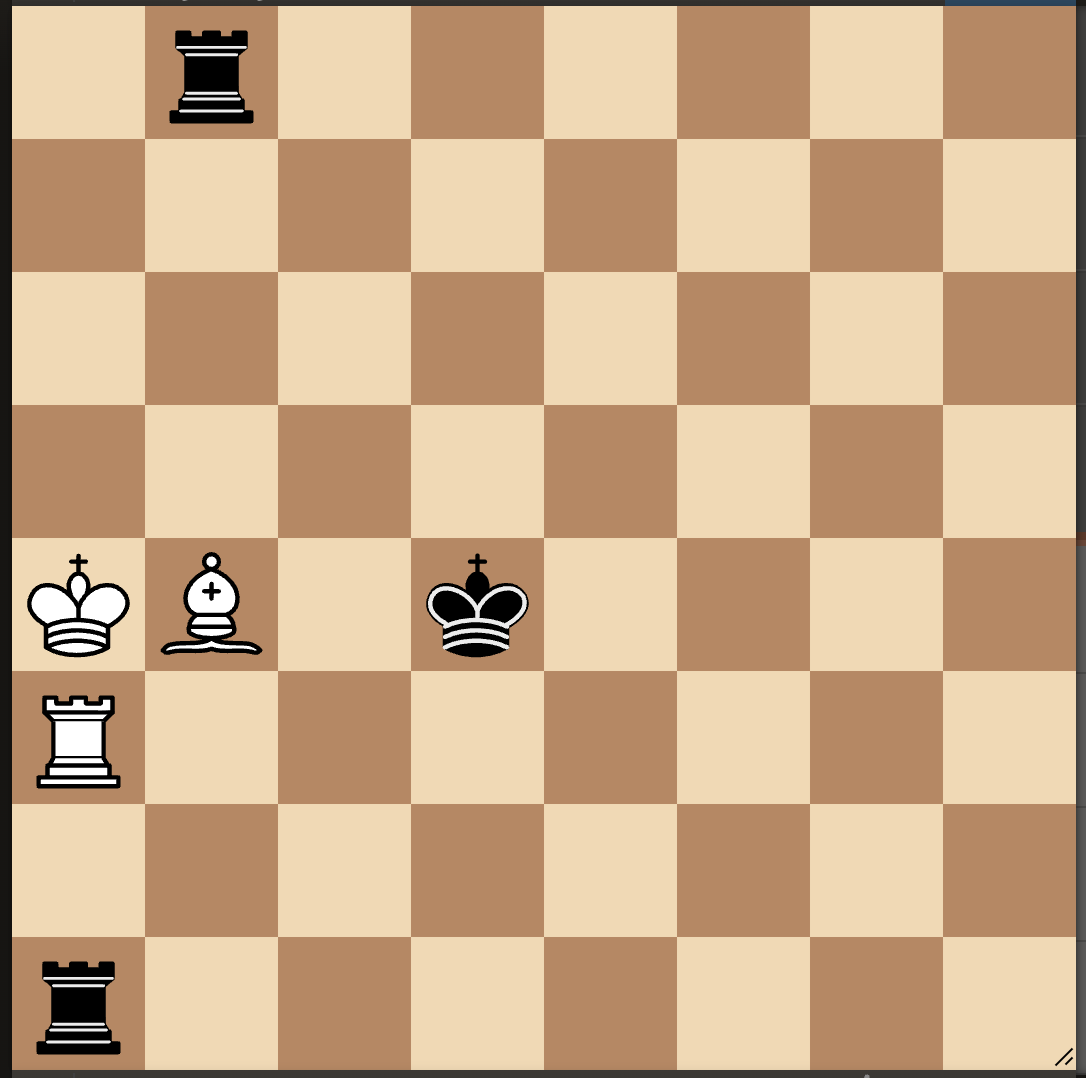
In this position, it is clear that even though the position is a draw, black has very good practical chances to win since he has a huge time advantage (Elliott was down to playing on the 30 second increment), and also, the white king is cut off on the edge of the board, making the endgame trickier to defend. For a while, Elliott was defending very well, so Bortnyk tries his last chance.
76... Rxa3+!? Played after around a 5-minute think. Objectively, black isn’t winning here, but white has to be very accurate.
77. Kxa3 (77. Bxa3?? Kc4 Was the first basic trap white had to avoid here.)
77... Kc4 78. Bd6?? And here, white falters. The bishop went the wrong way. It was extremely important for white to maintain control of the c3 square at all times. (78. Bd2) (78. Be1 Would both hold a draw. }) (78. Ba5?? Not this though due to 78... Ra8 79. Ka4 Ra7)
78... Rb3+! 79. Ka2 (79. Ka4 Rb6) 79... Kc3! The point! the black king is now able to get to c2 by force, and eventually, white will lose the bishop with the white king confined close to the corner.
80. Be7 Kc2 81. Ka1 Rb7 82. Bc5 Rb5 83. Ba3 Ra5 84. Ka2 Ra4 0-1 Black wins. 0-1
In addition to being able to grind better endgames, a very important skill to be able to win tournaments and to be a very strong player is to hold difficult positions. In this game, Zhou was able to outplay him to get a much better endgame with good pressing chances. However, Bortnyk was able to defend this game very resiliently, and these are the kinds of games that help win tournaments.
Round 5: Zhou, Jianchao - Bortnyk, Mykola
1. Nf3 Nf6 2. c4 e6 3. Nc3 d5 4. e3 Be7 5. b3 c5 6. cxd5 exd5 7. d4 Nc6 8. dxc5 Bxc5 9. Bb5 Bb4 10. Bd2 Qa5 11. Qc2 O-O 12. Bxc6 bxc6 13. O-O Ba6 14. Rfc1 Rac8?! 15. a3 Be7 16. Na4 Qc7 17. Bb4 c5?!18. Bxc5 Ne4 19. b4? Bf6 20. Nd4 Rfe8 21. Nc3 Be5 22. f4 Bxd4 23. Bxd4 Nxc3 24. Qxc3 Qxc3 25. Bxc3 Bc4?! 26. Bd4 a6 27. a4 f6 28. Rab1 Rb8 29. Kf2 Kf7 30. Rb2 Rb7 31. Ke1?! Reb8 32. Bc3 h5 33. Kd2 Kg6 34. Rcb1 Kf5 35. Bd4 Ke4 36. Bc5 Rc8 37. a5 g5 38. fxg5 fxg5 39. Kc3 Rf7 40. Rd1 Bb5 41. Rbd2 Bc6?? 42. b5 axb5 43. Kb4 Ra8 44. Rc1 Bb7 45. Bb6?! Rc8?! 46. Rxc8 Bxc8 47. Kxb5 Rf1 48. Kc6 Ba6 49. Rd4+ Kxe3 50. Rxd5+ Kf4 51. Bc7+ Ke3 52. Rxg5 Rf6+ 53. Kc5 h4 54. Rh5 Bb7 55. Bd6 Bxg2 56. Rxh4 Rf5+ 57. Kb4 Bf1 58. Bc5+ Kf3 59. Rh6 Rf4+ 60. Kb3 Rf5 61. Bb4 Kg2 62. h4 Kh3 63. Be1 Rf3+ 64. Kc2 Re3 65. Bd2 Re5 66. Kb3 Rd5 67. Be1 Rb5+ 68. Bb4 Rf5 69. Bc3 Kg4

At times, perhaps white might’ve been winning, but it was never easy, and this position seems like it might’ve been a fortress. If white is winning, finding the winning plan is definitely not easy. Here, Zhou offers a simplification into a pure opposite colored bishop endgame, probably evaluating it as winning for him. However, Bortnyk assessed it more accurately and didn’t trust his opponent and found a subtle nuance to be able to force a draw.
70. Rf6? Rxf6! Otherwise, the suffering would continue for Black. (70... Rb5+ 71. Bb4 Be2 72. Re6)
71. Bxf6 Kf5! The only move to hold. It’s worth noting that if black simply waits with the king on the kingside, they are totally lost due to the bishop on f6 being on the same color as the h8 square corner. A sample line would be (71... Kh5? 72. Kb4 Kg4 73. Kc5 Kh5 74. Kb6 Kg4 75. a6 Bxa6 76. Kxa6 Kh5 77. Kb5 Kg4 78. Kc4 Kh5 79. Kd5 Kg6 80. Bg5 Kh5 81. Ke6 Kg6 82. Ke5 Kg7 83. Kf5 Kf7 84. Bf6 Kg8 85. Kg6 Kf8 86. h5 Kg8 87. h6 { And white wins.)
72. Bg5 Ke6! The king and the bishop switch places now. The black king is in time to get to the queenside where it’ll stop the a-pawn, while the bishop will give himself up for the h-pawn. Since the a-pawn queening square a8 is opposite color of the bishop, this will lead to a draw.
73. Kc3 Kd6 74. Kd4 Be2 75. Bd8 Kc6 76. Ke3 Bc4 77. h5 Kb7 78. Kd4 Bg8 79. Ke5 Bh7 80. Kf6 Ka8 81. Kg7 Be4 82. h6 Kb7 83. h7 Bxh7 84. Kxh7 1/2-1/2
A very impressive hold for Bortnyk, which set him up to play for the championship on the last day, and he definitely delivered, against two of the strongest juniors in NYC, Liam Putnam and Nico Chasin.
After a very difficult hold against Zhou in round 5, Bortnyk now faces a very difficult test in IM Liam Putnam, who has been on a good streak recently, breaking 2500 FIDE and getting 2 GM norms, meaning he’s knocking on the door to becoming the next NYC GM.
Event “Round 6: Bortnyk, Mykola - Putnam, Liam
1. d4 Nf6 2. c4 e6 3. Nf3 d5 4. Nc3 dxc4 5. e3 a6 6. Bxc4 c5 7. O-O b5 8. Bd3 Nbd7 9. Qe2 Bb7 10. Rd1 Qb8 11. Bc2 b4 (11... Bd6 This is the main move here, and probably more accurate.)
12. Na4 cxd4 13. exd4 Bd6 14. Nc5! A very strong move, perhaps, missed or underestimated by Putnam.
14…Bxc5?! (14... O-O 15. Nxb7 Qxb7 Would be a more solid approach for Black.)
15. dxc5 O-O 16. Be3 Ng4?
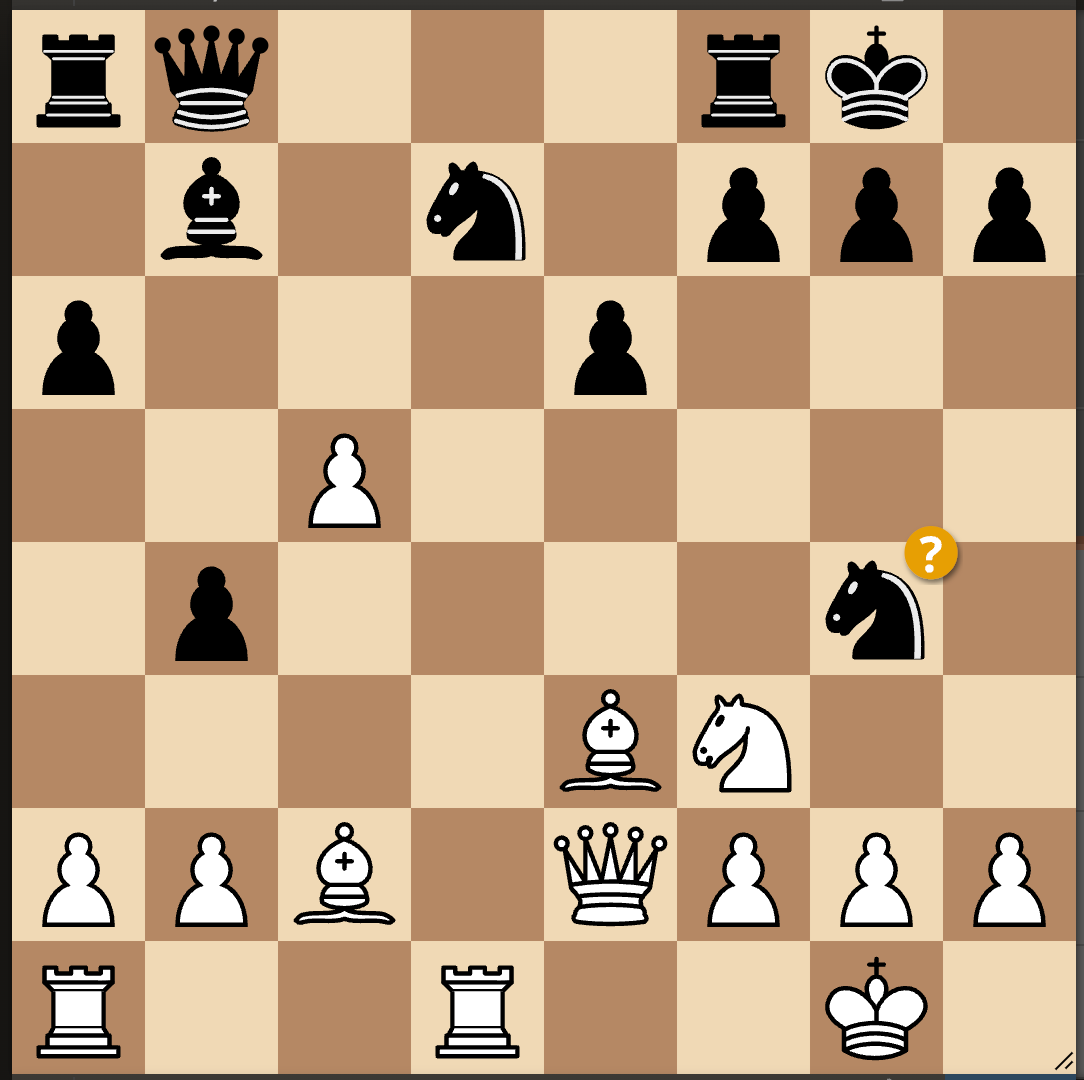
17. Bxh7+ Kh8 18. Rd6! I wonder if Bxh7 was missed or Rd6 was missed. Either way, it seems like a miscalculation by Putnam. However, from here, Putnam puts up a great fight and comes close to coming back and drawing the game.
18… Nxe3 19. Qxe3 Bxf3 20. Qxf3 Kxh7 21. Qh5+?! (21. Rxd7 Qe5 22. c6 Was more accurate for white. The b2 pawn isn’t so relevant. 22... Qxb2 23. Rad1 Qxa2 24. Qe4+)
21... Kg8 22. Rxd7 Qf4? 23. Rad1?? (23. c6 Not sure why Bortnyk didn’t push c6 here. 23... g6 24. Qc5)
23... g6 Suddenly, Black is back in the game. 24. Qf3? (24. g3!)
24... Qxf3 25. gxf3 Rfc8 26. Rc1 Rc6 27. Rd6 Rc7? (27... Rxd6 28. cxd6 Kf8 Is suddenly, holding for black with perfect play.)
28. Rb6 Rac8?! 29. c6 a5 30. Rc5 Ra8?! 31. Kf1 Kf8 32. Rb7? Rac8? 33. Rxa5 Rxc6 34. Raa7 Rc1+ 35. Kg2 R8c5 36. Rxf7+ Ke8 37. h4 1-0
A very important win for Bortnyk, setting himself up for an important showdown in the last round with everything to play for.
In the last round, we had GM-elect Nico Chasin, coming off of a tough loss to Jianchao Zhou with 4.5/6 against IM Mykola Bortnyk, coming off a strong win against a very strong IM Liam Putnam. Nico was now, in a must-win game, and Bortnyk likely also wanted to get winning chances, so this game was destined to be a very tense fight, and it definitely, didn’t dissapoint.
Round 7: Chasin, Nico - Bortnyk, Mykola
1. c4 e5 2. Nc3 Bb4 3. Nd5 a5 4. Nf3 d6 5. a3 Bc5 6. e3 c6 7. Nc3 Nd7 8. d4 Ba7 9. g3?! A little bit unusual. (9. Be2 Is the most common move here.)
9... Ngf6 10. Bg2 O-O 11. O-O Re8 12. b3?!
Now, Black is able to gain space in the center and is starting to get the upper hand. (12. dxe5)
12... e4 13. Nd2 d5 14. Bb2 Nf8! 15. f3 exf3 16. Qxf3 Bg4 17. Qf2 Qd7 18. Kh1 Ng6 19. Rae1 Rad8 20. c5 Be6 21. Qg1? Bb8 22. Rxf6!?
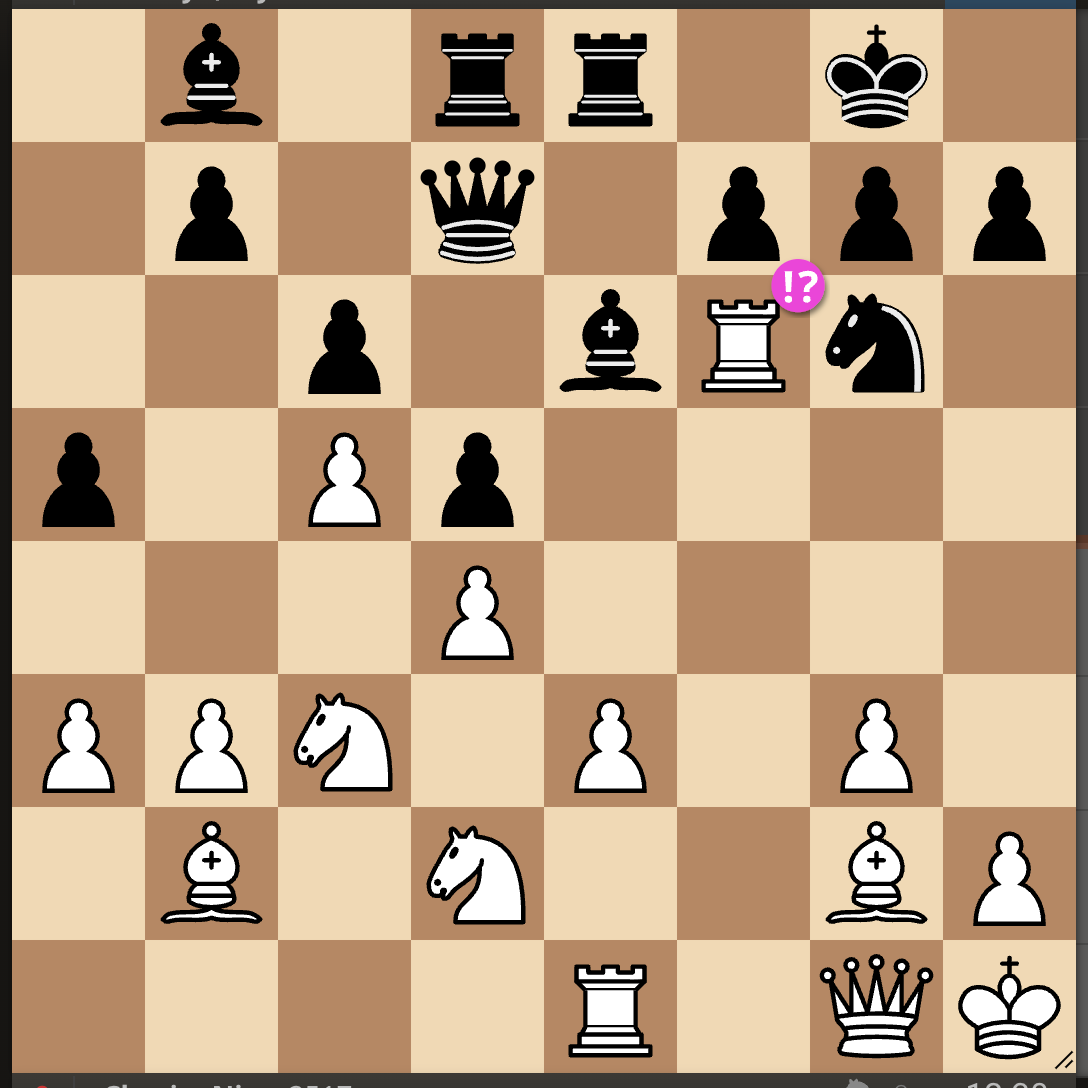
Black was already getting a very comfortable position, where it wasn’t clear what active plan white has, so white is now going for complications to try to reverse the trend.
22…gxf6 23. Qf2 Bh3 24. Bf3 f5 25. Ne2 Re7 26. Nf4 Bg4 27. Bg2 Nxf4 28. gxf4 f6 29. Qh4 Qe8 30. Rg1? 30... Rxe3! Black is playing very principled chess, backed up by good calculation.
31. h3 Bxf4! 32. hxg4 Bg5 33. Qh5 Re2 34. Bc1 Bxd2 35. Bf3 Bxc1?! This still wins, but now, white is starting to creep back into the game. (35... Be3! Would have been more clinical. All the lines work out for Black.)
36. gxf5+ Kh8 37. Bxe2 Qxh5+ (37... Be3 Was more accurate.)
38. Bxh5 Bb2 39. Rd1 Rg8 40. b4 axb4 (40... Rg3)
41. axb4 Ra8? 42. Rd2 Bc3 43. Rd3 Bxb4 44. Rb3 After a few inaccuracies by Bortnyk, where he didn’t quite put Nico away, Nico started showing incredible resiliency, and has fought back to a holdable position. However, in a practical position, it is still not easy for white to hold this.
44... Ra4 45. Bf7? Ba5 46. Rxb7 Rxd4 47. Ra7 Bb4? 48. Rc7 Bxc5 49. Rxc6 Bb4 50. Kg2 Kg7 51. Rc7 Kh6 52. Be6 Rd3 53. Bg8?! d4 54. Rxh7+ Kg5 55. Be6?! Kg4?! 56. Rh6?! Rd2+? 57. Kf1 Be7 58. Rg6+ Kf3 59. Bd5+ Kf4 60. Rg2 Rd1+ 61. Ke2 Rb1 62. Kd3 Bc5 63. Be6 Rd1+ 64. Rd2 Rh1 65. Rf2+ Ke5 66. Re2+ Kd6 67. Bc4 Rh3+ 68. Ke4 Bb6 69. Bd3 Ba7 70. Re1 Bc5 71. Re2 Bb6 72. Re1 Ba5 73. Re2 Kc5 74. Ba6 Rh4+ 75. Kf3 Bc7 76. Rc2+ Kb6 77. Bd3 Be5 78. Rc8 Rh3+ 79. Ke2 Bf4 80. Re8 Kc6 81. Rc8+ Kd7 82. Rc4 Be3 83. Ra4 Kd6 84. Ra6+ Ke5 85. Re6+ Kf4 86. Be4 Bc1 87. Kd1 Rc3 88. Bc2
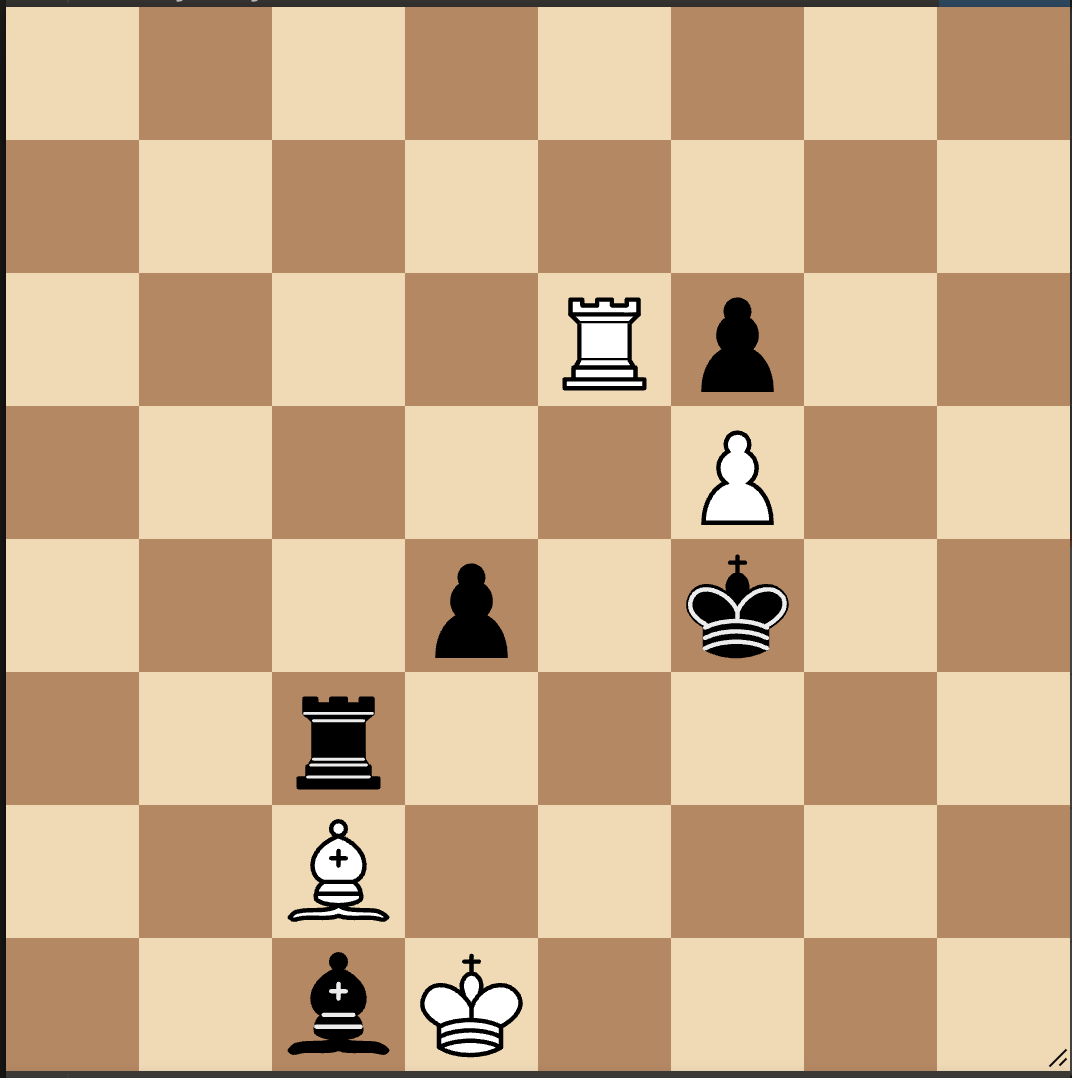
After many moves of maneuvering (similar to his game against Elliott), Bortnyk finally changes the course of the game, by simplifying into a R+B versus R endgame, which is objectively drawn, but in a practical game, it is definitely, far from easy to hold, and Bortnyk was able to trick Nico at the very end.
88…d3 89. Bxd3 Rxd3+ 90. Kc2! (90. Kxc1 Kxf5 Is of course, winning for black, since the white king is cut-off.)
90... Rd8 91. Rxf6! Rc8+ 92. Kd3 Bb2 93. Rb6 Be5 94. f6 Rd8+ 95. Ke2 Rf8 96. Rb4+ Kf5 97. f7 Rxf7 98. Ra4 Rb7 99. Kd3 Rb3+ 100. Kc2 Rg3 101. Kd2 Bc3+ 102. Ke2 Rh3 103. Kf2 Ke5 104. Kg2 Rd3 105. Rh4 Bd4 106. Rh5+ Kf4 107. Rh4+ Kf5 108. Rh3 Be3 109. Rh8 Kg4 110. Rg8+ Bg5 111. Rf8 (111. Rg7 Rd2+ 112. Kg1 Is how I’d try to hold this position.)
111... Rd7 112. Rf2 Be3 113. Ra2 (113. Rf8) 113... Rd1 Suddenly, just like that, this position is now at “only move territory” for White. 114. Re2?? Checkmate is now unavoidable. Ra4+ was best. (114. Ra4+ Was the only move to hold 114... Bf4 115. Ra2)
114... Kf4! Now, suddenly white is in zugswang and is losing. His rook is very awkwardly placed.
115. Kh2 Kf3 0-1
Zhou Jianchao was also able to win his last round game in round 7, leaving us with two players at 6/7, Bortnyk and Zhou. Bortnyk went on to win the playoff against Zhou, securing him the 3-peat. His last two titles were also won in playoffs, against IM Joseph Zeltsan and GM Andrew Tang respectively. Mykola Bortnyk is an extremely strong blitz player, who scored only 0.5 points behind the winner of the tournament at World Blitz Championship last year in NYC, consistently gets top scores at Marshall Blitz events, and consistently maintains 2900-3100 blitz level on chess.com, so it’s definitely not a surprise that he is consistently able to win these blitz playoffs even against very strong opposition. As for Nico, he also deserves his own recognition for recently getting his 3rd GM norm and 2500+ FIDE rating, making him the newest NYC GM-elect. A hearty congratulations and a very well deserved accomplishment for Nico. While this tournament ended in a tough fashion for him by losing his last two games after being a clear leader after 5 rounds, I have no doubt he’ll bounce back stronger than ever after this tournament and I truly believe he has a great future ahead of him.
The story of the tournament was the 3-peat by Mykola Bortnyk, but I wanted to give an honorable mention to a rising star player, Hardy Gu, who had an incredible tournament, starting with beating yours truly in round one, and finishing the tournament with 3 wins, enough to cross the coveted 2200 USCF to make NM, a nice milestone for Hardy, which will be the first of I’m sure many future big achievements. I was particularly impressed by Hardy’s maturity and focus during the game, and he has definitely outworked me this game, and found some very nice ideas which I have completely missed.
Round 1: Gu, Hardy - Lenderman, Aleksandr
1. d4 e6 2. Nf3 Nf6 3. Bf4 d5 4. e3 Bd6 5. Nbd2 O-O 6. c3 c5 7. Bd3 Bxf4 8. exf4 b6 9. O-O Ba6 10. Bxa6 Nxa6 11. Qe2 Qc8 12. Rac1 Qb7 13. g3 Rac8 14. Rfd1 Rc7 15. Kg2 Rfc8 16. h4 b5 17. dxc5 Nxc5 18. Nd4 a6 19. N2b3 Nxb3 20. axb3 b4 21. Qe1 bxc3 22. bxc3 Ne4 23. Rd3 a5 24. Re3 h5 25. f3 Nd6 26. Re5 Nb5 27. Nxb5 Qxb5
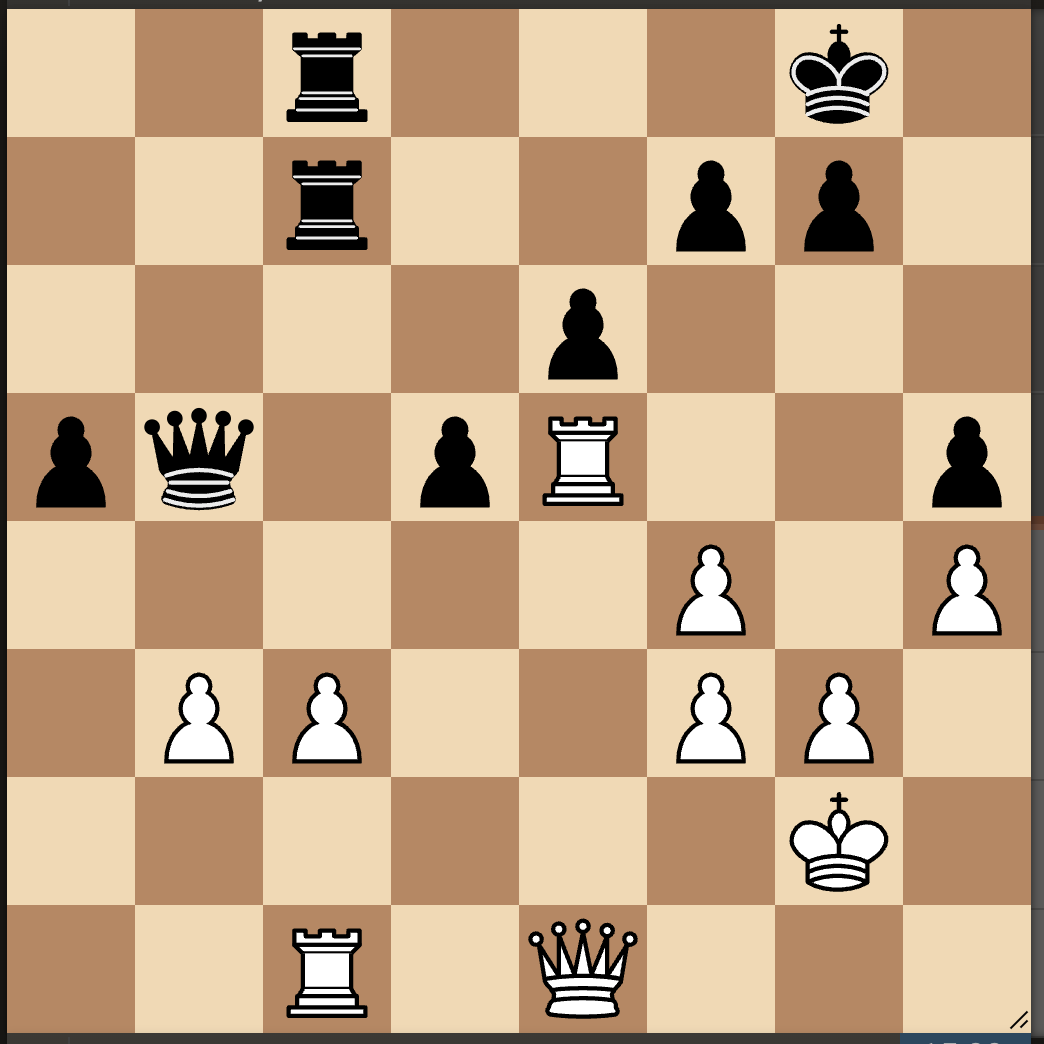
After a relatively slow start to the game, I was starting to feel optimistic. Not only did I have a comfortable time advantage, but also, it seemed to me that my queenside play was progressing faster than white’s kingside play, and at the very least, I thought I created good winning chances for myself and potentially, a promising endgame. However, my opponent, Hardy had other ideas!
28. f5! The first strong move of an impressive sequence by Hardy. This move is by far the strongest move in the position, and it has caught me off guard. (28. Rxh5 Was mainly what I was calculating, after which, I liked my chances after 28... Qxb3)
28... exf5 Perhaps, I played this move a bit quickly. I thought it’s more or less forced, but I had an interesting alternative in. (28... f6!? 29. Rxe6 d4! Now, white has to be quite accurate to maintain the balance. 30. c4! Qxb3 31. Re4! Where the engine says white is objectively holding, but this was probably a better winning attempt for me.)
29. Qd1! Rxc3 (29... Rc5!? 30. Rxf5 g6 31. Re5 Qb7 Was again, perhaps a better winning attempt. However, I was thinking that I will get a risk-free endgame because I missed his nasty trick from far away.)
30. Rxc3 Rxc3 31. Rxd5 Rc2+ This is what I saw from afar, and here, I thought that taking on c2 will be more or less forced, after which I will be up a pawn in a queen endgame, where Hardy doesn’t have a way to force a draw immediately. I figured my winning chances in a practical game, especially against a young opponent in a better endgame will be quite high. However, little did I know what was about to come!
32. Kh3!! Wow! a total unexpected shock. I simply thought this was unplayable since I really thought after Qxb3, I had everything fully in control and that I might have been winning. I double checked my calculations for about 5 minutes (most likely not enough time), and simply couldn’t find what my opponent’s true idea was. (32. Qxc2 Qxd5 This was the endgame I was aiming for, which I was willing to press for 100+ moves, and was hoping that eventually, my young opponent will crack.)
32... Qxb3?? (32... Rc5 I guess at this point, I have to simply settle for a draw after 33. Rd8+ Kh7 34. f4 g6 35. Rd7 (35. Rf8) 35... Kg8 36. Rd8+)
33. f4! Wow! What a cold shower! I simply completely missed this idea. I didn’t see it at all until he actually played it on the board. It even took me about a minute to fully comprehend the magnitude of how badly I blundered. Now, I’m simply worse and I’m lucky I even have a fortress chance and don’t lose immediately. (33. Rd2 I don’t think I gave my opponent enough credit. I thought maybe this kind of endgame was what Hardy wanted and that maybe he misevaluated it. 33... Rc3 34. Qxb3 Rxb3 35. f4 (35. Rd8+ Kh7 36. f4 a4 37. Ra8 a3 38. Ra6 g6) 35... Rb8 Where I should be winning.)
33... Qxd5 Unfortunately, a sad necessity. Otherwise, I lose immediately. (33... g6 34. Rd8+ Kh7 (34... Kg7 35. Qd4+ f6 36. Rd7+) 35. Qd4)
34. Qxd5 g6 35. Qxa5 (35. Qd8+ Kg7 36. Qd4+ Kg8 37. g4 Was possibly more accurate, but it was very hard to not take the a5 pawn.)
35... Re2 36. Qb5 Re6 37. Kg2 Kg7 38. Qd5 Kf6??
Unfortunately for me, I wasn’t able to maintain the fortress. At this point, I was already a bit in a bad mental state, and I couldn’t think very clearly, and I thought that there is no big difference in how I play with my king but it turned out the difference was huge. (38... Kg8 I should’ve kept the king on g8-g7 squares. I thought I might’ve been losing here too, but it turned out I do have a fortress here after 39. g4 fxg4! (39... hxg4? 40. Qd8+ Kg7 41. h5) 40. f5 This is where I thought I’m losing, but it turns out that I can even draw this with his h-pawn still on the board. 40... gxf5 (40... Rf6 Would also work in a similar way. 41. Qd8+ (41. fxg6 Rxg6 42. Qxh5 g3 43. Qe5 Kh7 44. h5 Rh6 45. Kxg3 Re6 46. Qf5+ Kg8) 41... Kg7 42. Qd4 gxf5) 41. Qxf5 Rg6 42. Qxh5 g3 43. Qf5 43... Rh6 44. Kxg3 Kg7 45. h5 Kg8 It turns out this position is a fortress, which unfortunately, I didn’t know or think about during the game.)
39. Qd4+ (39. g4 hxg4 40. Qd8+ Kg7 41. h5)
39… Ke7 40. Qg7 Re2+ 41. Kf3 Re6 42. Kf2 Re4 43. Qh6 Ra4 (43... Re6 44. g4)
44. Qg5+ Ke6?? (44... Kf8)
45. Qd8 Ra2+ (45... Re4 46. Kf3 Here, I’m simply in zugswang and cannot maintain the fortress anymore.)
46. Ke3 Ra3+ 47. Kd4 Rxg3 48. Qe8+ Kd6 49. Qxf7 Now, he breaks through and the rest of the game is a matter of simple technique.
49…Rg1 50. Qf6+ Kd7 51. Kd5 Rd1+ 52. Kc5 Rc1+ 53. Kb5 Rb1+ 54. Ka4 Rf1 55. Qf7+ Kd8 56. Qxg6 Rxf4+ 57. Kb5 Kd7?? Checkmate is now unavoidable. Rf1 was best.
58. Qxh5?! Lost forced checkmate sequence. Qc6+ was best.
58…Ke6 59. Qg6+ Ke5 60. h5 Rg4 61. Qf7 f4?! Checkmate is now unavoidable. Rd4 was best.
62. h6 f3 63. h7 Rh4 64. Qe7+ After this move, I lose the rook and finally resigned. A very impressive win by Hardy, who has displayed solid mature understanding in the opening, and showed incredible calculation ability, as well as good technique. I really think Hardy will go very far in chess. His last three months were particularly impressive also, where he went from below 2100 USCF to master. I’m looking forward to seeing how far he will progress with his chess and looking forward to seeing more great chess from him in the future. Given that Hardy is only 9 and already playing like this, sky is truly the limit for him I believe.
64... Kd5 1-0 White wins. 1-0
GM Aleksandr Lenderman, Marshall Spectator Contributor
Marshall Chess Camps Review, by The Egelhof Family
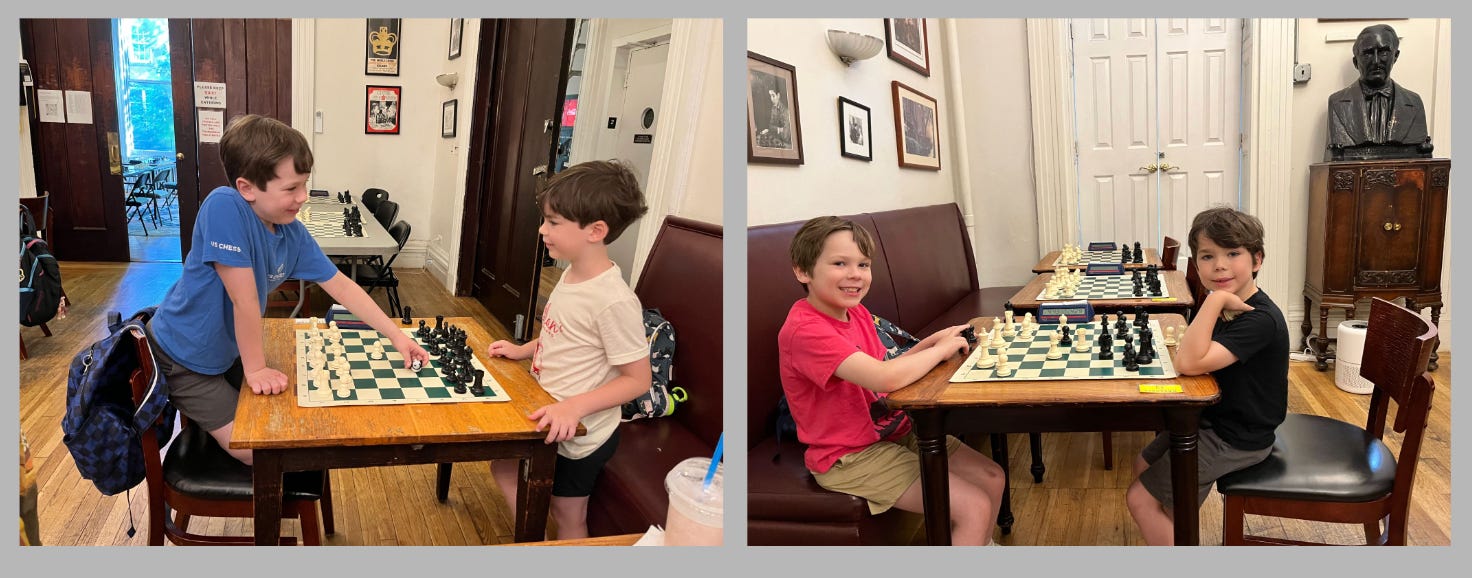
The below Q&A is between this newsletter’s editor and two high-performing camp attendees, with questions by Greg Keener (GK) and answers by Thomas Egelhof (TE) and Matthew Egelhof (ME). Both players had phenomenal results following their attendance at the Marshall Chess Club camps, with Matthew gaining 287 points in a single tournament!
GK: What is your favorite part about attending the Marshall Chess Club Camps?
TE: I love the way Coach Djurabek explains the master games he shares and the paper puzzles he brings for us to do. It’s fun working on them with the other kids. We’ve had some great guests and simuls, too. I also really love the lunch selection, and bughouse for fun!
ME: I like playing the rated games, making new friends who like chess, getting to play practice games with friends, lunchtime (especially Chick-Fil-a and pizza) with friends, and the lessons from all the coaches like Miguel, Tamar, and Oscar.
GK: Do you think your recent tournament performance has been helped by the instruction at the camps?
ME: Yeah!
TE: My camp days are definitely my longest chess study days.
GK: Do you have a recent game that you’re proud of that you would like to share?
TE: I played a game I really liked during a Marshall Saturday G/50 earlier this year against Rishan Malhotra. He is a few years older than I am. I had played him at the Princeton Open the month before and he beat me then, so it was a little bit of a rematch for me.
Egelhof,Thomas (1757) - Malhotra,Rishan (1915) [B52]
Marhsall Saturday G/50, 31.05.2025
[Egelhof]
You can play through the game here.
1.e4 c5 2.Nf3 d6 3.Bb5+ Bd7 4.Bxd7+ Qxd7 5.0–0 Nf6 6.Re1 Nc6 7.c3 e6 8.d4 cxd4 9.cxd4 Be7 10.Nc3 I like this line because it gives me a lot of space so I have a nice game for my style.
10...0–0 11.d5 I attack Rishan early to apply some pressure.
11...Ne5 12.Nxe5 dxe5 13.Bg5 Ne8 14.Bxe7 Perhaps I could have gone Be3 and follow up with Qg4 but I kept it simple and traded into an endgame which I liked.
14...Qxe7 15.Rc1 Rd8 16.Qb3 Rd6 17.Qa3 a6 18.Na4 exd5 19.Nb6

I liked this move because I will have an outpost on d5 after something like Qd8.
19...Qd8 20.Nxd5 b5 21.Rc8 After a five minute think and some calculation, I saw this move and played it.
21...Qd7 22.Rec1 f5 23.Qb3 Kh8 24.R1c7 Qe6 25.Qg3 Rg8 I thought I had Re7 in the line I had been calculating, but that hangs a rook two different ways.
26.Rc1 fxe4 27.Ne3 Qxa2 ?!
28.Qxe5 I thought I was in a nice position at this point.
28...Re6 29.Qc3 Nf6 30.Rxg8+ Kxg8 31.Nf5 Re8 this lets me get into his position. I will also try to mate him soon.
32.Qc7 Qf7?
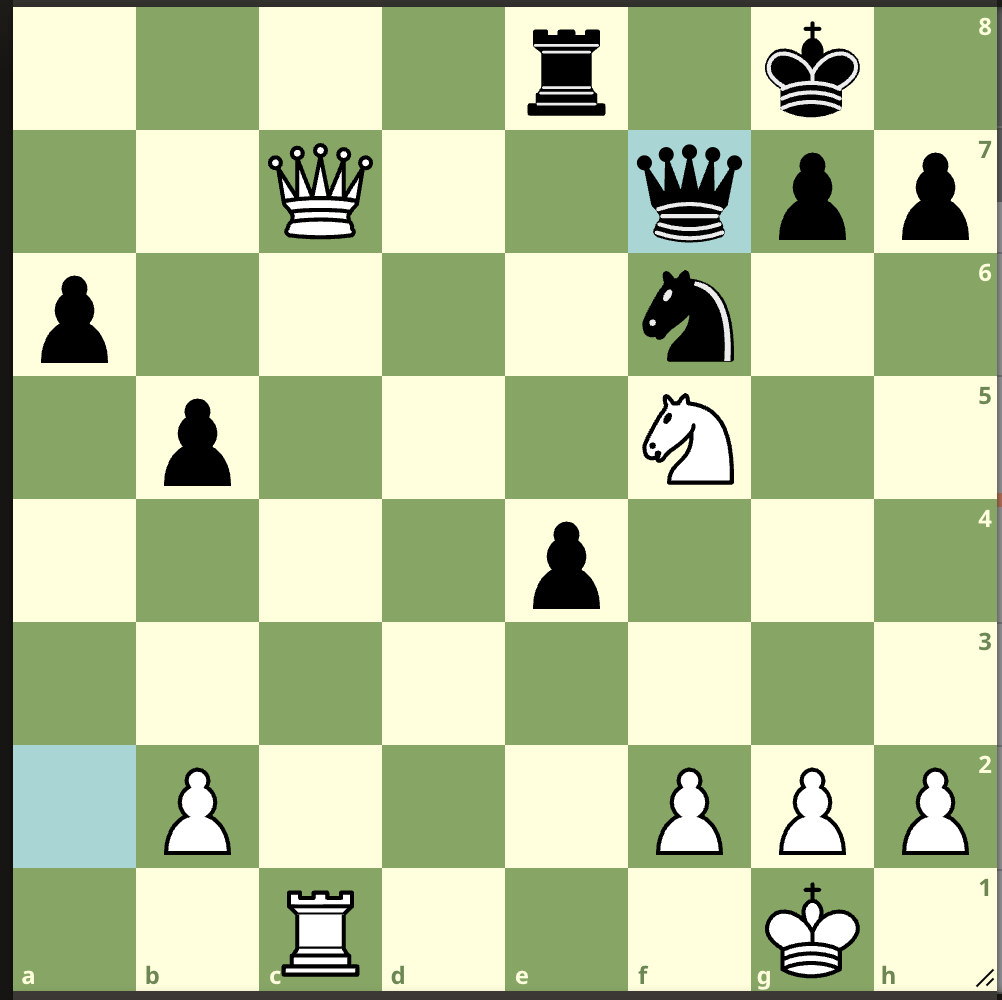
This lets me fork his king and rook after the queen trade.
33.Qxf7+ Kxf7 34.Nd6+ Ke7 35.Nxe8 Nxe8 36.Re1 Nf6 37.f3 Kd6 38.fxe4 Ke5 39.Kf2 a5 40.Kf3 a4 41.Rc1 Kd4 42.e5 Nd5 43.e6 b4 44.Rd1+ My opponent resigned here.
1–0
GK: What is your favorite opening trap, or opening variation?
TE: I thought it was fun to play the Dutch for a little while and really surprised some people with it, especially in blitz, but I don’t think it was a good choice for my level.
ME: It’s not exactly a trap but I really like the windmill.
GK: What are your major chess goals for the upcoming year?
TE: I want to keep improving and playing good games! In terms of rating, I’m still trying to reach 2000, which has been a goal of mine for some time.
ME: I want to break 1500. I don’t think it’s likely but I’m going to try.
The Egelhof Family, Marshall Chess Club Members
An Interview with David Hater, by Greg Keener
GK: David, thank you so much for taking a moment to answer some questions for our club’s humble newsletter. Would you mind introducing yourself to our readers in case there is anyone who might not know you?
DH: I’m a retired U.S. Army Colonel and now work full time as a chess professional. I’m one of the most active tournament directors in the United States, directing more than 50 major tournaments each year and overseeing events involving over 15,000 players nationwide. I’m a FIDE-certified International Arbiter and a US Chess National Tournament Director, and I’ve directed many U.S. National Championships as well as official FIDE world events. I also serve on the US Chess Executive Board and as the U.S. Delegate to FIDE, where I’m involved in the organization and governance of competitive chess both nationally and internationally.
GK: Would you mind telling us how you became involved with chess and directing tournaments?
DH: Like many other players, my father taught me how to play chess. I think I was about 5 years old. My father was not a tournament player - though he once played Bobby Fischer in a simul. I started out with a 4-0 score in a scholastic unrated tournament. I followed that up with an 0-3 score in my first rated event and started with a rating of about 1000. Like many TDs, I became involved so that there would be events to play in. When I was first starting out, I directed small events at the local club.
GK: How does someone become one of the most active tournament directors in America and involved with several of the most prominent organizers?
DH: I think a certain level of insanity is required.
I think in my case, I eventually started to become good at directing. I started because there was a need, but over time it became clear that I was a much better director than player and I did both for a while, but today I don’t play much anymore and I direct a lot.
GK: Are there any other tournament directors in America who you admire?
DH: There are a lot of TDs that I admire. Today, Franc Guadalupe and Chris Bird are the only International Arbiters in the USA certified at the A level. I’m proud to be certified at the B level (I think there are only 5 of us in the USA). I’m sure I will miss some, but I will mention a few names. Bill Goichberg has to be considered one of the all time greatest TDs in the USA. The late Carol Jarecki is also one of the greatest ever. I worked with the late Wayne Clark and learned a lot from him. I never worked with him as a TD, but every time I met George Koltanowski I considered it an honor. He is considered to be the father of the Swiss System in the USA. There are so many more and I could easily list many more so I hesitate just to have these few names.
GK: During your tenure at USChess, how have you seen the federation change over the years and what are you most excited about for the future of U.S. Chess?
DH: I would have to say that running US Chess more like a business and the professionalization of the office as well as some of our governance structures has led to a much better organization. Several times during my lifetime, US Chess almost went bankrupt. Hopefully those days are in the past. There are always challenges, but we are on a good footing now. The fact that many of our scholastics are endowed and will go on in perpetuity is an amazing testament to some of our very generous benefactors. We are now truly a non-profit 501c3 organization and we are looking at broader missions of chess in general while still supporting what has always been one of our greatest strengths - rated chess tournaments. I’m excited that we are still doing what we have always done with rated events, but are now also expanding to more casual players and bringing more people to the game.
GK: What do you think are the driving factors behind the explosion of growth in scholastic chess?
DH: As with anything, I think there are a myriad of reasons for success and nobody truly knows exactly what causes it, but there are some things that really have to be a factor. Every time chess appears in popular culture we see a bump. So for instance, when Queen’s Gambit came out, there was a bump. When Brooklyn Castle came out, there was a bump. Chess the musical is starting and we will likely again benefit - and they are a sponsor of this event! In a twist of fate, COVID may have helped popularize chess. When people were isolated and looking for a past time, chess filled a gap. Finally, and maybe most obvious, its a great game, and so many people recognize the positive aspects of transferring the benefits of chess in other areas of their life.
GK: Can you talk a little bit about the Metros tournament that you will be directing? What excites you most about this event?
DH: I’m excited that there are new organizers willing to step up and bring a large-scale scholastic tournament after a several years-long gap. New York is a tough market because of the relatively high cost of the tournament venues, especially as prices ballooned after Covid. This makes hosting events in hotels, difficult, if not possible. There are many folks who have done so much for scholastic chess in New York City and trying to pick out any would surely leave out many, but in this particular case, Sunil Weeramantry played a most critical role in breathing life into the Metros and I'm excited to run it. For a city with more scholastic chess players than anywhere else, being able to give them a Championship-caliber event in a professional hotel environment like the Marriott Marquis in Times Square is great for all of chess.
GK: What advice would you have for someone who was interested in working as a tournament director or wanted to start their own chess club?
DH: Like most things in life, the best advice is just get started and do it! Start small and work your way up. Volunteer at your club. Build your skills and just get better over time. At a small level, it really doesn’t take much to just dive right in and get started. Very quickly, the prospective TD will find out whether they want to continue on a larger scale. For those interested in being a TD, my best advice is be willing to do whatever it takes to make the event a success! There is a lot of non- glamorous work, but it has to be done. Setting up equipment, taking out the trash - no job is too small. TDs who really care will start to become better known and will move up the ranks. Finally, treat players the way you want to be treated. Though it is not essential to be a player (Carol Jarecki never played,) TDs who know what it is like to play in events and apply that knowledge to their events often make great directors.
Chess Toons

En Passant
Queen of Chess, a new documentary about the legendary GM Judit Polgar, has been selected for the prestigious 2026 Sundance Film Festival. Days after the announcement, it was also revealed that streaming giant Netflix has acquired the rights and will release the film on its platform later next year.
Magnus back in FIDE World Rapid and Blitz event scheduled to take place in Doha after FIDE signals peace in “jeans-gate” dispute.
The Global Chess League — a joint venture between Tech Mahindra and the world chess body Fide — is being staged in Mumbai in mid-December. It is the world’s first franchise-based, mixed-gender, mixed-age professional chess league, and emphasises providing the audience with an engaging experience. It includes top players from around the world, in all categories.
Problems, Problems, curated by Alexander George
T. R. Dawson, 1914
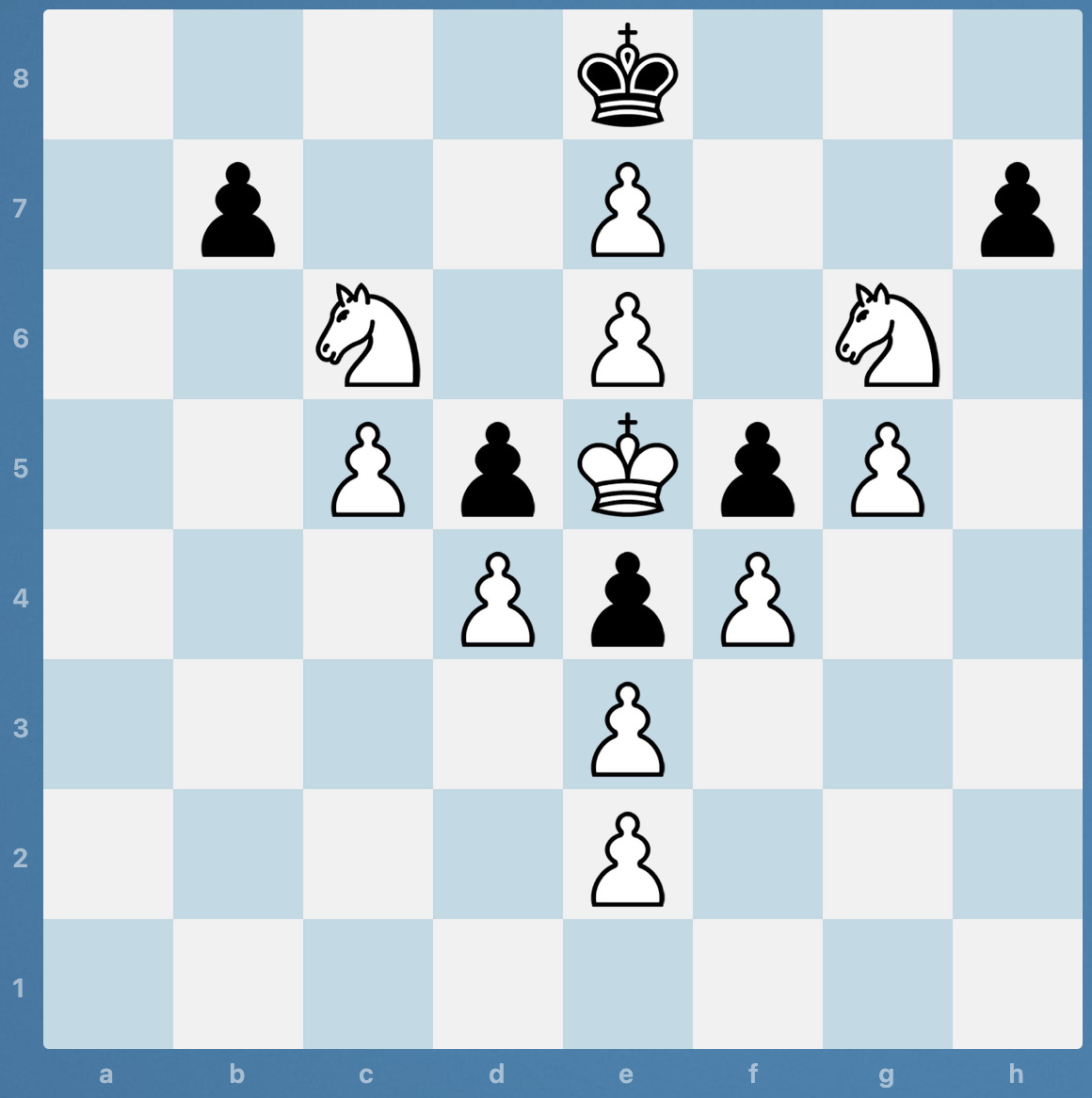
White to mate in 2.
A topsy-turvy holiday tree. It appears that there’s no solution - until you start to think about how this position could have arisen.
---
Solution to last issue’s problem (W. A. Shinkman, 1901):
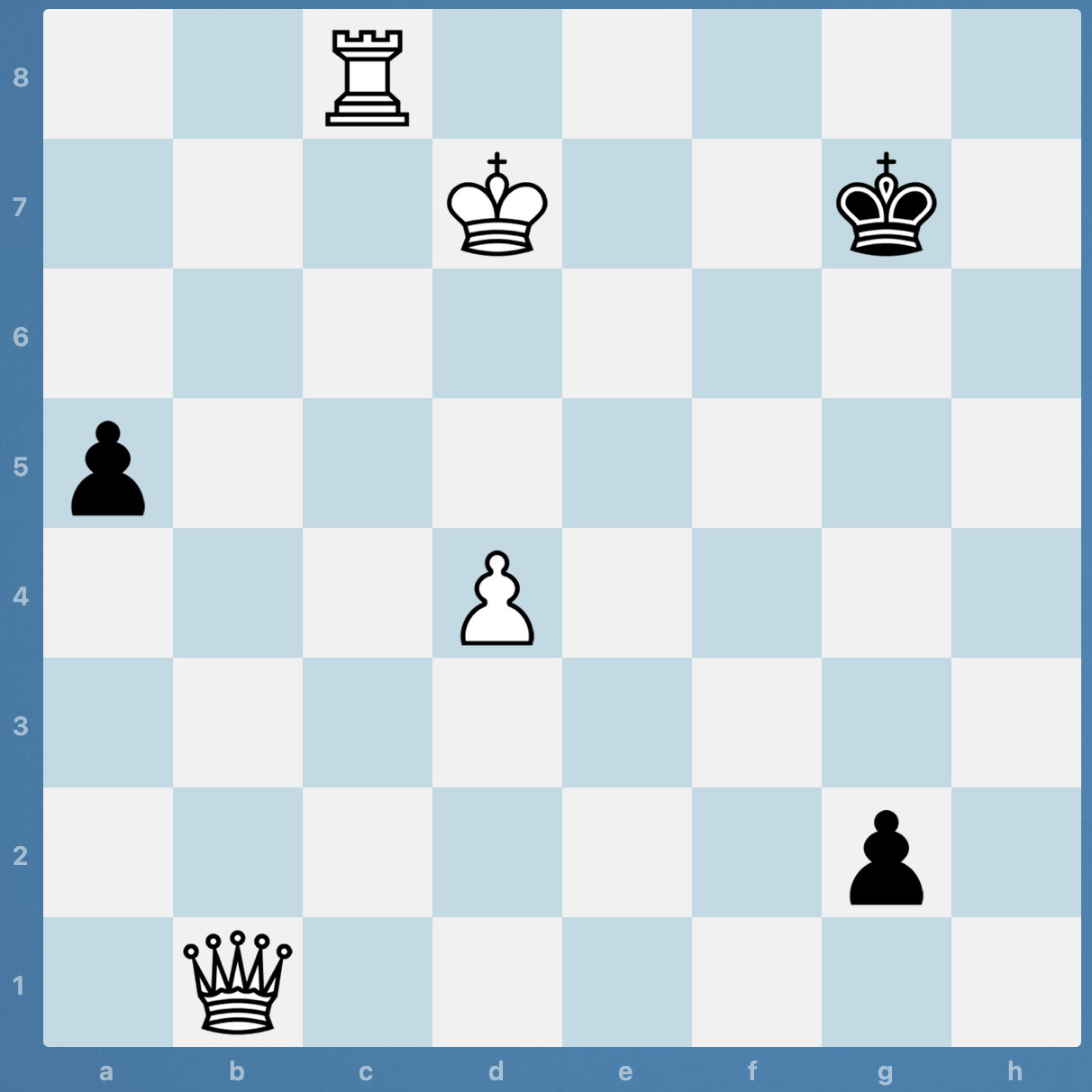
White to mate in 3.
Solution: 1.Rc2 K any (or a4) 2.Rxg2, followed by Q mates. Or if 1...g1=Q 2.Qxg1+, followed by Rook mates.
---
Alexander George
Editor’s Note
As always, if you have any feedback, comments, or would like to submit an article please contact us directly at td@marshallchessclub.org.
Enjoy, and thanks for reading!
The Marshall Chess Club
23 West Tenth Street New York, NY 10011
212.477.3716

Thanks for reading The Marshall Spectator! Subscribe for free to receive new posts and support the club.